
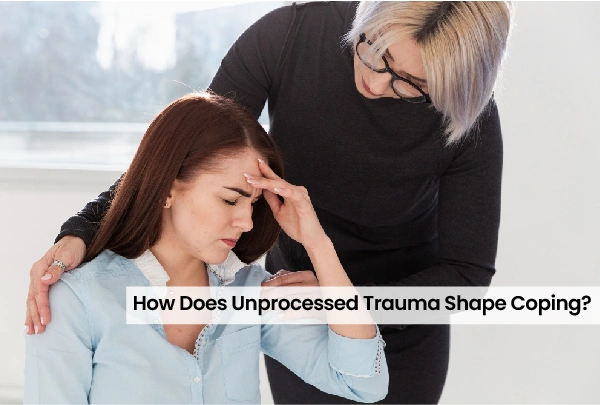
Why do you snap over small things, shut down in a crisis, or feel restless when life is calm? For many people the answer sits in something that happened years ago and never got worked through. Unresolved trauma doesn’t go away. It quietly trains the mind and body to expect danger. This article explains how that happens, what unhealthy coping can look like, and which steps genuinely help. You’ll also find guidance on choosing professional support in Delhi NCR or online.
What Is Unprocessed Trauma?
Unprocessed trauma is a distressing experience, such as abuse, an accident, violence or neglect, that the mind hasn’t fully made sense of. The memories can stay fragmented and emotionally charged. The body may react as though the threat is still present (van der Kolk, 2014).
Large studies also link childhood adversity to later health and emotional difficulties, with risk rising as adverse experiences add up (Felitti et al., 1998).
How Does Unprocessed Trauma Shape the Way You Cope?
The brain keeps the strategies that once kept you safe. Years later, those same habits can cause trouble.
What are the common unhealthy coping patterns?
- Avoidance: steering clear of places, people or conversations that stir up memories
- Emotional numbing: feeling flat, detached or “not really here”
- Hypervigilance: being constantly on guard, easily startled or unable to relax
- Escape habits: overworking, or leaning on alcohol, food or screens to switch off
- Reactivity: sudden anger, irritability or people-pleasing to avoid conflict
How does this look in daily life?
Take a composite example. After a road accident, Riya stops driving and tells herself she is simply busy. Over time she skips invitations and her world shrinks. What began as protection turns into limitation.
Learning skills for Coping With Trauma Responses, such as grounding and paced breathing, helps you interrupt this cycle instead of feeding it.
How Are Loss, Worry and Isolation Connected to Trauma?
Trauma rarely travels alone. Grief, anxiety and withdrawal often follow it.
- Coping With Significant Loss, such as a death or a broken relationship, can reopen old wounds if earlier pain was never processed.
- Managing Emotional Worry matters because an alert nervous system keeps scanning for danger, which shows up as constant “what-ifs.”
- Managing Feelings Of Isolation is important because shame makes people hide, and hiding cuts off the support that heals.
- Coping With Emotional Harm from betrayal or abuse usually needs safety, validation and time, not just willpower.
What Practical Steps Can You Start Today?
- Ground yourself. List five things that you can see, four that you can touch, three that you can hear, two that you can smell, and one that you can taste.
- Track triggers. Note the time, place, feeling and your reaction in a small notebook.
- Slow your breath. Inhale for four counts and exhale for six, for two minutes.
- Move daily. A ten-minute walk or gentle yoga helps discharge tension.
- Reach out. Share your feelings with one person you can trust.
- Set small goals. Planning Meaningful Future Targets, even tiny ones like a weekly walk, rebuilds a sense of control and direction.
When Should You See a Professional?
Seek help if flashbacks, nightmares, panic, numbness or avoidance last beyond a month or disrupt work and relationships. Guidelines recommend trauma-focused therapies such as trauma-focused CBT and EMDR (World Health Organization, 2013).
It makes sense for many folks to start by looking for a counselor near me or therapist near me. In the capital region, look for a psychologist in Delhi NCR with trauma training and verifiable credentials, such as RCI registration for clinical psychologists. Good psychological counseling in Delhi should be private, safe, and tailored to your needs.
Where Can You Get Help: Psychowellness Center or TalktoAngel?
TalktoAngel is an online platform for counselling. Online platforms connect individuals with psychologists and therapists through video calls, audio sessions, or chat, making professional support more accessible for those living far from clinics or seeking greater privacy.
In contrast, Psychowellness Center is a Delhi NCR-based mental health centre that offers clinical psychology and therapy services through in-person sessions, making it a suitable choice for people who prefer face-to-face interaction. Before scheduling an appointment, verify the professionals’ qualifications, clinic location, and updated contact information on the respective platforms.
Conclusion
Unprocessed trauma teaches the mind to protect first and live second. That is why old wounds can show up as worry, avoidance, numbness or a sense of being cut off from people. The reassuring part is that these patterns were learned, which means they can be unlearned. Small daily habits, honest conversations and trained professional guidance can steadily change how your mind and body respond.
You don’t need to wait until your challenges become overwhelming to seek help. If you prefer receiving support in a private and comfortable setting, TalktoAngel offers online counselling services that allow you to connect with a professional from the comfort of your home. For face-to-face support, Psychowellness Center offers counselling services across Delhi NCR. Taking the first step can help you move towards better emotional well-being.
Contributed by: Dr. R.K. Suri, Clinical Psychologist, and Ms. Mahima Mathur, Counselling Psychologist
Frequently Asked Questions
What is unprocessed trauma?
It is a distressing experience the mind and body haven’t fully worked through. It can keep triggering strong emotional and physical reactions long after the event.
What are the signs of unresolved trauma?
Common signs include flashbacks, nightmares, avoidance, emotional numbness, irritability, sleep problems, being easily startled and difficulty trusting others.
Can unresolved trauma affect physical health?
Yes. Research links adverse childhood experiences with a higher risk of several health problems in adulthood (Felitti et al., 1998). Chronic stress can also show up as headaches, fatigue and muscle tension.
How long does trauma healing take?
It varies. Many structured trauma-focused therapies run for roughly 8 to 16 sessions, though complex or long-standing trauma may need longer.
References
Felitti, V. J., Anda, R. F., Nordenberg, D., Williamson, D. F., Spitz, A. M., Edwards, V., Koss, M. P., & Marks, J. S. (1998). Relationship of childhood abuse and household dysfunction to many of the leading causes of death in adults: The Adverse Childhood Experiences (ACE) Study. American Journal of Preventive Medicine, 14(4), 245–258. https://doi.org/10.1016/S0749-3797(98)00017-8
van der Kolk, B. A. (2014). The body keeps the score: Brain, mind, and body in the healing of trauma. Viking.
World Health Organization. (2013). Guidelines for the management of conditions specifically related to stress. World Health Organization.
https://www.psychowellnesscenter.com/Blog/how-does-trauma-effect-self-worth-and-self-concept/
https://www.psychowellnesscenter.com/Blog/trauma-counselling-near-me-healing-emotional-wounds/
https://www.psychowellnesscenter.com/Blog/how-does-trauma-impact-your-identity/