
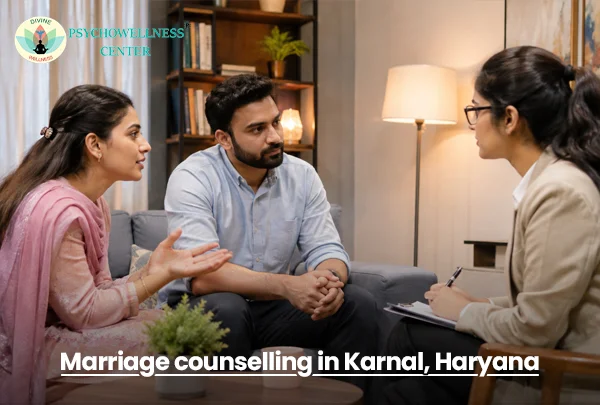
Disagreements are part of every marriage. What matters is whether they bring you closer or push you apart. If you’re searching for online marriage counselling in Karnal, you have probably already tried talking, waiting it out, or staying quiet for the sake of family, and things still feel stuck. This guide explains why couples struggle, how to recognise when you need support, and what counselling involves. You’ll also find practical steps to try at home and tips on choosing a marriage counsellor in Karnal, Haryana online.
Why Do Couples Struggle in Marriage?
Most marriages don’t hit trouble because of one dramatic event. Small, unaddressed strains pile up until they feel impossible to carry.
Common causes include:
- Communication problems in marriage: talking at each other instead of with each other, or going silent.
- In-law conflict and joint-family pressure: clashing expectations about roles, space, and decision-making.
- Financial stress in a relationship: debts, job changes, or disagreements over spending, which often lead to relationship stress and anxiety.
- Parenting differences: discipline, schooling, and who does what at home.
- Emotional distance between spouses: busy routines leave little room for affection or shared time.
- Broken trust after infidelity: secrecy, betrayal, or repeated unkept promises.
- Unspoken emotional needs: each partner assumes the other should “just know.”
- Unresolved childhood or past trauma: old wounds that resurface as conflict caused by past trauma.
Naming the pattern matters. It shifts the question from “who’s at fault?” to “what keeps happening between us?”
What Are the Signs a Marriage Needs Professional Support?
The signs your marriage needs counselling often appear gradually. Consider reaching out if you notice:
- The same argument keeps returning with no resolution
- One or both of you avoid difficult topics to keep the peace
- You feel lonely in a marriage even when you’re together
- Criticism, sarcasm, or the silent treatment have replaced warmth
- Trust has been damaged, and you can’t repair it alone
- Separation or divorce has crossed your mind
- Stress is affecting your sleep, work, health, or children, or you notice signs of depression or anxiety caused by marital problems
- Constant tension is leading to emotional burnout in marriage
You don’t need to wait for a crisis. Research on relationship counselling covers couples at every stage, from content to deeply distressed. Seeking help sooner usually means fewer entrenched habits to undo. If you’re unsure where you stand, a relationship issues self-assessment test can be a useful starting point.
What Should Couples Do When Communication Breaks Down?
When conversations keep ending in fights or silence, small changes can restart the connection. Try these steps for improving communication in a relationship:
- Pick the right moment. Avoid raising serious issues when either of you is tired, hungry, or distracted.
- Take a timeout when emotions spike. Agree on a break of 20 to 30 minutes, then come back. This also helps with anger management in relationships.
- Speak for yourself. Say “I feel overlooked when…” instead of “You never…”
- Listen first. Repeat back what you heard before you respond. This is the heart of active listening for couples.
- Set a weekly check-in. Ten calm minutes, away from phones, to share what’s going well and what isn’t.
- Ask for help early. A neutral third person can break a stalemate you can’t break alone.
Resolving Conflicts Between Partners Through Marriage Counselling
A counsellor doesn’t take sides. They offer a structured, safe space where both partners can be heard and learn healthier ways to handle tension.
Effective conflict resolution for couples in counselling often includes:
- Identifying the pattern behind repeated arguments
- Teaching calm, respectful ways to raise sensitive topics
- Helping each partner understand the need behind the anger, including managing anger and emotional triggers in marriage
- Building shared problem-solving habits
- Practising skills between sessions so change sticks
Many couples also benefit from relationship coaching focused on improving relationship skills and communication. It’s practical and goal-based, and works well alongside deeper counselling.
How Can You Manage Disagreements Without Hurting Each Other?
Managing disagreements without hurting each other is a skill you can learn. These habits help:
- Focus on the issue, not the person. “The bills worry me” works better than “You’re irresponsible.”
- Avoid dragging in the past. Stick to what’s happening now.
- Don’t involve extended family mid-argument. It usually raises the stakes.
- Repair quickly. A genuine apology or a small kind gesture afterwards goes a long way.
- Aim for understanding, not winning. If one person “wins,” the marriage loses.
How Does Marriage Counselling Help Couples Resolve Relationship Problems?
Marriage counselling works on the bond, not just the arguments. Depending on your goals, that can mean:
- Building emotional intimacy in marriage through honest conversations about fears, hopes and needs
- Strengthening interpersonal connections with shared routines, appreciation and small daily gestures
- Practising mindfulness techniques for couples to slow down, notice stress signals and respond instead of reacting
- Building confidence in sexual well-being by talking openly about desire, differences and worries without shame, including support for sexual dysfunction and intimacy concerns
- Nurturing lasting marital bonds through rituals, shared goals and regular check-ins
- Supporting stress management for couples so daily pressures don’t spill into the relationship
One consistent finding is that the quality of the relationship between clients and their counsellor strongly influences outcomes. That’s why fit matters when you choose someone.
Can Marriage Counselling Prevent Separation?
Sometimes, but no counsellor can honestly promise it. Counselling helps many couples rebuild trust after infidelity, break negative cycles, and rediscover what brought them together. It works best when both people take part willingly.
It can also bring clarity. If separation is the healthiest option, counselling supports navigating separation and divorce with emotional support, especially when children, finances, and families are involved.
Is Online Marriage Counselling Available for Couples in Karnal?
Yes. Online marriage counselling in Karnal is a practical option if you have a busy schedule, young children, privacy concerns, or difficulty travelling. Sessions run by video, audio, or chat, so you can attend from home.
Online counselling works best when you have a private space and a stable connection, and when both partners are willing to engage. Because the counsellor relationship matters so much, choose someone you both feel comfortable with, whatever the format.’
How Do You Choose the Right Marriage Counsellor?
Look for these basics:
- Qualifications: a recognised degree or diploma in psychology, counselling, or marriage and family therapy
- Experience with issues like yours, such as infidelity, in-law conflict, or communication problems
- Approach: ask how sessions work and what you can expect
- Comfort: do both of you feel heard and unjudged?
- Practicalities: fees, session length, language, and in-person or online options
Give it two or three sessions before deciding. Early progress is often small but meaningful.
Which Marriage Counsellors Can You Consult in Karnal? (Top 10 to Consider)
Dr. R. K. Suri
Dr. R. K. Suri is a senior Clinical Psychologist with over 40 years of experience, specialising in anxiety treatment, stress management and relationship concerns, along with behavioural issues. As the founder of Psychowellness Center, he is known for his ethical practice and structured therapeutic approach.
Mrs. Kala Sengupta
Mrs. Kala Sengupta is an experienced psychologist working with children, adolescents and adults. She specialises in psychological assessments and counselling for anxiety, attention difficulties, emotional regulation and developmental concerns.
Ms. Sakshi Dhankhar
Ms. Sakshi Dhankhar is an experienced counselling psychologist who helps adolescents and adults manage anxiety, stress, depression and anger, as well as relationship concerns and workplace difficulties, while promoting emotional well-being.
Ms. Tanu Sangwan
Ms. Tanu Sangwan is a psychologist specialising in stress, anxiety and emotional difficulties. She uses evidence-based approaches, including Cognitive Behavioural Therapy (CBT) and mindfulness, to support emotional well-being.
Mr. Utkarsh Yadav
Mr. Utkarsh Yadav supports professionals and young adults dealing with emotional difficulties, career-related stress, and life decisions. He focuses on building emotional resilience, problem-solving skills, and practical coping strategies.
Mr. Harpreet Singh
Mr. Harpreet Singh helps individuals manage stress, emotional triggers, and interpersonal difficulties. His approach focuses on emotional regulation, interpersonal skills, and practical coping strategies.
Dr. Lekha Murali
Dr. Lekha Murali specialises in supporting individuals experiencing stress, depression, trauma-related concerns and behavioural difficulties. She uses evidence-based, personalised approaches to promote emotional well-being and effective coping.
Dr. Kaukab Imam
Dr. Kaukab Imam holds a Ph.D. in Psychology and supports individuals facing emotional and psychological challenges through an empathetic, patient and client-centred approach.
Mrs. Nazneen Iqbal
Mrs. Nazneen Iqbal is a psychologist specialising in stress, anxiety, depression, OCD, PTSD, phobias, anger management, and emotional well-being among adults and middle-aged individuals.
Ms. Krishna Amrutbhai Panchal
Ms. Krishna Amrutbhai Panchal is an RCI-licensed Clinical Psychologist experienced in treating anxiety, OCD, mood disorders, addiction, relationship concerns, and career-related challenges through evidence-based therapies.
Conclusion
Marriages rarely break overnight, and they rarely heal overnight either. Small, consistent changes in how partners communicate, resolve disagreements, and express care can gradually strengthen a relationship, and support for mental health in marriage can make those changes easier to sustain.
If you are ready to take the first step, consider discussing counselling with your partner. You can book an online counselling session through Psychowellness Center or opt for offline sessions at its centres in B-Block, Janakpuri, or Sector-17, Dwarka. Seeking professional guidance can help couples work through challenges and build a healthier, more understanding relationship.
Frequently Asked Questions
How do I know if my marriage can be saved?
Many marriages can improve when both partners are willing to work on the problems. Signs of hope include a shared wish to fix things, some remaining care or respect, and openness to change. A counsellor can help you assess where your relationship stands and what is realistic.
What if my spouse refuses to attend counselling?
This is common. You can still begin with individual sessions to understand your own patterns, manage stress, and learn healthier ways to respond. Many partners become more open once they see positive changes. When you raise the idea, present it as support for the relationship, not as blame.
Can counselling help if the problem is mainly with in-laws or family?
Yes. Counselling can help you set healthy boundaries, present a united front as a couple, and handle family expectations without damaging your relationship. Sometimes a joint session with family members is also helpful.
References
- https://www.psychowellnesscenter.com/Blog/quick-resolution-for-marital-conflict-tips-from-marriage-counsellor/
- https://www.psychowellnesscenter.com/Blog/giving-importance-to-resolving-marital-conflict/
- https://www.psychowellnesscenter.com/Blog/pre-marital-counselling-to-address-initial-conflicts-and-disagreement/
- https://www.psychowellnesscenter.com/Blog/how-to-handle-stressful-marriage/
- Department of Women and Child Development, Government of Haryana. (n.d.). Women helpline number 181. https://wcdhry.gov.in/women-helpline-number-181/
- Hunter, C., & Commerford, J. (2015). Relationship education and counselling: Recent research findings (CFCA Paper No. 33). Australian Institute of Family Studies. https://aifs.gov.au/cfca/publications/relationship-education-and-counselling
- International Institute for Population Sciences & ICF. (2021). National Family Health Survey (NFHS-5), 2019–21: India. IIPS.
- Ministry of Women and Child Development. (2024, February 2). Schemes for destitute women (Lok Sabha Unstarred Question No. 201). Government of India. https://eparlib.nic.in/bitstream/123456789/2973825/1/AU201.pdf