
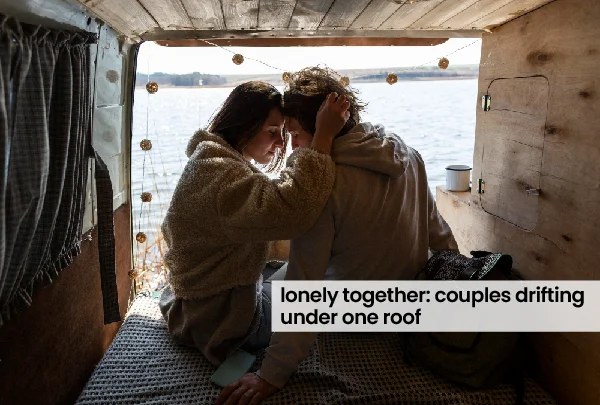
Have you ever sat beside your partner on the same sofa, shared meals at the same table, or slept in the same bed, yet felt completely alone? You live together, manage household responsibilities, discuss daily schedules, but meaningful conversations, affection, and emotional closeness seem to have disappeared.
This experience is often described as being lonely together. It occurs when couples remain physically present in each other’s lives but gradually become emotionally disconnected. Unlike obvious relationship conflicts, this distance often develops quietly. Partners may not even realise how far apart they have grown until they begin feeling like strangers.
The good news is that emotional disconnection does not necessarily mean a relationship is over. With awareness, communication, and consistent effort, couples can rebuild their connection.
What Does It Mean to Be Lonely Together?
Being lonely together means experiencing emotional isolation despite sharing a home and relationship with someone. Partners may continue fulfilling their responsibilities while losing the companionship and understanding that once brought them closer.
For example, one partner may spend evenings scrolling through social media while the other watches television. They discuss groceries, bills, and children’s schedules but rarely share their feelings or personal experiences.
Common signs include:
- Conversations focusing mainly on household responsibilities.
- Spending free time separately despite living together.
- Feeling unheard, misunderstood, or emotionally unsupported.
- Reduced affection, intimacy, and meaningful physical contact.
- Avoiding difficult conversations to prevent arguments.
- Feeling more comfortable sharing personal experiences with friends.
Sometimes, the absence of arguments reflects emotional avoidance rather than genuine relationship satisfaction.
Why Do Couples Gradually Drift Apart Under One Roof?
Emotional distance rarely develops overnight. It often results from small, repeated experiences that gradually weaken intimacy.
1. Daily Responsibilities Take Priority
Work pressure, parenting, financial responsibilities, and household tasks consume much of a couple’s energy. Partners begin functioning like a management team rather than romantic companions.
2. Communication Becomes Transactional
Conversations shift from sharing thoughts and experiences to discussing practical matters. Instead of asking, “How are you feeling today?” partners ask, “Did you pay the electricity bill?”
3. Unresolved Conflicts Create Emotional Walls
Repeated disagreements, criticism, resentment, and unmet expectations can make partners withdraw emotionally. Silence may eventually feel safer than discussing another disagreement.
4. Technology Replaces Quality Time
Constant notifications, social media, and streaming platforms can interrupt opportunities for genuine interaction. Being physically together does not automatically mean being emotionally available.
5. Emotional Needs Remain Unexpressed
One partner may need reassurance, while the other expresses love through practical support. When these differences remain misunderstood, both individuals may feel unappreciated.
How Does Emotional Disconnection Affect Mental Well-being?
Feeling lonely within a relationship can contribute to sadness, frustration, stress, low self-esteem, and emotional exhaustion. A person may begin questioning their importance in their partner’s life or wondering whether their relationship still matters.
Research by Cacioppo and Patrick (2008) explains how persistent loneliness can affect emotional and physical well-being. Similarly, Holt-Lunstad et al. (2015) highlighted the importance of social relationships for health and longevity.
Prolonged emotional disconnection may contribute to:
- Increased irritability and misunderstandings.
- Reduced relationship satisfaction.
- Feelings of rejection and insecurity.
- Avoidance of intimacy and meaningful conversations.
- Difficulty expressing affection and vulnerability.
Recognising these experiences early can help couples address underlying concerns before emotional distance becomes deeply established.
How Can Couples Rebuild Emotional Intimacy?
Reconnecting does not always require expensive holidays or dramatic romantic gestures. Modest, regular adjustments can have a significant impact.
1. Start With Honest Conversations
Create space to discuss how both partners feel without immediately blaming or defending yourselves.
Instead of saying, “You never spend time with me,” try saying, “I miss spending meaningful time together, and I would like us to reconnect.”
Listen to understand rather than win an argument.
2. Create Technology-Free Time
Set aside 20–30 minutes daily without phones, television, or other distractions. Talk about your day, share memories, or simply enjoy each other’s company.
3. Bring Back Small Acts of Affection
Emotional intimacy often grows through ordinary gestures, such as:
- Hugging before leaving for work.
- Asking about each other’s day.
- Preparing a favourite meal.
- Expressing appreciation for small efforts.
- Holding hands during a walk.
These actions communicate care and emotional availability.
4. Address Unresolved Resentment
If past disagreements continue affecting the relationship, avoid pretending everything is fine. Discuss what hurt, acknowledge each other’s experiences, and identify realistic changes.
Ignoring persistently damaging behavior is not the definition of forgiveness. It takes responsibility and persistent work to rebuild trust.
5. Rediscover Shared Experiences
Try activities that encourage companionship rather than focusing only on responsibilities. Cooking together, walking, playing games, or revisiting a favourite place can create opportunities for positive interactions.
6. Seek Professional Support
Sometimes, couples struggle to reconnect because their communication patterns, emotional needs, or unresolved conflicts require professional guidance.
A qualified relationship counsellor or psychologist can help partners understand recurring patterns, communicate effectively, and develop healthier ways of managing disagreements.
When Should Couples Consider Relationship Counselling?
Professional counselling may be helpful when:
- Conversations repeatedly turn into arguments or silence.
- One or both partners feel emotionally neglected.
- Affection and intimacy have significantly reduced.
- Resentment continues despite repeated discussions.
- Partners feel disconnected but genuinely want improvement.
Approaches such as Emotionally Focused Therapy (EFT) and the Gottman Method focus on strengthening emotional bonds, improving communication, and understanding relationship patterns.
Searching for a psychologist near me or couple counseling near me can help couples identify appropriate professional support. An expert couple counselor in India can also help partners explore individual emotional difficulties affecting their relationship.
If abuse, intimidation, or coercive control is present, individual safety-focused support should take priority over joint counselling.
Conclusion
Being lonely together does not automatically mean love has disappeared. Sometimes, couples become so occupied with managing everyday responsibilities that they forget to nurture their relationship.
The way forward begins with recognising emotional distance, communicating honestly, making time for each other, expressing affection, and addressing unresolved concerns. Reconnection is a shared responsibility, and meaningful change often begins with small, consistent efforts.
Psychowellness Center provides professional psychological and relationship counselling through experienced mental health professionals. Offline counselling services are available at Janakpuri and Sector-17, Dwarka, Delhi. For appointments, contact 09810636188 or 07827208707.
TalktoAngel provides online counselling through convenient digital sessions for individuals and couples who prefer remote support. Both platforms encourage emotional well-being and healthier relationships.
You do not have to accept emotional loneliness as a permanent part of your relationship. Sometimes, finding each other again begins with an honest conversation.
Frequently Asked Questions
- Is it normal to feel lonely while living with your partner?
Yes. Emotional loneliness can occur when partners lack meaningful communication, affection, or emotional support, even when they spend considerable time together.
- Can a relationship survive emotional disconnection?
Yes. Couples can rebuild their connection through mutual commitment, honest conversations, emotional understanding, and professional guidance when needed.
- How can I recognise an emotionally distant partner?
Signs may include reduced communication, limited affection, avoiding meaningful conversations, and decreased interest in shared activities. These signs should be understood in context rather than treated as proof of lost love.
- Does couples counselling help partners who have grown apart?
Yes. Counselling can help partners identify the reasons behind emotional distance, improve communication, address recurring disagreements, and rebuild intimacy when both are willing to participate.
Contributed by: Dr. R.K. Suri, Clinical Psychologist, and Ms. Tanu Sangwan, Counselling Psychologist
References
Cacioppo, J. T., & Patrick, W. (2008). Loneliness: Human nature and the need for social connection. W. W. Norton & Company.
Gottman, J. M., & Silver, N. (2015). The seven principles for making marriage work: A practical guide from the country’s foremost relationship expert (Revised ed.). Harmony Books.
Holt-Lunstad, J., Smith, T. B., Baker, M., Harris, T., & Stephenson, D. (2015). Loneliness and social isolation as risk factors for mortality: A meta-analytic review. Perspectives on Psychological Science, 10(2), 227–237. https://doi.org/10.1177/1745691614568352
Johnson, S. M. (2019). Attachment theory in practice: Emotionally focused therapy (EFT) with individuals, couples, and families. The Guilford Press.
https://www.psychowellnesscenter.com/service-couple-counselling-delhi/
https://thepsychowellness.com/why-isnt-my-relationship-getting-better-relationship-counselor/
https://www.psychowellnesscenter.com/Blog/signs-of-hidden-tension-that-could-ruin-your-relationship/
https://www.psychowellnesscenter.com/best-marriage-counselling-near-me/delhi-ncr/