
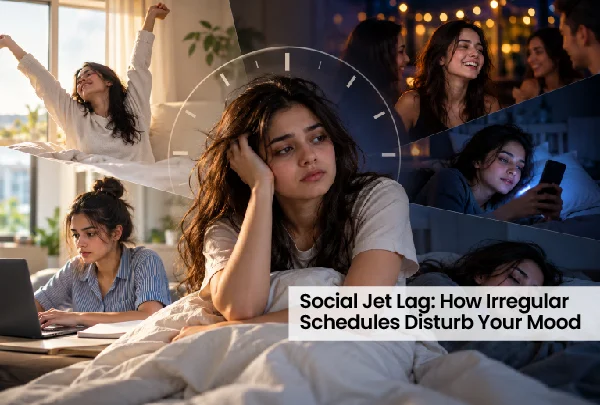
Do you notice that you feel much better when you follow a consistent sleep routine? Your sleep schedule plays an important role, much more than you think, in maintaining your energy, mood, and overall well-being. From waking up feeling refreshed to approaching daily challenges with a positive mindset, a healthy sleep routine supports both physical and emotional well-being. Understanding your body’s natural rhythms and giving yourself enough time to rest can be a simple yet meaningful step toward a healthier, happier lifestyle.
What is Social Jet Lag?
Social jet lag occurs when your internal biological clock doesn’t match your schedule because of work, studies, social commitments, or lifestyle choices. Your body operates on an internal timing system called the circadian rhythm, which helps regulate when you feel awake, when you feel sleepy, and several other important biological processes.
However, modern lifestyles often force people to follow schedules that conflict with their natural sleep preferences.
What Causes Social Jet Lag?
Several everyday habits can disrupt your sleep schedule. Some common causes are:
- Different Sleep Schedules – Having different sleep schedules on weekdays and weekends causes changes and disruptions in your circadian rhythm.
- Late-Night Screen Time – Exposure to bright light influences melatonin production and reduces the regulation of sleep.
- Work and Academic Pressure – Demanding responsibilities and deadlines contribute to chronic sleep restriction and irregular sleep patterns.
- Social Activities and Late Nights – While occasional late nights are normal, frequently changing sleep makes it harder to maintain a consistent biological rhythm.
How Do Irregular Sleep Schedules Affect Your Mood?
The effects of irregular sleep schedules can become noticeable when your bedtime and wake-up time change frequently.
- Mood Swings: Becoming frustrated or emotionally sensitive more easily
- Low energy: Feeling tired throughout the day
- Poor concentration: Irregular sleep reduces focus and attention
- Increased stress: Everyday responsibilities may feel more overwhelming
- Reduced productivity: Fatigue can affect your performance
Sleep plays an important role in maintaining emotional balance, and when your body does not get sufficient, consistent rest, managing everyday challenges can become more difficult.
How Does Your Biological Clock Influence Emotional Regulation?
One’s biological clock helps coordinate the body’s daily activities and emotional regulation according to a natural circadian rhythm. It influences when you feel sleepy, when you become alert, and how different biological processes function throughout the day.
Three important factors include:
- Melatonin production signals to your body that it’s time to get ready to sleep. Its production is influenced by darkness and your internal body clock.
- Cortisol Rhythm helps regulate alertness and the body’s response to stress. Its levels naturally change throughout the day, following a daily rhythm.
- Brain function and emotional balance help the brain process emotional experiences and regulate responses to stress.
How Does Poor Sleep Affect Mental Health?
The relationship between poor sleep and mental health works together. When your sleep schedule is repeatedly irregular, you may start to experience changes in your psychological well-being.
- Increases emotional sensitivity
- Harder to manage anxious thoughts
- Contributes to low energy
- Negatively affects cognitive functioning
- Reduces memory consolidation
Inadequate or disrupted sleep can contribute to emotional difficulties, while stress, anxiety, and depression can also interfere with sleep. This can create a repeating cycle of poor sleep and emotional distress.
To support better mental well-being, focus on:
- Getting enough sleep every night.
- Maintaining regular sleep and wake times.
- Making time for physical activity.
- Reducing stimulating activities before bedtime.
- Managing everyday stress through relaxation techniques.
What Healthy Circadian Rhythm Habits Can Improve Your Sleep?
Developing healthy circadian rhythm habits does not require a complete lifestyle change. A few realistic adjustments can help your body maintain a more consistent sleep-wake cycle.
- Follow a consistent sleep schedule – Try going to bed and waking up at approximately the same time every day, including weekends, to avoid large differences.
- Get morning sunlight – Spend 15-30 minutes outdoors to get natural daylight that helps regulate your internal body clock.
- Reduce screen time before bed – Using phones, laptops, and screens before bed exposes you to bright light that reduces melatonin.
- Stay physically active – Walking, cycling, yoga, or other moderate activities can support overall health and improve sleep quality.
- Limit caffeine intake – Coffee, tea, and energy drinks can interfere with sleep, especially when consumed later in the day.
- Create a relaxing bedtime routine – Reading, gentle stretching, or taking a warm shower can help you transition from daytime activities to sleep.
When Should You Seek Professional Help?
Occasional sleep disruption is common, but persistent problems should not be ignored.
Think about getting expert assistance if you encounter:
- Ongoing difficulty falling asleep or staying asleep.
- Persistent daytime exhaustion despite sufficient sleep opportunities.
- Frequent mood changes or worsening anxiety.
- Loud snoring or breathing interruptions during sleep.
- Sleep problems that interfere with daily responsibilities.
A counseling professional can help identify underlying issues and recommend appropriate treatment. Remember, improving your sleep schedule is important, but it should not replace professional mental health care when needed.
Conclusion
Your sleep schedule plays an important role in how you feel, think, and respond to everyday challenges. Although social jet lag and irregular sleeping patterns can affect your mood, energy levels, and emotional balance, small lifestyle changes can make a meaningful difference. The need to understand your body’s biological clock, and prioritising healthy sleep habits can help you feel more refreshed and emotionally balanced.
If irregular sleep patterns affect your daily life or mental well-being, seeking professional support can be a positive step. Here at Psychowellness Center, in Janakpuri and Dwarka Sector 17, you can have in-person counseling with qualified mental health professionals who can help you address emotional difficulties, manage stress, and develop healthier coping strategies.
To book an appointment with Psychowellness Center, call 011-47039812 or 7827208707.
Contributed by: Dr. R.K. Suri, Clinical Psychologist, and Ms. Vandana Krishnan, Counselling Psychologist
Frequently Asked Questions (FAQ)
Why do I feel depressed or anxious after poor sleep?
Poor sleep can affect the brain systems responsible for emotional processing and stress regulation, which may increase negative emotions, making anxious thoughts harder to manage.
Is sleeping longer on weekends harmful?
No, getting additional sleep is not harmful, but consistently sleeping several hours later than usual can shift your internal clock and contribute to social jet lag.
How many hours of sleep do adults need?
Most adults need at least seven hours of sleep per night, although it may vary from individual to individual.
References
- Caruso, C. C., & Chosewood, L. C. (2020, June 29). Improve sleep: Tips to improve your sleep when times are tough. National Institute for Occupational Safety and Health, Centers for Disease Control and Prevention. https://www.cdc.gov/niosh/bulletin/2020/sleep.html
- Roenneberg, T. (2023). How can social jetlag affect health? Nature Reviews Endocrinology. https://doi.org/10.1038/s41574-023-00851-2
- Wittmann, M., Dinich, J., Merrow, M., & Roenneberg, T. (2006). Social jetlag: Misalignment of biological and social time. Chronobiology International, 23(1–2), 497–509. https://doi.org/10.1080/07420520500545979
- https://www.psychowellnesscenter.com/Blog/circadian-rhythm-sleep-disorders/
- https://www.psychowellnesscenter.com/Blog/symptoms-of-delayed-sleep-phase-syndrome/
- https://www.psychowellnesscenter.com/Blog/overcoming-sleep-disruption-and-preventing-risk-of-psychosis/
- https://www.psychowellnesscenter.com/Blog/5-reasons-why-your-sleep-is-not-enough/
- https://www.psychowellnesscenter.com/Blog/how-to-set-a-routine-for-good-mental-health/