
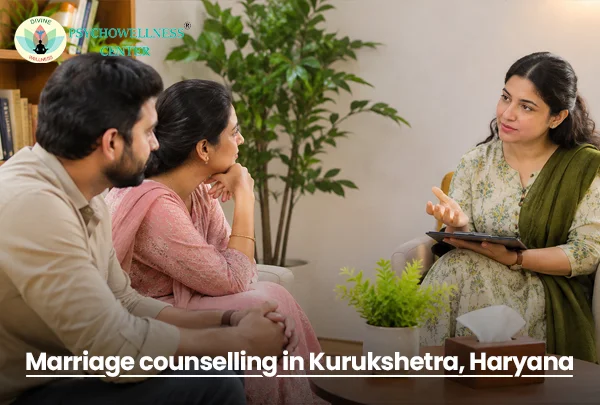
Some couples argue loudly. Others go quiet for days. Either way, the marriage starts to feel like a place where nobody is really listening. If that sounds uncomfortably familiar, outside help can make a real difference. Marriage counselling in Kurukshetra offers spouses a confidential setting to slow down, understand what keeps going wrong, and practise better ways of relating. Many people arrive carrying stress and emotional exhaustion in marriage that they have been hiding for months. Below, you will find the common causes of marital strain, warning signs worth noticing, what a session looks like, and how to find a counsellor who suits you, whether you meet in person or online.
Common Reasons Couples Experience Difficulties in Marriage
Marital trouble rarely has a single cause. It usually builds from several small pressures that are never discussed. Some of the most frequent ones are:
- Mismatched expectations. One partner pictures a shared life very differently from the other, whether about career, children, or how time off should be spent.
- Unequal load at home. When one person quietly carries most of the household and caregiving work, resentment follows, and caregiver burnout in marriage can set in.
- Money stress. Debt, irregular income, or different spending habits can turn every purchase into a debate and fuel financial stress and relationship anxiety.
- Extended family dynamics. Living close to or with relatives can blur boundaries around parenting, privacy, and decision-making.
- Exhaustion. After long workdays, many couples have nothing left for each other, and work-related stress affecting married life quietly erodes closeness.
- Unspoken hurt. Small disappointments pile up when nobody names them, sometimes leading to emotional withdrawal and feelings of loneliness in marriage.
- Betrayal of trust. Lies, secrecy, or infidelity can shake the foundation of a marriage.
- Old wounds. Conflict caused by past trauma can make an ordinary disagreement feel far bigger than it is.
None of these mean you chose the wrong person. They usually point to skills and conversations that are still missing.
Signs That Couples May Need Professional Relationship Support
Every couple has bad weeks. The signs that a marriage needs professional support are different: they are patterns that last and do not improve on their own.
Notice whether any of these describe your marriage:
- You fight about the same issue again and again, with no result.
- Talks quickly become accusations, shouting, or stony silence.
- One of you avoids serious topics to prevent a blow-up.
- You share a home but little else, as if living parallel lives.
- Contempt, sarcasm, or put-downs have replaced warmth.
- Trust has been broken, and the wound is still open.
- Physical affection has dwindled or disappeared.
- Life changes, such as parenthood, relocation, illness, or job loss, have left you struggling.
- Persistent low mood, irritability, or signs of depression are showing up in one or both of you.
- Anger outbursts in relationships are becoming frequent or frightening.
- Separation has crossed one of your minds.
If several of these ring true, a professional can help you sort through them. A free relationship issues self-assessment test can also give you a first sense of where the strain lies. You do not have to wait for a crisis to book a session.
Things Couples Should Do When Communication Breaks Down
When conversations go wrong, the instinct is to push harder or retreat. Neither works well. These are the things couples should do when communication breaks down:
- Call a timeout. If voices rise, agree to stop for twenty minutes, then come back. Say when you will resume so the pause doesn’t feel like abandonment.
- Start with your own feelings. “I felt left out when the decision was already made” lands better than “You never include me.”
- Reflect before replying. Summarise what your partner said and ask, “Did I get that right?”
- Pick one topic. Dragging in old grievances makes every talk unmanageable.
- Choose calm moments. Avoid raising weighty issues at bedtime, during meals, or when either of you is exhausted.
- Make clear, small requests. “Could we eat dinner together three nights a week?” is easier to act on than “Spend more time with me.”
- Bring in a neutral guide. If you keep hitting the same wall, a counsellor can show you what you cannot see from inside the argument.
Practising these steps supports improving communication skills between spouses, because each partner starts to feel understood rather than attacked, and strengthening interpersonal connections becomes much easier.
Resolving Conflicts Between Partners Through Marriage Counselling
Disagreement is a normal part of marriage. The real question is whether your arguments lead anywhere. Marriage counselling helps couples resolve relationship problems by exposing the pattern underneath the fight, then teaching alternatives. A large meta-analysis of couples therapy found improvements in relationship satisfaction, communication, and emotional intimacy compared with control groups.
In sessions, couples commonly work on:
- Recognising the trigger that starts the cycle
- Treating the issue as the shared problem, rather than treating each other as the enemy
- Speaking firmly without insults
- Negotiating solutions that both can accept
- Making amends after a blow-up
Consider a couple who clash every evening over who handles the children’s homework. Counselling may reveal that one parent feels invisible and the other feels judged. Once those feelings are voiced, a practical split of duties becomes much easier to agree on. This kind of conflict resolution counselling for couples turns repeated fights into workable agreements.
Developing Effective Response Regulation
Intense emotion can make anyone say things they regret. Developing effective response regulation means catching the early warning signs, such as a pounding heartbeat, clenched hands, or a sharp tone, and choosing a response instead of reacting automatically. It is a core part of emotional regulation in relationships, and for some people it overlaps with anger management counselling.
Useful practices:
- Take a few slow breaths before answering
- Put a name to what you feel, such as “hurt” or “overwhelmed”
- Leave the room briefly, then return to the discussion
- Stay away from threats, name-calling, and the silent treatment
Establishing Healthier Relational Patterns
Establishing healthier relational patterns means swapping habits like constant fault-finding, controlling behaviour, or shutting down for respect, openness, and fairness. A counsellor helps you spot the loop you are stuck in and rehearse a better one, so that new habits gradually feel natural. Over time, this supports healthy boundaries in marriage and a calmer, more secure bond.
Understanding What Happens During a Marriage Counselling Session
Walking into the first session can feel daunting. Knowing the format often eases nerves, particularly if you are dealing with anxiety before starting couples therapy. Here is how a typical course unfolds:
- Setting the ground rules. The counsellor explains confidentiality, how sessions run, and what to expect.
- Hearing both perspectives. Each partner describes the concerns and what they hope will change.
- Mapping the pattern. Together you look at when and how conflict or distance tends to arise.
- Learning new skills. You practise listening, expressing needs, and solving problems together.
- Trying things at home. You may get small tasks, such as a weekly conversation about how the marriage is going.
- Checking progress. You reflect on what has improved and what still needs work.
The counsellor’s role is not to name a winner. Both of you should leave sessions feeling respected and heard.
Can Couples Attend Marriage Counselling Online in Kurukshetra?
Yes. Online marriage counselling for couples in Kurukshetra is an option many professionals offer, and it suits couples with demanding schedules, long commutes, or partners based in different cities. Research on web-based and video-delivered couple therapy shows meaningful gains in relationship satisfaction. In one study, couples who received therapy by videoconference improved to a similar degree as those who attended in person.
To make online sessions work:
- Find a private spot where you won’t be overheard
- Check your internet connection beforehand
- Choose a time both of you can protect
- Confirm the counsellor’s qualifications, fees, and privacy practices before you commit
Some evidence suggests that the bond with the therapist can take longer to form on screen, so give it a few sessions and say so if the format isn’t working for you.
Closeness, Intimacy, and Sexual Well-Being
Emotional distance usually develops slowly, through busy days and unresolved disputes, until two people feel lonely side by side. This emotional disconnect between partners is one of the most common reasons couples seek help.
Building deeper emotional closeness typically comes from:
- Talking about feelings, not only schedules and chores
- Saying thank you for everyday efforts
- Protecting regular time together
- Listening without rushing to fix
- Admitting your own fears and needs honestly
Many couples find it hard to discuss physical intimacy at home. A counsellor provides a private, non-judgmental setting where such topics can be raised without embarrassment. Enhancing sexual health and well-being might involve talking about mismatched desire, stress, body changes, past hurt, or health worries, and some couples seek sexual dysfunction counselling for intimacy issues in marriage. When a medical cause seems likely, a counsellor may suggest seeing a doctor alongside therapy.
Can Marriage Counselling Help Rebuild Trust After Infidelity?
For many couples, yes, though the road is slow. Counselling lets the injured partner express pain while the other learns to take responsibility without deflecting. Reviews of therapies for couples recovering from infidelity describe structured approaches that address the hurt, rebuild trust, and help partners decide on next steps. Many people also need support for betrayal trauma and emotional healing after an affair.
Typical areas of work include:
- Understanding what happened and what contributed to it
- Setting clear agreements about honesty and openness
- Rebuilding trust through reliable, consistent behaviour over time
- Deciding together whether to repair the marriage or part ways
Results depend heavily on both partners’ commitment to the process.
Building Long-Term Marital Well-Being Through Professional Support
Counselling is not just a rescue service. Many couples use it to strengthen a marriage that is already working reasonably well. Nurturing lasting marital bonds depends on habits that continue long after the last session:
- Respect in disagreement: Argue about the issue, not each other’s character.
- A regular check-in: Set aside a weekly slot to ask how the relationship is going.
- Joint decisions: Discuss big choices before they are made.
- A fair division of work: Revisit who does what whenever life changes.
- Common goals: Talk about money, children, health, and the future.
- Visible gratitude: Notice what your partner does and say so.
A counsellor can help you build these routines, and many couples return for occasional follow-ups during major transitions. These habits also protect mental health and emotional well-being in marriage over the long run.
What If a Relationship Feels Unsafe?
Where there is abuse, intimidation, or fear, individual support and safety planning come before couples work. Joint sessions may be unsafe, since speaking openly in front of an abusive partner can raise the risk of harm. Anyone experiencing emotional abuse in a relationship or living in constant fear should seek individual support first.
How Do You Choose the Right Marriage Counsellor?
Qualifications matter, but so does personal fit. Look at:
- Training and registration. Clinical psychologists in India are registered with the Rehabilitation Council of India.
- Couples experience. Ask how often they treat communication, trust, and conflict issues.
- Working style. Find out how sessions are structured and what to expect.
- Confidentiality. Ask how your information is stored and shared.
- Balance. Each partner should get equal space to speak.
- Logistics. Compare fees, appointment times, travel distance, and online availability.
10 Experienced Counsellors for Professional Relationship and Emotional Support
Dr. R. K. Suri
Dr. R. K. Suri is a senior Clinical Psychologist with over 40 years of experience. He specialises in stress and anxiety management, relationship concerns, behavioural issues, and cognitive-based therapies. As the founder of Psychowellness Center, he is known for his ethical practice and structured therapeutic approach.
Mrs. Kala Sengupta
Mrs. Kala Sengupta works with children, adolescents, and adults experiencing emotional, behavioural, and developmental concerns. Her expertise includes psychological assessments and support for anxiety, attention difficulties, emotional regulation difficulties, and adjustment-related challenges.
Ms. Sakshi Dhankhar
Ms. Sakshi Dhankhar is a Counselling Psychologist who helps individuals manage stress, anxiety, depression, anger, relationship concerns, and workplace stress and burnout through compassionate, evidence-based support.
Ms. Tanu Sangwan
Ms. Tanu Sangwan supports individuals experiencing stress, anxiety, and emotional difficulties. She uses Cognitive Behavioural Therapy (CBT) and mindfulness-based techniques for anxiety and stress to encourage emotional well-being and personal growth.
Mr. Utkarsh Yadav
Mr. Utkarsh Yadav works with young adults and professionals facing emotional challenges, career-related stress and uncertainty, and life uncertainties. His approach focuses on building emotional resilience, problem-solving, and practical coping strategies.
Mrs. Molly George
Mrs. Molly George brings over 30 years of experience in supporting individuals with psychiatric concerns, emotional difficulties, and learning-related challenges. She combines clinical expertise with empathetic, evidence-based care.
Ms. Nicole Fernandes
Ms. Nicole Fernandes is a Counselling Psychologist who works with individuals experiencing workplace stress, relationship concerns, depression, low self-esteem and self-worth issues, and life transition counselling. Her therapeutic approaches include CBT, Acceptance and Commitment Therapy (ACT), Dialectical Behaviour Therapy (DBT), and mindfulness-based interventions.
Ms. Parvathy Venugopal
Ms. Parvathy Venugopal is a psychotherapist with a background in clinical psychology. She provides personalised support focused on developing self-awareness, healthy coping skills, and emotional well-being.
Ms. Meenakshi Chaubey
Ms. Meenakshi Chaubey is a psychologist experienced in addressing emotional distress, anxiety, family conflict, parenting stress, and career-related challenges. She also conducts psychometric assessments and uses approaches such as CBT and Rational Emotive Behaviour Therapy (REBT).
Ms. Sudipta Das
Ms. Sudipta Das supports adolescents and adults dealing with emotional and psychological concerns, including stress, anxiety, depression, anger management issues, and relationship difficulties. Her approach focuses on compassionate care and emotional well-being.
Conclusion
Trouble in a marriage does not mean it has failed. More often, it means a few important conversations and skills are overdue. With skilled guidance, couples can argue less destructively, understand one another better, and rebuild warmth. Counselling can also ease marital stress, anxiety, and low mood that have built up quietly over the years.
If you have been wondering about marriage counselling in Kurukshetra, make this the week you act. Tell your partner you would like to try it, shortlist a qualified professional psychologist, and book a first session, in person or online.
References
- https://www.psychowellnesscenter.com/Blog/quick-resolution-for-marital-conflict-tips-from-marriage-counsellor/
- https://www.psychowellnesscenter.com/Blog/giving-importance-to-resolving-marital-conflict/
- https://www.psychowellnesscenter.com/Blog/marriage-therapy-to-rebuild-trust-after-repeated-conflicts/
- https://www.psychowellnesscenter.com/Blog/what-to-expect-from-marriage-counselling/
- How Can Mindfulness and Happiness Strengthen Marital Bonds Through Marriage Counselling?
- Roddy, M. K., Walsh, L. M., Rothman, K., Hatch, S. G., & Doss, B. D. (2020). Meta-analysis of couple therapy: Effects across outcomes, designs, timeframes, and other moderators. Journal of Consulting and Clinical Psychology, 88(7), 583-596. https://doi.org/10.1037/ccp0000514
- Doss, B. D., Cicila, L. N., Georgia, E. J., Roddy, M. K., Nowlan, K. M., Benson, L. A., & Christensen, A. (2016). A randomized controlled trial of the web-based OurRelationship program: Effects on relationship and individual functioning. Journal of Consulting and Clinical Psychology, 84(4), 285-296. https://doi.org/10.1037/ccp0000063
- Kysely, A., Bishop, B., Kane, R. T., McDevitt, M., De Palma, M., & Rooney, R. (2021). Couples therapy delivered through videoconferencing: Effects on relationship outcomes, mental health and the therapeutic alliance. Frontiers in Psychology, 12, Article 773030. https://doi.org/10.3389/fpsyg.2021.773030
- Chatterjee, S., & Srivastava, N. (2025). Therapies to help recover relationships of the couples healing from infidelity: A review study. International Journal of Indian Psychology. https://doi.org/10.25215/1304.047
- Rehabilitation Council of India. (n.d.). Registration in Central Rehabilitation Register (CRR). https://rehabcouncil.nic.in/norms-guidelines/