
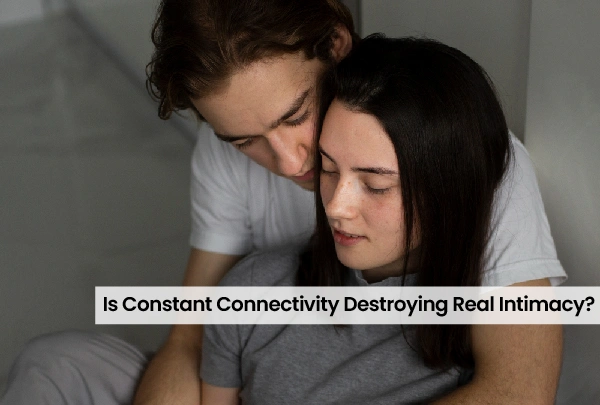
Your partner is sitting next to you, yet you’re both scrolling. A friend replies to your text within seconds, but you haven’t had a real conversation in weeks. Constant connectivity promises closeness, yet many people feel more distant than ever. So is your phone damaging intimacy, or is it how you use it? This guide looks at what research says, the warning signs to watch for and simple habits that help you reconnect. It also covers when to seek professional support.
What Does Constant Connectivity Do to Real Intimacy?
Intimacy grows from undivided attention, and notifications compete with it. Researchers call the habit of ignoring someone in favour of a phone “phubbing.” In one survey, being phubbed by a partner was linked to more conflict over phone use and lower relationship satisfaction (Roberts & David, 2016).
According to a different study, technoference, the term for regular tech disruptions during a couple’s time was associated with increased conflict and decreased wellbeing in women (McDaniel & Coyne, 2016).
The evidence isn’t one-sided. Early experiments suggested that even a visible phone can lower conversation closeness (Przybylski & Weinstein, 2013), but later replication attempts did not reproduce that effect. It is best to treat heavy phone use as a risk to intimacy, not a guaranteed cause of damage.
How Can You Tell If Your Phone Is Getting Between You and Others?
Watch for these signs:
- You reach for your phone during every pause in conversation
- Alerts regularly interrupt meals, dates or serious talks
- You feel anxious when you’re unreachable or a message goes unanswered
- Quality time together happens on separate screens
- Your partner or friends say they feel unheard
Does Constant Connectivity Affect More Than Relationships?
How does it affect your confidence and focus?
Endless comparison on social media can chip away at self-worth. Building Personal Confidence starts with noticing which feeds leave you feeling smaller and muting them.
Constant pings also fragment your attention. Practical steps for Overcoming Delayed Task Completion include working in 25-minute blocks with notifications off, then checking messages during your break.
Why do online conversations feel harder?
Text strips out tone and body language, so small misunderstandings grow quickly. Skills for Managing Difficult Social Interactions, such as moving a tense message thread to a phone call, stop small misreads from becoming full arguments.
How Can You Rebuild Real Intimacy Without Quitting Your Phone?
You don’t need a digital detox. You need a few clear habits.
- Create phone-free zones. The bedroom and the dining table should come first.
- Schedule a daily device-free chat. Even 20 to 30 minutes helps.
- Silence non-essential notifications. Keep alerts for calls and truly urgent messages.
- Say it out loud. Inform others when you need to check your phone, and encourage them to follow suit.
- Agree on reply expectations. Maintaining Respectful Personal Limits around availability means you don’t owe anyone an instant response, and neither do they.
- Practise full listening. Eye contact, open questions and follow-ups support Developing Deeper Emotional Bonds over time.
For example, a couple might drop their phones into a basket at 8 pm and spend the next half hour cooking, talking or walking. It sounds small, but it signals that the person in front of you matters most.
When Should You Seek Professional Help?
Consider support if phone-related arguments keep repeating, you feel disconnected despite your efforts or anxiety about being offline is growing. A trained professional can help you understand attachment patterns, communication habits and underlying stress.
Many people start by searching for a therapist near me or a counsellor near me. If you’re looking for a counselling psychologist Delhi residents can consult, or a psychologist in Delhi NCR, check credentials, experience with relationship concerns and how comfortable you feel in the first session. Good counselling in Delhi should feel safe, confidential and paced to you.
How Can Psychowellness Center Help?
Psychowellness Center is a Delhi NCR centre offering clinical psychology and therapy services, with options for face-to-face sessions. If you prefer to talk from home, the centre’s counselling is also available online through TalktoAngel, an online platform for counselling.
Before booking, confirm the professional’s credentials, availability and current contact details.
Conclusion
Connectivity isn’t the enemy. Distraction without intention is. Technology becomes a tool instead of a third party in the room when you establish reasonable boundaries, safeguard some device-free time, and be open about your behaviors.
If you feel that professional support could be helpful, you can book a session with Psychowellness Center for in-person guidance or connect with TalktoAngel online from the comfort of home. This week, set aside some time for an honest discussion that will allow you to think, comprehend, and proceed.
Frequently Asked Questions
Is constant connectivity bad for relationships?
It can be when phone use replaces attention. Studies link partner phubbing and technology interruptions with more conflict and lower satisfaction (McDaniel & Coyne, 2016; Roberts & David, 2016). Mindful, limited use is far less risky.
How can I be less dependent on my phone?
Turn off non-essential notifications, keep the phone out of the bedroom, set phone-free meals and use timed work blocks. Change one habit at a time so it lasts.
Does social media make people lonelier?
The research is mixed. Passive scrolling and constant comparison can leave some people feeling more disconnected, while meaningful conversations online can help others feel supported. How you use it matters more than how much time you spend.
Contributed by: Dr. R.K. Suri, Clinical Psychologist, and Ms. Mahima Mathur, Counselling Psychologist
References
McDaniel, B. T., & Coyne, S. M. (2016). “Technoference”: The interference of technology in couple relationships and implications for women’s personal and relational well-being. Psychology of Popular Media Culture, 5(1), 85–98. https://doi.org/10.1037/ppm0000065
Przybylski, A. K., & Weinstein, N. (2013). Can you connect with me now? How the presence of mobile communication technology influences face-to-face conversation quality. Journal of Social and Personal Relationships, 30(3), 237–246. https://doi.org/10.1177/0265407512453827
Roberts, J. A., & David, M. E. (2016). My life has become a major distraction from my cell phone: Partner phubbing and relationship satisfaction among romantic partners. Computers in Human Behavior, 54, 134–141. https://doi.org/10.1016/j.chb.2015.07.058
https://www.psychowellnesscenter.com/Blog/can-continuous-arguments-badly-affect-your-relationship/
https://www.psychowellnesscenter.com/Blog/negative-effects-of-being-too-busy-for-your-relationship/