
Healthy communication forms the foundation of every successful partnership. Whether couples are navigating the early stages of dating or have shared decades of life together, the ability to express emotions, resolve disagreements, and understand each other’s perspectives determines the strength of their bond. However, in metropolitan cities like Delhi, many couples are finding it increasingly difficult to maintain open and meaningful conversations. Fast-paced lifestyles, demanding careers, digital distractions, financial responsibilities, and changing social expectations have created new challenges that affect the quality of communication between partners.
Communication breakdowns rarely happen overnight. They usually develop gradually through misunderstandings, unresolved conflicts, emotional distance, and ineffective listening. Left unaddressed, these difficulties may lead to dissatisfaction, resentment, and emotional disconnection. Understanding the factors contributing to these challenges is the first step toward rebuilding healthier and more fulfilling relationships.
The Psychological Impact of Daily Pressures
Urban living often exposes individuals to significant stress, making it difficult to remain emotionally available for loved ones. Long working hours, commuting, financial concerns, and balancing family responsibilities leave little time for meaningful conversations. When emotional exhaustion becomes routine, couples may begin interacting only to discuss responsibilities rather than emotional needs.
Persistent anxiety can further interfere with communication by increasing worry, overthinking, and emotional sensitivity. Individuals experiencing heightened anxiety may misinterpret neutral conversations as criticism or rejection, leading to defensive reactions and misunderstandings.
Similarly, depression often reduces emotional expression, energy, and interest in social interaction. A partner experiencing depression may appear distant or withdrawn, while the other partner may misunderstand these behaviours as indifference or lack of affection. These misconceptions have the potential to increase emotional distance in the absence of knowledge and assistance.
Individuals living with generalized anxiety disorder (GAD) may experience constant worry about finances, work, family, or future uncertainties. This ongoing mental burden can make it difficult to remain fully present during conversations, resulting in repeated misunderstandings and emotional fatigue.
Emotional Distance in Urban Relationships
Despite living together, many couples report experiencing profound loneliness within their relationships. Emotional loneliness develops when partners no longer feel understood, valued, or emotionally connected.
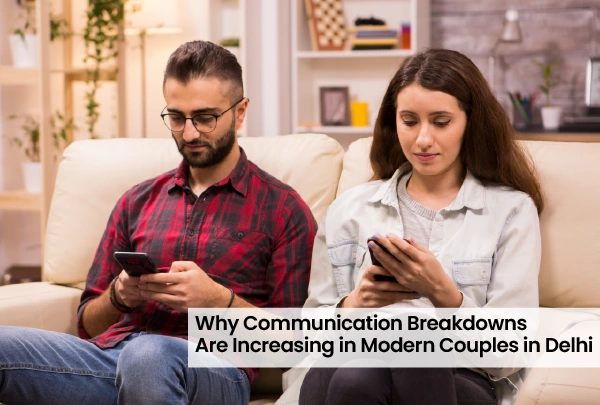
Modern lifestyles encourage constant digital engagement, often replacing meaningful conversations with brief text messages, social media interactions, or passive entertainment. Couples may spend hours in the same room while remaining emotionally disconnected.
A healthy relationship requires continuous emotional investment. Small daily conversations, expressions of appreciation, and shared experiences strengthen emotional bonds. When these interactions gradually disappear, emotional distance increases, making future communication even more challenging.
Reduced emotional closeness also affects intimacy, which extends beyond physical affection to include emotional openness, vulnerability, trust, and mutual understanding.
Changing Expectations Within Partnerships
Modern marriage often involves balancing multiple responsibilities simultaneously. Both partners may pursue demanding careers while managing household responsibilities, childcare, financial planning, and personal aspirations. These competing priorities can reduce opportunities for quality communication.
Additionally, evolving social expectations have encouraged individuals to seek emotional companionship, personal growth, financial security, and equal partnership within marriage. While these expectations are positive, unmet expectations may create disappointment when couples struggle to communicate openly about their needs.
Establishing shared goal-setting practices helps couples align their priorities, discuss future plans, and reduce unnecessary misunderstandings. Couples who regularly review their personal and shared goals often experience stronger emotional connection and improved cooperation.
Emotional Regulation During Disagreements
Conflict itself is not harmful; rather, the manner in which conflict is handled determines relationship satisfaction.
Uncontrolled anger frequently escalates disagreements through criticism, blame, sarcasm, or emotional withdrawal. Repeated exposure to hostile communication may reduce trust and increase emotional insecurity between partners.
Effective emotional control enables individuals to recognize emotional triggers before reacting impulsively. Taking time to calm down, actively listening, and expressing feelings respectfully often leads to more productive discussions.
Some couples also experience low motivation to resolve recurring disagreements after repeated unsuccessful attempts. Emotional exhaustion may cause partners to avoid conversations altogether, allowing unresolved concerns to accumulate over time.
Communication Patterns That Damage Relationships
Communication difficulties often develop through subtle behavioural patterns rather than dramatic arguments.
Common unhelpful communication habits include:
- interrupting while the other person is speaking
- making assumptions without clarification
- avoiding difficult conversations
- dismissing emotional concerns
- excessive criticism
- defensive responses
- silent treatment
- blaming instead of problem-solving
Developing assertiveness allows individuals to communicate honestly while respecting both their own needs and their partner’s feelings. Assertive communication differs from aggression by promoting openness without hostility.
Many couples also struggle with recurring interpersonal problem patterns that remain unresolved because they focus on winning arguments rather than understanding one another’s experiences.
The Influence of Digital Communication
Technology has transformed how couples communicate, but excessive reliance on digital communication may unintentionally reduce emotional closeness.
Text messages often lack emotional tone, facial expressions, and body language, increasing opportunities for misunderstanding. Constant phone usage during meals or shared leisure time may also reduce opportunities for meaningful conversations.
Social media comparisons further contribute to dissatisfaction by creating unrealistic expectations regarding relationships. Constant exposure to carefully curated images of seemingly perfect couples may increase feelings of inadequacy or disappointment.
Practicing mindfulness during conversations encourages individuals to remain fully present, listen without distraction, and respond thoughtfully rather than react impulsively. Mindful communication strengthens empathy and emotional understanding.
Recognising Harmful Relationship Dynamics
Not every communication difficulty indicates serious relationship problems. However, repeated disrespect, manipulation, emotional invalidation, controlling behaviour, or intimidation may indicate a toxic relationship.
Healthy relationships encourage mutual respect, trust, cooperation, and emotional safety. In contrast, unhealthy communication patterns often involve criticism, humiliation, blame, emotional withdrawal, or persistent power struggles.
Repeated couple conflicts that remain unresolved may gradually reduce emotional security and satisfaction if constructive conflict resolution strategies are not developed.
Some individuals also experience underlying communication disorder conditions that affect language processing, expression, or social communication. Professional assessment can help distinguish communication disorders from relationship communication difficulties, allowing appropriate interventions to be implemented.
Practical Ways to Improve Communication
Healthy communication is a skill that can be learned and strengthened with consistent practice.
Couples may benefit from the following strategies:
- Schedule uninterrupted time for meaningful conversations.
- Practice active listening without interrupting.
- Express appreciation regularly.
- Discuss concerns before resentment builds.
- Avoid making assumptions.
- Focus on solving problems rather than assigning blame.
- Use “I” statements instead of accusations.
- Respect differences in communication styles.
- Take short breaks during emotionally intense discussions.
- Revisit unresolved concerns calmly after emotions settle.
Significant long-term gains in relationship satisfaction frequently result from even modest daily communication improvements.
When Professional Guidance Can Help
While many communication challenges can be resolved through mutual effort, persistent emotional distance, repeated misunderstandings, recurring conflicts, or loss of trust may require professional support.
Psychological interventions help couples understand communication patterns, identify emotional triggers, strengthen empathy, improve conflict resolution, and rebuild trust. Additionally, therapy offers a neutral setting where both spouses feel understood and heard.
Individuals searching for the Best Psychologists in Delhi, seeking psychological counselling in Delhi, looking for Couple Counselling near me, or searching for Marriage Counselling near me may benefit from evidence-based therapeutic approaches designed to improve communication and relationship satisfaction.
Conclusion
Communication is the foundation upon which trust, understanding, and emotional connection are built. Although modern lifestyles present unique challenges for couples, healthy communication skills can be strengthened through self-awareness, empathy, emotional regulation, and consistent effort. Addressing communication difficulties early helps prevent misunderstandings from developing into long-term emotional distance while promoting healthier, more satisfying relationships.
Professional psychological support is available through TalktoAngel, an online counselling platform, and Psychowellness Center, which offers comprehensive mental health services. Both Janakpuri, Delhi, and Dwarka Sector 17, Delhi, offer comprehensive psychological therapy. For appointments or further information, individuals may contact 011-47039812 or 7827208707. Seeking professional support early can help strengthen emotional resilience while encouraging healthier patterns of thinking, behaviour, and overall well-being.
Contributions: Dr. R.K. Suri, Clinical Psychologist, and Mr. Harshit, Counselling Psychologist
References
https://www.psychowellnesscenter.com/Blog/signs-of-a-broken-relationship-and-ways-to-repair-it/
https://www.psychowellnesscenter.com/Blog/communication-hacks-for-working-couples/
https://www.psychowellnesscenter.com/Blog/how-counselling-improves-communication-between-couples/
https://www.psychowellnesscenter.com/Blog/ways-to-bring-up-confronting-issues-in-your-relationship/
American Psychiatric Association. (2022). Diagnostic and statistical manual of mental disorders (5th ed., text rev.). American Psychiatric Association Publishing.
Gottman, J. M., & Silver, N. (2015). The seven principles for making marriage work (Revised ed.). Harmony Books.
Johnson, S. M. (2019). Attachment theory in practice: Emotionally focused therapy (EFT) with individuals, couples, and families. Guilford Press.
Kabat-Zinn, J. (2015). Mindfulness. Hachette Books.
Markman, H. J., Stanley, S. M., & Blumberg, S. L. (2010). Fighting for your marriage (3rd ed.). Jossey-Bass.