
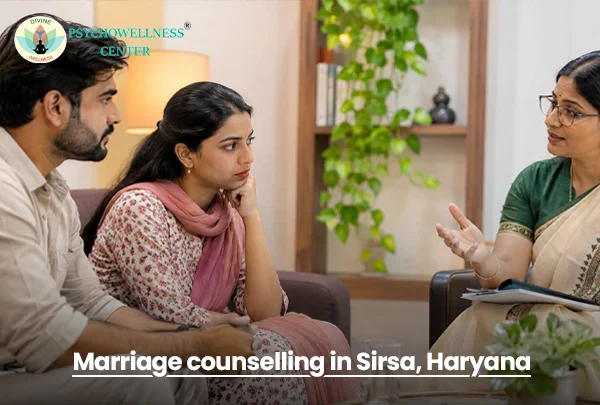
Arguments that never seem to end. Conversations that stop halfway. A house that feels quiet in the wrong way. If your marriage feels like this, you are not alone, and it does not mean the relationship is over. Marriage counselling in Sirsa gives couples a confidential space to talk, understand what keeps going wrong, and learn practical ways to reconnect. This guide explains the common causes of marital conflict, what to do when arguments become frequent, how couples therapy for relationship problems works, and how to find the right mental health support for couples near you.
What Are the Common Reasons Couples Experience Marital Conflicts?
Understanding why couples fight is the first step toward solving it. Most conflicts grow out of everyday pressures that never get discussed openly.
- Different expectations: Partners may hold different ideas about roles, careers, children, or how to spend time and money.
- Unequal workload: When one person carries most household or caregiving duties, resentment builds, often leading to relationship stress and emotional burnout.
- Money stress: Debt, uneven income, or different spending habits can turn small purchases into arguments.
- Family involvement: In-laws, parenting choices, and joint family expectations can blur boundaries.
- Exhaustion: Long workdays leave little energy for each other, and work-related stress affecting marriage is more common than most couples admit.
- Unspoken hurt: Small disappointments pile up when no one names them.
- Broken promises or secrecy: Trust issues in marriage can follow lies, hidden spending, or infidelity.
- Life challenges: Illness, job loss, or fertility concerns can strain even strong marriages.
- Unresolved past experiences: Conflict caused by past trauma can quietly shape how a partner reacts to everyday disagreements.
These issues do not mean you chose the wrong person. They usually point to conversations and skills that are still missing.
How Can Communication Problems Affect a Marriage?
Communication is the thread that holds a marriage together. When it frays, small misunderstandings grow into lasting distance.
Communication problems often look like:
- Interrupting, criticising, or talking over each other
- Avoiding sensitive topics to keep the peace
- Giving the silent treatment
- Assuming you know what your partner thinks
- Bringing up old arguments in new ones
Over time, partners may feel unheard, lonely, or disrespected. Many stop sharing worries, which weakens trust and closeness. Persistent emotional disconnection in a relationship can also feed anxiety and low mood in couples, making every conversation harder.
Can Marriage Counselling Help With Communication Problems?
Yes. Marriage counselling for communication problems gives you a neutral guide who makes sure both partners are heard. The counsellor notices patterns you may miss, such as one partner pursuing while the other withdraws.
Couples learn to speak respectfully, listen fully, and ask questions instead of assuming. This supports building emotional connection between partners, because each person starts to feel understood.
What Should You Do When Arguments Become Frequent in Marriage?
When fights keep recurring, try these steps before they harden into habit:
- Call a timeout. Agree to pause for 20 minutes when voices rise, then come back to the discussion.
- Start with “I.” Say “I felt left out when plans were made without me,” not “You never include me.”
- Listen, then reflect. Repeat what you heard before you answer.
- Stick to one topic. Avoid dragging in old complaints.
- Choose calm moments. Do not raise heavy topics at bedtime or when tired.
- Make small, clear requests. “Can we eat dinner together three nights a week?” is easier to act on than “Spend more time with me.”
- Seek outside help if nothing changes. Repeating the same fight is a sign that new skills are needed.
Developing Effective Response Regulation
Strong emotions can make anyone say things they regret. Developing effective response regulation means noticing early warning signs, such as a racing heart, a raised voice, or clenched hands, and choosing how to respond. This is a core part of anger management for couples and emotional regulation skills.
Helpful habits include:
- Taking slow breaths before answering
- Naming the feeling: “I’m hurt,” not “You’re impossible”
- Stepping away briefly and returning calmer
- Avoiding threats, name-calling, and silent treatment
Managing Feelings Effectively and Worries
Managing feelings effectively also means learning to handle worry before it spills into the relationship. Coping with anxiety in a relationship can include writing down what is bothering you, asking what you would tell a friend, and sharing the worry calmly instead of letting it build into an argument. If worry or sadness feels constant, it may be worth exploring signs of depression in a partner or in yourself with a professional.
How Can Marriage Counselling Help Couples Resolve Conflicts?
Many couples ask, “How can marriage counselling help couples resolve conflicts?” Counselling does not decide who is right. It helps you understand the pattern underneath the fight and replace it with healthier habits.
A large meta-analysis found that couples therapy improved relationship satisfaction, communication, and emotional intimacy compared with no treatment. In sessions, couples typically learn to:
- Recognise triggers that start the cycle
- Treat the issue as the shared problem, not each other as the enemy
- Disagree without insults
- Negotiate solutions both can accept
- Repair after an argument
For example, a couple who argue about who handles the children’s homework may discover that one parent feels invisible while the other feels judged. Once those feelings are said aloud, a fair division of tasks becomes easier to agree on.
Can Marriage Counselling Help Save a Troubled Relationship?
For many couples, it can help, though no counsellor can promise a result. Outcomes depend on both partners’ willingness to take part.
Counselling may help a troubled marriage by:
- Slowing down destructive arguments
- Helping partners understand each other’s needs and fears
- Teaching practical communication and conflict skills
- Supporting honest decisions about the future
Even when a marriage does not continue, counselling can help partners separate with clarity and respect. This is part of psychological support for troubled marriages, where the goal is not only to stay together, but to make healthier decisions.
Can Couples Therapy Improve Emotional Intimacy?
Yes. Research shows couples therapy is linked with gains in emotional intimacy. Deeper emotional intimacy in marriage usually comes from:
- Talking about feelings, not only schedules and chores
- Saying thank you for everyday efforts
- Protecting regular time together without phones
- Listening without rushing to fix
- Admitting fears and needs honestly
Many couples also find it hard to discuss physical intimacy. A counsellor provides a private, non-judgmental space where such topics can be raised without embarrassment. Enhancing sexual health and well-being might involve talking about mismatched desire, stress, health changes, or past hurt, and, in some cases, sexual dysfunction counselling for couples. If a medical cause seems likely, a counsellor may suggest seeing a doctor as well.
Navigating Fertility-Related Challenges
Navigating fertility-related challenges can place heavy emotional strain on a marriage. Couples may feel grief, blame, pressure from family, or loss of closeness. A systematic review of randomised trials found that counselling interventions improved marital and sexual satisfaction among couples facing infertility. Counselling for infertility-related stress gives both partners room to share feelings and support each other through treatment decisions.
Can Marriage Counselling Help Rebuild Trust After Betrayal?
It can help many couples, though it takes time and honesty. Counselling lets the hurt partner express pain while the other learns to take responsibility without deflecting. Reviews of therapies for couples healing from infidelity describe structured approaches that address the hurt, rebuild trust, and support decisions about the future. Many people also benefit from therapy for emotional pain after infidelity, since betrayal can bring anxiety, anger, and low self-worth.
Couples often work on:
- Understanding what happened and what contributed to it
- Setting clear agreements about honesty and openness
- Rebuilding trust through reliable behaviour over time
- Deciding together whether to repair the marriage or part ways
What Happens During the First Marriage Counselling Session?
Walking into the first session can feel nerve-racking. Knowing the format often eases the worry:
- Ground rules: The counsellor explains confidentiality and how sessions work.
- Both perspectives: Each partner describes concerns and hopes.
- Mapping the pattern: You explore when and how conflict or distance tends to arise.
- First skills: You may try a simple listening or communication exercise.
- Plan: You agree on goals and how often to meet.
The counsellor does not take sides. Both partners should leave feeling respected and heard. Some couples also begin with a relationship issues self-assessment test to understand where their concerns lie before the first session.
Is Online Counselling an Option, and How Do You Find Support Near You?
If you search for marriage counselling near me, you may find limited options nearby. Online counselling for couples can fill the gap, and research on videoconferencing couples therapy has shown improvements in relationship outcomes.
To choose well, consider:
- Training and registration: Clinical psychologists in India are registered with the Rehabilitation Council of India.
- Experience with couples: Ask about their work with communication, trust, and conflict.
- Approach: Understand how sessions are structured.
- Confidentiality: Ask how your information is handled.
- Balance: Each partner should have equal space to speak.
- Practicalities: Check fees, appointment times, and online availability.
For online sessions, choose a private space, check your internet connection, and agree on a time both can protect.
10 Experienced Counsellors to Support Your Mental and Relationship Well-Being
Dr. R. K. Suri
Dr. R. K. Suri is a senior Clinical Psychologist with over 40 years of experience, specialising in stress and anxiety management, relationship counselling, behavioural concerns, and cognitive-based therapies. As the founder of Psychowellness Center, he is recognised for his ethical practice and structured therapeutic approach.
Mrs. Kala Sengupta
Mrs. Kala Sengupta is an experienced psychologist supporting children, adolescents, and adults with emotional, behavioural, and developmental concerns. She specialises in psychological assessments and counselling for anxiety, attention difficulties, emotional regulation, and adjustment issues, using a patient and supportive approach.
Ms. Tanu Sangwan
Ms. Tanu Sangwan is a compassionate psychologist specialising in stress, anxiety, and emotional concerns. Using evidence-based approaches such as Cognitive Behavioural Therapy (CBT) and mindfulness, she supports emotional well-being and personal growth.
Mr. Utkarsh Yadav
Mr. Utkarsh Yadav supports professionals and young adults dealing with emotional concerns, career stress, and life uncertainties. His therapeutic approach focuses on building resilience, improving problem-solving skills, and developing practical coping strategies for everyday stress.
Ms. Sakshi Dhankhar
Ms. Sakshi Dhankhar is an experienced counselling psychologist supporting adolescents and adults with anxiety, stress, depression, anger, relationship concerns, and workplace stress. She uses compassionate, evidence-based approaches to encourage emotional well-being and personal growth.
Dr. Lekha Murali
Dr. Lekha Murali has extensive clinical experience in supporting individuals with stress, depression, trauma recovery, and behavioural concerns. She uses personalised, evidence-based therapies and a compassionate, structured approach to help clients manage emotional challenges and improve daily functioning.
Ms. Suchita Bharat Thakkar
Ms. Suchita Bharat Thakkar is a Counselling Psychologist and Hypnotherapist with 8 years of experience, specialising in anxiety, depression, addiction, low self-esteem, phobias, and marital concerns. She uses Cognitive Behavioural Therapy (CBT) and hypnotherapy to support clients.
Ms. Krishna Amrutbhai Panchal
Ms. Krishna Amrutbhai Panchal is an RCI-licensed Clinical Psychologist specialising in anxiety, OCD treatment, mood disorders, addiction, relationship concerns, and career-related difficulties through evidence-based therapies.
Ms. Meenakshi Chaubey
Ms. Meenakshi Chaubey is a trained psychologist experienced in addressing emotional distress, anxiety, family conflict and stress, and career-related challenges. She also conducts psychometric assessments and uses therapeutic approaches such as CBT and REBT.
How Can Couples Nurture Lasting Marital Bonds?
Counselling is not only for crises. Nurturing lasting marital bonds depends on habits that continue after sessions end and support long-term relationship well-being:
- Respect during disagreements
- A weekly check-in: “How are we doing?”
- Joint decisions on major choices
- A fair division of work that you revisit as life changes
- Shared goals for money, family, and health
- Regular, visible gratitude
Conclusion
Trouble in a marriage does not mean it has failed. More often, it means a few important conversations and skills are overdue. With skilled guidance, couples can argue less destructively, understand one another better, and rebuild warmth.
If you have been wondering about marriage counselling in Sirsa, make this the week you act. Talk to your partner, shortlist a qualified professional, and book a first session. Psychowellness Center offers counselling options, including online marriage counselling, subject to availability and suitability, so couples in Sirsa can ask about the format that fits their needs. A small step today can change the direction of your marriage.
References
- https://www.psychowellnesscenter.com/Blog/quick-resolution-for-marital-conflict-tips-from-marriage-counsellor/
- https://www.psychowellnesscenter.com/Blog/intimacy-and-emotional-needs-tips-from-marriage-counsellor/
- https://www.psychowellnesscenter.com/Blog/key-secrets-to-strong-marriage-communication/
- Roddy, M. K., Walsh, L. M., Rothman, K., Hatch, S. G., & Doss, B. D. (2020). Meta-analysis of couple therapy: Effects across outcomes, designs, timeframes, and other moderators. Journal of Consulting and Clinical Psychology, 88(7), 583-596. https://doi.org/10.1037/ccp0000514
- Kysely, A., Bishop, B., Kane, R. T., McDevitt, M., De Palma, M., & Rooney, R. (2021). Couples therapy delivered through videoconferencing: Effects on relationship outcomes, mental health and the therapeutic alliance. Frontiers in Psychology, 12, Article 773030. https://doi.org/10.3389/fpsyg.2021.773030
- Rehabilitation Council of India. (n.d.). Registration in Central Rehabilitation Register (CRR). https://rehabcouncil.nic.in/norms-guidelines/
- Alirezaei, S., Taghipour, A., & Latifnejad Roudsari, R. (2022). The effect of infertility counseling interventions on marital and sexual satisfaction of infertile couples: A systematic review and meta-analysis. International Journal of Reproductive BioMedicine, 20(10), 795-806. https://doi.org/10.18502/ijrm.v20i10.12264
- Chatterjee, S., & Srivastava, N. (2025). Therapies to help recover relationships of the couples healing from infidelity: A review study. International Journal of Indian Psychology. https://doi.org/10.25215/1304.047