
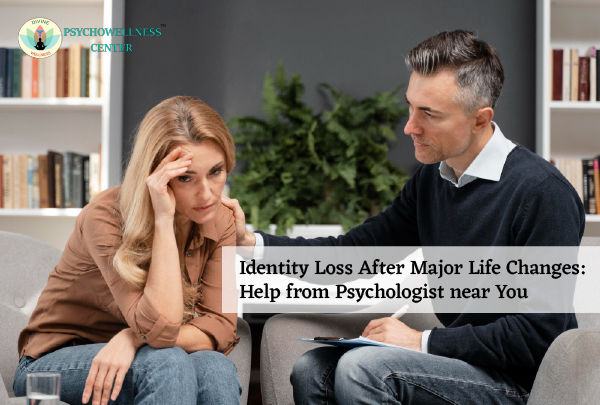
Major life changes often require more than practical adjustment. They can reshape how individuals see themselves, their roles, and their place in the world. Events such as career transitions, relocation, divorce, parenthood, loss, or retirement may disrupt familiar routines and long-held identities. While change is a normal part of life, it can sometimes lead to a sense of identity loss that feels disorienting and difficult to manage.
This experience is not uncommon, yet it is often overlooked. Individuals may focus on adapting to external demands while struggling internally with questions about who they are and what their life now represents. Counselling provides a structured way to process these shifts and rebuild a stable sense of self.
Understanding Identity Loss
Identity is shaped over time through experiences, relationships, values, and roles. When a significant life change occurs, one or more of these elements may be altered or removed. For example, leaving a long-term job may affect professional identity, while the end of a relationship may influence emotional and social identity.
When these changes happen abruptly or without adequate emotional processing, individuals may feel disconnected from themselves. This can lead to confusion, lack of direction, and a sense of instability.
Identity loss is not about losing oneself completely, but about navigating a transition between who one was and who one is becoming.
Common Situations That Trigger Identity Loss
Life transitions that commonly lead to identity disruption include career changes, unemployment, migration, marriage or divorce, becoming a parent, or experiencing bereavement. Even positive changes, such as achieving a long-term goal, can create a temporary sense of emptiness once the goal is reached.
In each of these situations, the individual is required to adapt not only to new circumstances but also to a redefined sense of self. Without adequate support, this adjustment can feel overwhelming.
Emotional and Psychological Impact
Identity loss can manifest in several ways. Individuals may experience low motivation, uncertainty about decisions, or difficulty setting goals. There may be a sense of detachment from previous interests or a lack of clarity about future direction.
Emotionally, this can present as anxiety, sadness, irritability, or a persistent feeling of being “stuck.” Some individuals may attempt to avoid these feelings by staying constantly occupied, while others may withdraw from activities and relationships.
These responses are understandable, but they can prolong the adjustment process if not addressed.
The Role of Counselling in Rebuilding Identity
Counselling offers a structured and supportive space to explore identity changes. Rather than focusing only on the external event, therapy examines how the change has affected thoughts, emotions, and self-perception.
A psychologist helps individuals process the transition, identify what has been lost, and recognise what remains stable. This balanced perspective is essential in reducing emotional overwhelm and building clarity.
Therapy also supports the development of a new identity that integrates past experiences with present realities.
Exploring Values and Personal Meaning
One of the key components of rebuilding identity is reconnecting with personal values. Life changes often disrupt routines, but underlying values such as connection, growth, stability, or creativity may remain consistent.
Counselling helps individuals identify these values and use them as a foundation for decision-making. This creates a sense of continuity, even when external circumstances have changed. By aligning actions with values, individuals can rebuild a sense of purpose and direction.
Addressing Self-Doubt and Uncertainty
Identity loss is often accompanied by self-doubt. Individuals may question their abilities, decisions, or future potential. This uncertainty can make it difficult to take action or embrace new opportunities.
Therapeutic approaches focus on identifying and challenging unhelpful thought patterns. By developing more balanced perspectives, individuals can regain confidence in their ability to adapt and grow.
Building tolerance for uncertainty is also an important part of the process, as not all answers are immediately available during transitions.
Re-establishing Routine and Stability
While identity work involves reflection, practical structure is equally important. Establishing routines, setting small goals, and maintaining daily activities can provide a sense of stability during periods of change.
Counselling often includes strategies to balance reflection with action. This ensures that individuals remain engaged with their environment while processing internal experiences. Gradual progress helps rebuild a sense of control and predictability.
Strengthening Social and Emotional Support
Relationships play a significant role in identity formation. During life transitions, individuals may feel isolated or disconnected from others who do not share similar experiences.
Counselling encourages the development and maintenance of supportive relationships. This may involve reconnecting with existing networks or building new connections that align with current life circumstances. A supportive environment reinforces emotional stability and reduces the sense of isolation.
Moving Toward a Reconstructed Identity
Identity reconstruction is not about replacing one version of the self with another. It is a gradual process of integrating past experiences with new roles and perspectives.
Over time, individuals develop a more flexible and resilient sense of identity. This allows them to adapt to future changes without experiencing the same level of disruption. Counselling supports this process by providing guidance, structure, and emotional clarity.
Conclusion
Identity loss after major life changes is a complex but manageable experience. With the right support, individuals can process transitions, reconnect with their values, and build a renewed sense of self. Counselling provides a structured approach to navigating these changes with clarity and confidence.
Those considering support options such as a psychologist near me, counselling near me, therapist near me, psychologist in delhi, Counseling Doctor Near me, or seeking help from best psychologists and top psychologists in Delhi may benefit from consulting professionals at Psychowellness Center. With centres located in Janakpuri and Dwarka Sec-17, Delhi, services are offered through a structured and confidential approach; appointments can be scheduled at contact number: 011-47039812 or 7827208707.
Additionally, TalktoAngel provides access to qualified counsellors through a trusted online platform, supporting individuals in navigating identity changes with greater stability and long-term emotional resilience.
Contributions: Dr. R.K. Suri, Clinical Psychologist, and Ms. Charavi Shah, Counselling Psychologist
References
- Erikson, E. H. (1968). Identity: Youth and crisis. W. W. Norton & Company.
- Ibarra, H. (1999). Provisional selves: Experimenting with image and identity in professional adaptation. Administrative Science Quarterly, 44(4), 764–791. https://doi.org/10.2307/2667055
- Neimeyer, R. A. (2001). Meaning reconstruction and the experience of loss. American Psychological Association. https://doi.org/10.1037/10397-000
- Schlossberg, N. K. (2011). The challenge of change: The transition model and its applications. Journal of Employment Counseling, 48(4), 159–162. https://doi.org/10.1002/j.2161-1920.2011.tb01102.x
- Thoits, P. A. (2013). Self, identity, stress, and mental health. In C. S. Aneshensel, J. C. Phelan, & A. Bierman (Eds.), Handbook of the sociology of mental health (pp. 357–377). Springer. https://doi.org/10.1007/978-94-007-4276-5_18
- https://www.psychowellnesscenter.com/Blog/emotional-milestones-in-identity-formation/
- https://www.psychowellnesscenter.com/Blog/reshaping-a-blurred-identity-due-to-social-media-overuse/
- https://www.psychowellnesscenter.com/Blog/how-does-trauma-impact-your-identity/
- https://www.psychowellnesscenter.com/Blog/identity-formation-and-self-discovery-during-teen-years/