
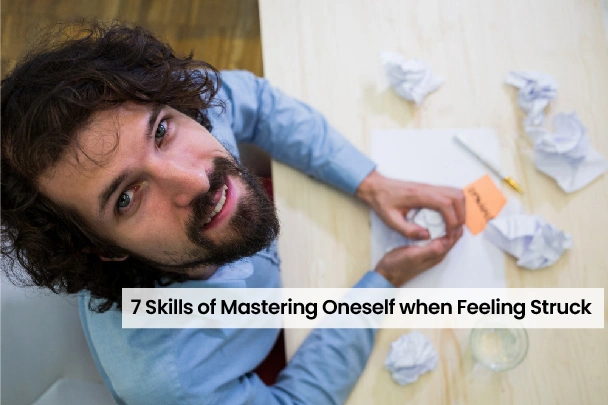
Feeling stuck can arise during career changes, relationship difficulties, academic pressure, setbacks, or uncertainty. It can make decisions and everyday responsibilities feel overwhelming. Rather than indicating failure, such periods can provide an opportunity to pause and reassess priorities. Mastering oneself involves building awareness, making intentional choices, and developing healthier ways to respond to challenges.
Understanding Why You May Feel Stuck
People can become stuck for different reasons. Prolonged handling daily pressures may leave little emotional energy for reflection or problem-solving. When several responsibilities accumulate, even simple decisions can appear difficult. Uncertainty can also contribute to emotional worry management difficulties. A person may repeatedly imagine negative outcomes, question previous decisions, or avoid taking action because the future feels unpredictable.
Other experiences, including disrupted routines, unresolved conflicts, disappointment, exhaustion, or major life changes, can contribute to feeling emotionally blocked. Recognising the underlying experience is often the first step toward changing the pattern.
Seven Skills for Regaining Direction
- Develop Self-Awareness
Self-awareness involves noticing thoughts, emotions, habits, and behavioural patterns without immediately judging them. When feeling stuck, individuals can ask themselves what they are experiencing, what may have triggered it, and what they need at that moment.n Writing thoughts in a journal can help organise confusing experiences. Identifying recurring thoughts such as “I cannot do this” or “Nothing will change” can make unhelpful thinking patterns easier to examine. Self-awareness also involves recognising personal strengths. Remembering previous situations that were handled successfully can provide evidence that difficult periods can be navigated.
- Practise Emotional Response Regulation
Strong emotions can influence decisions and behaviour, particularly when a person feels overwhelmed. Emotional response regulation involves noticing an emotional reaction, creating space before responding, and choosing a behaviour that is consistent with personal values.
For example, when frustration rises during an argument, taking a short pause may be more constructive than immediately sending an angry message. Similarly, acknowledging disappointment can be healthier than pretending that everything is fine. This skill does not require suppressing emotions. Feelings provide information, but they do not always need to determine behaviour.
- Use Anger Regulation Strategies
When people feel powerless, misunderstood, or repeatedly frustrated, anger may become more prominent. Learning anger regulation strategies can help prevent temporary frustration from turning into damaging behaviour.
Useful approaches may include identifying triggers, recognising physical signs of escalation, taking a brief time-out, using slower breathing, and returning to a difficult conversation after emotional intensity has decreased. It is also useful to distinguish between experiencing anger and acting aggressively. Anger itself is a normal emotional response; the goal is to express and manage it constructively.
- Clarify Meaningful Personal Targets
When life feels directionless, defining meaningful personal targets can provide structure. Goals are more effective when they are specific, realistic, and connected to personally important values. Instead of deciding to “fix everything,” an individual might choose one manageable objective, such as updating a résumé, completing an unfinished task, improving a daily routine, or reconnecting with a supportive person. Breaking a larger objective into smaller steps can reduce the psychological burden associated with change. Completing one achievable task can create momentum for the next.
- Focus on Personal Growth and Development
Periods of feeling stuck can encourage comparison with other people. Social comparisons may create the impression that everyone else is progressing while one person is falling behind.
Personal growth and development is better understood as an individual process. It can involve learning new skills, developing healthier habits, improving communication, recognising limitations, and becoming more aware of personal values. Growth does not always look like achievement. Sometimes it involves resting appropriately, asking for assistance, setting a boundary, or accepting that a previous plan no longer fits one’s circumstances.
- Practise Mindful Awareness Techniques
When the mind is occupied with past mistakes or future possibilities, it can become difficult to engage with the present. Practising mindful awareness techniques can help individuals notice current thoughts, sensations, and surroundings without immediately reacting to them. A simple exercise involves sitting comfortably, observing the breath for a few moments, and gently returning attention whenever the mind wanders. Another approach is to focus deliberately on immediate sensory experiences while walking, eating, or completing a routine activity. These practices are not intended to eliminate difficult thoughts. Instead, they can create greater awareness of thoughts and reactions, making it easier to respond intentionally.
- Create Supportive Daily Routines
When feeling stuck, a consistent routine can provide stability through regular sleep, meals, movement, responsibilities, and rest. Instead of changing everything at once, focus on two or three manageable habits. Staying connected with trusted people can also provide perspective and emotional support.
Turning Reflection Into Action
Self-mastery involves turning awareness into intentional action. Ask: What is within my control? What tiny action can I do today? What support do I need? Focusing on small actions can restore confidence and direction. Since progress is not always linear, setbacks should be viewed as opportunities to adjust rather than signs of failure.
When Should You Consider Seeking Professional Support?
If feeling stuck persists and affects daily life, relationships, work, studies, or well-being, professional support may help. Searching for psychological counselling in delhi can provide structured guidance for understanding emotional patterns and building coping strategies. Those seeking a psychologist delhi can consider qualifications, experience, and therapeutic approach. Individuals exploring counselling in delhi can discuss their concerns and expectations before starting sessions.
Conclusion
Mastering oneself during difficult periods is not about having complete control over circumstances. It involves developing awareness, regulating emotional reactions, establishing meaningful priorities, taking manageable actions, and recognising when support is needed. Small, consistent changes can gradually restore a sense of direction and confidence.
The Psychowellness Center offers in-person psychological assistance to people going through emotional and mental difficulties. Professional guidance can help individuals understand recurring patterns, strengthen coping abilities, and work toward realistic personal changes in a confidential and supportive setting.
On the Psychowellness Center YouTube channel, you may watch more instructional films and learn more about mindfulness and self-improvement.
Contributions: Dr. R.K. Suri, Clinical Psychologist, and Mr. Harshit Vaid, Counselling Psychologist
Frequently Asked Questions
- Why do I feel stuck even when I know what I should do?
Knowing what needs to change does not always make action easy. Emotional exhaustion, uncertainty, perfectionism, fear of failure, or competing responsibilities can interfere with decision-making and motivation.
- How can I start moving forward when everything feels overwhelming?
Begin with one manageable action rather than trying to solve every problem simultaneously. Breaking a larger task into smaller steps can make change feel more achievable.
- Can mindfulness help when I feel mentally stuck?
Mindful practices can increase awareness of present-moment experiences and reduce automatic reactions. They can be incorporated into daily routines alongside other healthy coping strategies.
- When should I speak to a psychologist?
Consider professional support when difficulties persist, significantly affect daily functioning, or feel difficult to manage independently. A psychologist can help assess the situation and identify appropriate therapeutic strategies.
References
- American Psychological Association. (2020). Publication manual of the American Psychological Association (7th ed.). American Psychological Association.
- Beck, J. S. (2020). Cognitive behavior therapy: Basics and beyond (3rd ed.). Guilford Press.
- Kabat-Zinn, J. (2013). Full catastrophe living: Using the wisdom of your body and mind to face stress, pain, and illness (Revised ed.). Bantam Books.
- World Health Organization. (2022). World mental health report: Transforming mental health for all. World Health Organization.