
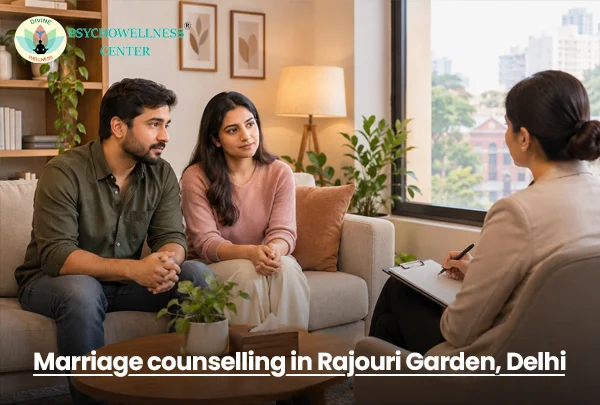
Every relationship goes through difficult phases. You may find yourselves having the same argument every week, or living under one roof while feeling worlds apart. Long hours, family pressure, and money worries can also lead to relationship stress that slowly wears down even a strong bond. If that sounds familiar, it doesn’t mean your marriage has failed. Marriage counselling in Rajouri Garden, Delhi offers couples a calm, structured space to be heard, understand each other, and learn practical ways to reconnect. If you are searching for an affordable marriage counsellor, this guide explains when to seek help, what to expect from sessions, and how counselling can help with trust, intimacy, money, anger, and conflict.
Not sure where your relationship stands? Try this Free Relationship Issues Self-Assessment Test for a quick, private look at what may be going wrong.
What Is Marriage Counselling and How Does It Work?
Marriage counselling is a form of talk therapy in which a trained professional works with both partners together. Its purpose is not to decide who is right or wrong. It helps you recognise the patterns that keep hurting your relationship and replace them with healthier ones.
Marital counselling in Rajouri Garden usually starts with an intake conversation. The counsellor asks about your relationship history, your present concerns, and what each of you hopes will change. After that, sessions focus on communication in marriage, emotional understanding, and practical strategies you can use at home. Many couples ask how many marriage counselling sessions are needed. There is no fixed number, but most couples notice early progress within a few weeks of regular sessions, and the counsellor reviews progress with you along the way.
A typical course of couples counselling may include:
- Identifying recurring arguments and the triggers behind them
- Practising listening and speaking without blame
- Setting shared goals for the marriage
- Reviewing progress and adjusting the approach as needed
What Are the Signs That a Marriage Needs Counselling?
Many couples wait until problems feel unbearable, but spotting early warning signs makes change easier. If you are wondering when to see a marriage counsellor, consider relationship counselling if:
- The same argument keeps coming back without a resolution
- One or both of you avoid difficult conversations
- Secrecy, dishonesty, or broken promises have damaged trust in marriage
- You feel lonely, ignored, or emotionally disconnected
- Affection or intimacy has faded
- Money, in-laws, or parenting decisions regularly create tension
- Anger, sarcasm, or the silent treatment has become routine
- Constant relationship stress is affecting your sleep, mood, or work
- One of you seems low, withdrawn, or hopeless, which may point to depression
If two or three of these feel true, it is worth speaking to a marriage therapist. Asking for help early shows commitment, not weakness.
Can Marriage Counselling Help Rebuild Trust Between Spouses?
Yes. Marriage counselling for trust issues gives both partners a safe place to talk honestly about what happened and how it affected them. Couples often ask how to rebuild trust after cheating or betrayal in marriage, and a counsellor can guide this process step by step. The hurt partner can express their pain, while the other partner receives guidance on taking responsibility without becoming defensive.
Rebuilding trust takes time and consistency. A counsellor may help you:
- Agree on clear expectations around honesty and transparency
- Build small, dependable habits, such as keeping promises and communicating openly
- Plan how to handle triggers and moments of doubt
Progress depends on accountability and on both partners taking part. When trust has been broken, counselling is a safer route than repeated, painful arguments.
How Can Counselling Help With Emotional Distance in Marriage?
Emotional distance in marriage often grows quietly. Busy work schedules, parenting duties, and unspoken resentment can leave couples feeling like housemates. Many people search for what to do when they feel emotionally disconnected from their spouse, and the answer often begins with understanding how the gap formed. Sometimes the distance is also linked to depression in one partner, which can show up as irritability, loss of interest, or withdrawal rather than obvious sadness. Marriage counselling for emotional disconnection helps partners take small steps to close the gap.
Counsellors often encourage couples to:
- Set aside regular time together without phones or distractions
- Share feelings, not just daily logistics
- Express appreciation for small things
- Ask open questions and listen without interrupting
For example, a couple who only discuss household chores might begin a weekly check-in where each person shares one worry and one thing they value about the other. Small habits like this can rebuild emotional intimacy over time. If one partner is struggling with persistent low mood, individual depression counselling alongside couples sessions can make a real difference.
What Can Couples Do About Intimacy Problems?
Intimacy is more than physical closeness. It includes emotional safety, affection, and feeling desired and respected. Counselling for intimacy problems in marriage offers a private, judgment-free space to discuss sensitive topics that are hard to raise at home. Many couples look for ways to fix a sexless marriage or improve intimacy in a marriage without feeling awkward, and a counsellor can guide these conversations gently.
Intimacy issues can come from stress, unresolved conflict, health changes, differing needs, or past hurt. A counsellor helps you understand the cause and talk about it without shame or pressure. Where concerns relate to desire, performance, or comfort, specialised support for Sexual Dysfunction can help couples address the emotional and psychological factors involved. The aim is to build deeper emotional closeness, which often makes it easier to restore physical intimacy.
How Can Marriage Counselling Help Couples Resolve Conflicts?
Conflict is normal. What matters is how you handle it. Conflict resolution counselling for couples teaches practical skills for disagreeing without damaging the relationship. If you keep asking how to stop fighting with your spouse all the time, these tools are a good place to start.
Common tools include:
- Using “I” statements: Say “I feel overlooked when plans change without telling me” instead of “You never care.”
- Taking a pause: If emotions run high, agree to a short break and return to the discussion later.
- Focusing on the problem: Treat the issue as the opponent, not your partner.
- Looking for compromise: Aim for a solution you can both live with.
Managing marital conflicts becomes easier when both partners feel heard. Over time, these habits reduce tension and bring more calm to everyday life.
When Past Trauma Fuels Marital Conflict
Sometimes arguments seem far bigger than the issue at hand. This can happen with conflict caused by past trauma, such as painful childhood experiences, earlier betrayals, or difficult previous relationships. A small disagreement may trigger old fears of being abandoned, criticised, or controlled, and one partner reacts to the past rather than the present. In trauma-informed marriage counselling, a therapist helps both of you recognise these triggers, respond with patience, and build a sense of safety together. This is especially useful for couples asking how past trauma affects marriage and relationships.
How Can Couples Manage Anger in Marriage?
Anger itself is not the problem. The damage comes from harsh words, shouting, or withdrawing in silence. Anger Management for couples starts with recognising your triggers and noticing early signs such as a tight jaw, a raised voice, or racing thoughts. Many partners search for how to control anger in a relationship or how to deal with an angry spouse, and counselling offers practical, step-by-step answers.
Counselling can help you practise:
- Pausing before reacting
- Naming the emotion beneath the anger, such as hurt, fear, or feeling disrespected
- Expressing frustration without personal attacks
- Returning to the conversation once you are calmer
If anger in your marriage involves threats, intimidation, or violence, individual support and safety planning should come first. Joint counselling may not be suitable in such situations.
How Do Couples Manage Differences in Expectations?
Spouses often enter marriage with unspoken assumptions about roles, careers, children, family involvement, and lifestyle. When reality differs from those assumptions, marital problems and relationship stress can build up. This is common in counselling for in-law and family interference issues as well, where expectations from extended family add pressure.
A counsellor can help you:
- Put unspoken expectations into words
- Understand where each expectation comes from, such as upbringing or culture
- Separate what is negotiable from what truly matters to each of you
- Create shared agreements that feel fair
The goal is not to think alike but to respect each other’s views and find workable middle ground.
How Do Couples Manage Financial Disagreements in Marriage?
Money conflicts are rarely only about money. They often reflect different values, fears, or habits around saving and spending. Couples who ask how to handle money problems in marriage can ease financial disagreements in marriage with a few practical steps:
- Share a clear picture of income, savings, debts, and regular expenses
- Set common goals, such as an emergency fund, a home, or children’s education
- Agree on a spending limit above which you decide together
- Hold a short monthly money conversation, away from moments of stress
If these talks keep turning into arguments, couples therapy can help you discuss money calmly and fairly.
What If You Are Considering a Breakup or Separation?
Some couples start counselling unsure whether they want to stay together. Others come to see that the marriage may end. Separation and divorce counselling helps you think clearly rather than react in the heat of the moment. If you are asking should we separate or try counselling first, a counsellor can help you weigh your options without pressure.
Counselling can help you explore whether the marriage can be repaired or, if separation is the choice, how to handle grief, practical decisions, and respectful co-parenting. Either way, the aim is clarity and emotional balance.
How Can You Improve Marital Satisfaction?
If you feel unhappy in your marriage, small, steady changes often matter more than grand gestures. Couples who wonder how to improve a struggling marriage can start with a few habits. Improving marital satisfaction usually involves:
- Making time for each other every week
- Showing gratitude and affection regularly
- Sharing responsibilities fairly
- Respecting each other’s personal space and interests
- Managing relationship stress together rather than blaming each other
- Seeking help when problems feel stuck
Marital dissatisfaction is common and often treatable. Counselling gives you tools to move from frustration toward understanding.
How Do You Choose the Right Marriage Counsellor in Rajouri Garden?
Finding the right fit matters. Keep these points in mind before booking a marriage counsellor near Rajouri Garden or looking for a qualified couples therapist in West Delhi:
- Qualifications: Check their education, training, and professional registration or membership.
- Experience with couples: Ask about their work with trust, communication, intimacy, trauma, anger, and conflict.
- Approach: Understand how sessions are structured.
- Confidentiality: Ask how your personal information is handled.
- Fairness: Both partners should feel comfortable and equally heard.
- Practical details: Confirm fees, timings, and whether online marriage counselling for couples in Delhi is available.
Who Are the 10 Counsellors to Consider for Professional Guidance?
Dr. R. K. Suri
A senior clinical psychologist with more than 40 years of experience and the founder of Psychowellness Center. He focuses on stress and anxiety, relationship counselling, behavioural concerns, and cognitive-based therapy, and is known for his ethical, structured practice.
Mrs. Kala Sengupta
An experienced psychologist who supports children, adolescents, and adults facing emotional, behavioural, and developmental difficulties. She offers psychological assessments and counselling for anxiety, attention problems, emotional regulation, and adjustment issues in a patient, reassuring manner.
Ms. Sakshi Dhankhar
An experienced counselling psychologist who supports adolescents and adults dealing with anxiety, stress, depression, anger, relationship concerns, and work-related challenges. She offers caring, evidence-based guidance for emotional well-being and personal growth.
Ms. Tanu Sangwan
A compassionate psychologist who helps people work through stress, anxiety, and emotional difficulties using evidence-based methods such as Cognitive Behavioural Therapy (CBT) and mindfulness. Her supportive space encourages emotional well-being and personal growth.
Mr. Utkarsh Yadav
Works with professionals and young adults facing emotional struggles, career stress, and uncertainty about life choices. He helps clients build emotional resilience, sharpen problem-solving skills, and find practical ways to manage everyday challenges.
Mr. Harpreet Singh
Helps individuals from varied backgrounds handle stress, emotional triggers, and interpersonal difficulties. He works on strengthening emotional regulation and interpersonal skills, and builds practical life strategies suited to each client’s circumstances and goals.
Dr. Lekha Murali
Has extensive clinical experience treating stress, depression, trauma-related concerns, and behavioural patterns that disrupt daily life. Using evidence-based approaches tailored to each person, she offers a structured, compassionate process that helps clients face complex emotions with clarity and confidence.
Ms. Parvathy Venugopal
A psychotherapist with a clinical psychology background. She offers personalised, caring support to help individuals develop self-awareness, coping skills, and lasting emotional growth.
Dr. Kaukab Imam
Holds a Ph.D. in Psychology and helps people with emotional and psychological challenges. Her client-centred approach is built on empathy, patience, and positivity.
Ms. Chitra Chandrabhan Kadu
A clinical psychologist and researcher with over 10 years of experience. She blends evidence-based therapies with mindfulness, yoga, and holistic wellness practices to improve clients’ quality of life.
Conclusion
Every marriage needs care, and asking for help is a step toward a stronger relationship, not a sign of defeat. Whether you are dealing with distrust, distance, relationship stress, intimacy concerns, anger, or constant arguments, marriage counselling in Rajouri Garden can help you understand each other better and build healthier habits. If you have been thinking about it, take the first step this week: talk to your partner, shortlist a qualified marriage counsellor in Delhi, and book an introductory session.
Contributed by: Dr. R.K. Suri, Clinical Psychologist, and Mr. Harshit Vaid, Counselling Psychologist
Frequently Asked Questions
Can marriage counselling help rebuild trust between spouses?
Yes. Counselling gives partners a structured space to discuss what damaged trust, express hurt, and agree on realistic steps for rebuilding it. Results depend on honesty, consistency, and both partners’ willingness to take part.
How can marriage counselling help couples resolve conflicts?
It teaches communication skills, anger management techniques, and problem-solving methods. Couples learn to discuss disagreements calmly, understand each other’s viewpoint, and reach compromises.
What are the signs that a marriage needs counselling?
Common signs include repeated arguments, emotional distance, broken trust, loss of intimacy, constant criticism, and avoiding important conversations.
How can couples manage differences in expectations?
By discussing expectations openly, understanding their origins, and agreeing on shared priorities and boundaries. A counsellor can guide this process.
How do couples manage financial disagreements in marriage?
Start with transparency about income and spending, set shared goals, and agree on how decisions are made. Counselling can help if money talks regularly turn into fights.
References
- https://www.psychowellnesscenter.com/Blog/quick-resolution-for-marital-conflict-tips-from-marriage-counsellor/
- https://www.psychowellnesscenter.com/Blog/giving-importance-to-resolving-marital-conflict/
- https://www.psychowellnesscenter.com/Blog/pre-marital-counselling-to-address-initial-conflicts-and-disagreement/
- https://www.psychowellnesscenter.com/Blog/marriage-therapy-to-rebuild-trust-after-repeated-conflicts/
- https://www.psychowellnesscenter.com/Blog/how-childhood-trauma-shows-up-during-marital-conflict/
- How Can Mindfulness Help Couples Build a Healthier and More Fulfilling Marriage?
- Roddy, M. K., Walsh, L. M., Rothman, K., Hatch, S. G., & Doss, B. D. (2020). Meta-analysis of couple therapy: Effects across outcomes, designs, timeframes, and other moderators. Journal of Consulting and Clinical Psychology, 88(7), 583-596. https://doi.org/10.1037/ccp0000514
Supports: counselling improving communication, emotional intimacy, and relationship satisfaction. - Beasley, C. C., & Ager, R. (2019). Emotionally focused couples therapy: A meta-analysis of its effectiveness over the past 19 years. Journal of Evidence-Based Social Work. https://doi.org/10.1080/23761407.2018.1563013
Supports: emotional distance, closeness, and sustained improvement in marital satisfaction. - Meta-analysis of the efficacy of emotionally focused couples therapy and behavioral couples therapy (2019). Journal of Marital and Family Therapy, 45(3), 447-463. https://doi.org/10.1111/jmft.12336 (PubMed: https://pubmed.ncbi.nlm.nih.gov/29781200/)
Supports: conflict resolution and reducing couple distress. Add the author names from the PubMed page, as I couldn’t confirm them. - Dew, J., Britt, S., & Huston, S. (2012). Examining the relationship between financial issues and divorce. Family Relations, 61(4), 615-628. https://doi.org/10.1111/j.1741-3729.2012.00715.x
Supports: the financial disagreements section. - Chatterjee, S., & Srivastava, N. (2025). Therapies to help recover relationships of the couples healing from infidelity: A review study. International Journal of Indian Psychology. https://doi.org/10.25215/1304.047
Supports: trust, rebuilding, and the role of couple therapy after betrayal. - Rehabilitation Council of India. (n.d.). Registration in Central Rehabilitation Register (CRR). https://rehabcouncil.nic.in/norms-guidelines/