
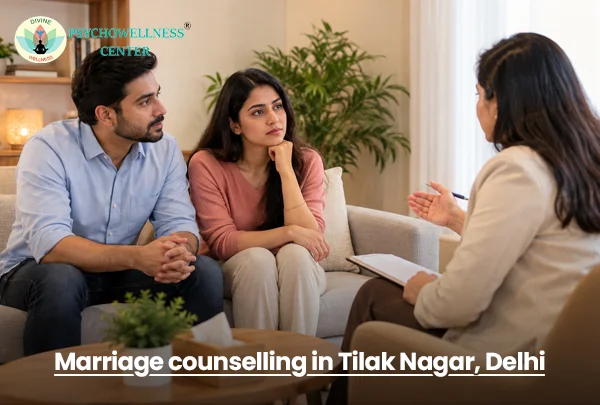
Every marriage goes through phases when love feels buried under deadlines, arguments, and long silences. If you and your spouse keep returning to the same problems, you are not alone, and the situation is not hopeless. Marriage counselling in Tilak Nagar offers couples a calm, confidential space to talk openly and learn healthier ways of relating. This guide covers why couples clash, the warning signs to watch for, and what professional couples therapy can change. It also includes practical steps you can try at home and tips for choosing the right marriage counsellor.
Why Do Married Couples Experience Frequent Disagreements?
Disagreements are a normal part of married life. They become a concern when the same argument keeps coming back with no resolution, a pattern that often points to relationship stress and unresolved emotional conflict.
Most repeated conflicts come from a few common sources:
- Unspoken expectations: One partner assumes the other will “just know” what they need.
- Money worries: Different habits around spending, saving, and financial priorities.
- Family involvement: In-laws, parenting decisions, and household roles.
- Unequal workload: One person feels they carry most of the responsibility, which can lead to emotional exhaustion and burnout in marriage.
- Poor timing: Serious topics come up when both people are tired or upset.
For example, an argument about dishes is rarely about dishes. It is usually about feeling unappreciated or unsupported.
What Are the Common Signs of an Unhealthy Marriage?
A rough patch does not always mean the marriage is failing. Still, some patterns deserve attention.
Watch for these signs of an unhealthy relationship:
- Constant criticism, sarcasm, or put-downs
- One partner shutting down or avoiding conversations (emotional withdrawal in marriage)
- Feeling afraid to share your opinions
- Controlling behaviour around money, phones, friends, or movement
- Broken trust that is never addressed
- Feeling lonely even when your spouse is in the same room
- Persistent sadness, anxiety, or low mood linked to the relationship
Healing unhealthy relationship patterns is often the first goal of counselling. A counsellor helps you notice what keeps repeating and what each of you can do differently.
If you feel unsafe, threatened, or controlled, please put your safety first. In such situations, individual support and safety planning may be more appropriate than joint sessions.
When Should a Couple Consider Marriage Counselling?
Many couples wait years before asking for help. Starting early usually makes change easier.
Consider reaching out when:
- The same fight keeps returning
- Conversations end in blame or silence
- Trust has been damaged, for instance through infidelity or betrayal
- You feel more like housemates than partners
- A major change, such as a new baby, job loss, or relocation, is straining the relationship
- You are dealing with conflict caused by past trauma that keeps surfacing in your marriage
- One or both of you has started thinking about separation
You do not need to be at a breaking point. Reaching out shows that you value your marriage.
How Can Couples Improve Communication in Their Marriage?
Good communication is a skill, and skills can be learned. Counselling gives you a structured setting to practise.
How Does Counselling Improve Communication Between Partners?
A counsellor acts as a neutral guide. Each partner gets time to speak and to be heard without interruption.
With regular sessions, couples usually learn to:
- Talk about feelings instead of attacking character
- Ask questions instead of assuming motives
- Listen without preparing a rebuttal
- Pause when emotions run high and return to the conversation later
This is how couples counselling for communication problems strengthens the bond between partners. Each person begins to understand the other’s point of view, even when they still disagree.
Simple Habits to Try at Home
- Use “I” statements: “I feel ignored when plans change without notice.”
- Set aside 15 minutes a day for a phone-free conversation.
- Repeat back what you heard before you respond.
- Agree on a signal for taking a short break during heated moments.
- Practise couples’ stress-management techniques, such as deep breathing, before difficult talks.
Can Marriage Counselling Help Improve Intimacy Between Partners?
Yes. Intimacy is more than physical closeness. It includes feeling safe, valued, and understood.
When partners stop sharing feelings or spend little time together, closeness fades. Resentment and unresolved arguments can make affection feel awkward or forced. In some cases, concerns such as low desire, performance anxiety, or sexual dysfunction in relationships also play a part, and a trained counsellor can address them sensitively.
How Can Couples Rebuild Intimacy in Their Marriage?
Emotional closeness usually returns through small, steady actions:
- Talk about feelings, not just schedules and chores
- Show appreciation for everyday efforts
- Plan regular time together, even if it is short
- Be honest about physical and emotional needs without blame
- Work on rebuilding trust after betrayal if it has been broken
A counsellor can help you discuss sensitive topics in a private, non-judgmental setting. Many couples find that emotional safety in a relationship comes first, and physical closeness follows.
How Can Couples Maintain a Healthy and Fulfilling Marriage?
A good marriage is not free of problems. It is one where both people keep working at it.
Nurturing a lasting bond involves ongoing habits:
- Mutual respect: Disagree without contempt or name-calling.
- Shared decisions: Discuss major choices together.
- Fair responsibilities: Revisit who does what as life changes.
- Regular check-ins: Hold a weekly conversation about how each of you is doing.
- Shared goals: Plan together for finances, family, health, and the future.
Daily pressures matter too. Work deadlines, parenting, health concerns, and money worries seep into a marriage when left unspoken. Treating work-related stress and its impact on relationships as a shared problem keeps it from turning into blame. If one partner is struggling with anger issues in marriage or symptoms of depression and anxiety, seeking support early protects both the individual and the relationship.
What Does Marriage Therapy for Relationship Problems Involve?
Marriage therapy for relationship problems is a collaborative process. The counsellor does not take sides or decide who is right.
A typical journey looks like this:
- Initial sessions: You share your history, concerns, and goals.
- Identifying patterns: You and your counsellor explore what triggers conflict.
- Skill-building: You learn communication, listening, and problem-solving techniques.
- Practice between sessions: You try new habits at home.
- Review: You look at your progress and adjust the plan.
The number of sessions depends on your concerns and on how consistently both partners take part.
How to Find the Right Marriage Counsellor in Delhi
The counsellor’s fit matters as much as their qualifications. Whether you choose marriage counselling in Delhi or look closer to home, check these points:
- Qualifications: Look for a relevant degree, training, and registration. Clinical psychologists in India are registered with the Rehabilitation Council of India.
- Experience with couples: Ask whether they regularly work with trust issues, conflict, and intimacy.
- Approach: Understand how sessions are structured.
- Confidentiality: Ask how your information is handled.
- Fairness: Both partners should feel equally heard.
- Practical details: Confirm fees, timings, location, and whether online marriage counselling is available.
Trust your instincts after the first session. Feeling comfortable and respected is a good sign of fit.
Which 10 Marriage Counsellors Can Help You Build a Healthier Relationship?
Dr. R. K. Suri is a Clinical Psychologist with over 40 years of experience and the founder of Psychowellness Center. He works with stress, anxiety, relationship counselling, and behavioural concerns, and is known for his ethical, structured approach.
Mrs. Kala Sengupta is a psychologist who supports children, teenagers, and adults with emotional, behavioural, and developmental difficulties. She offers assessments and counselling in a patient, gentle manner.
Ms. Sakshi Dhankhar is a counselling psychologist who works with adolescents and adults on anxiety, stress, depression, anger, relationship, and work-related challenges. Her warm, evidence-based guidance supports emotional well-being.
Ms. Tanu Sangwan is a psychologist who helps people manage stress, anxiety, and emotional difficulties through CBT and mindfulness in a supportive setting.
Mr. Utkarsh Yadav supports professionals and young adults dealing with emotional difficulties, career stress, and doubts about life decisions. He focuses on building resilience and practical problem-solving skills.
Dr. Sakshi Kochhar is a psychologist with over 12 years of experience helping adolescents and young adults with anxiety, stress, depression, anger, and relationship concerns. She specialises in psychotherapy, particularly CBT, to build coping skills and emotional well-being.
Ms. Nicole Fernandes is a Counselling Psychologist who supports clients with workplace stress, relationship concerns, depression, self-esteem, and life transitions. She draws on CBT, ACT, DBT, and mindfulness-based methods to promote emotional well-being and personal growth.
Mrs. Surabhi Patel is a Counselling Psychologist with experience in clinical, educational, and career settings. She uses counselling and psychotherapy to support individuals in their personal growth.
Ms. Meenakshi Chaubey is a trained psychologist experienced in emotional distress, anxiety, family concerns, career counselling, and psychometric assessments. She works with CBT, REBT, and other therapeutic techniques.
Mrs. Nazneen Iqbal is a passionate psychologist who supports adults and middle-aged individuals with stress, anxiety, depression, OCD, PTSD, phobias, anger management, and emotional well-being.
Conclusion
Problems in a marriage do not mean the relationship has failed. More often, they signal that something needs attention. With the right guidance, couples can understand each other better, communicate more calmly, and rebuild closeness.
If you are considering marriage counselling in Tilak Nagar, take the first step this week. Talk to your partner, shortlist a qualified marriage counsellor, and book an introductory session. A small step today can change the direction of your marriage.