
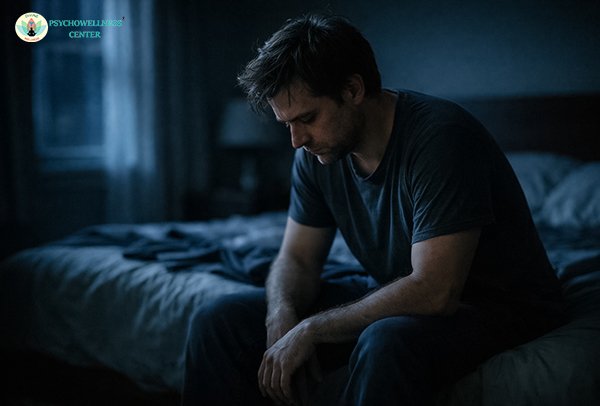
The house is quiet, your phone is face down, and suddenly your thoughts get loud. During the day, you manage. You work, talk, scroll, smile, and move through responsibilities. But at night, when the lights are low and the world slows down, something shifts. Anxiety creeps in. Loneliness feels heavier. Old worries come back stronger.
Why the Mind Gets Louder After Dark
At night, life becomes quieter — and that’s exactly why the mind gets louder. During the day, distractions protect us. Work, people, noise, and routines keep our thoughts busy. At night, those distractions disappear. The brain finally has space to speak — and sometimes, it speaks harshly. Fatigue also plays a role. When you’re tired, emotional control becomes weaker. Small worries turn into big fears. Stress feels heavier. Coping skills feel harder to use. There are also hormonal changes. Melatonin rises to prepare the body for sleep, while cortisol (the stress hormone) can become unbalanced, especially if you’re dealing with burnout, poor sleep, or ongoing anxiety. Darkness and isolation add to the problem. Humans are social beings. When we’re alone at night, the brain can mistake silence for danger and start ruminating.
Nighttime Anxiety: Racing Thoughts and “What If” Loops
At night, anxiety often shows up as racing thoughts. You replay conversations. You worry about the future. “What if” questions loop endlessly. During the day, anxiety may feel manageable. At night, it becomes louder because nothing is competing with it. The mind tries to solve everything at once — even things that don’t need solving right now.
Depression That Feels Heavier at Night
Many people experience depression that feels worse at night. There may be a deep sadness, numbness, or emotional heaviness that fades by morning. Thoughts like “Nothing will ever change” or “I’m stuck” feel very real at night. But these thoughts are often influenced by exhaustion, not truth.
Panic Attacks When Lying Down
For some, panic attacks appear only when lying down. The chest feels tight. Breathing feels strange. There’s fear of dying while falling asleep. When the body slows down, physical sensations become more noticeable. The brain may misinterpret these normal changes as danger, triggering panic.
Intrusive Thoughts and Existential Fear
At night, intrusive thoughts can become intense. Thoughts about death, meaninglessness, or losing control may appear without warning. These thoughts are distressing, but they do not mean you want them or believe them. They are a common anxiety response, especially when the mind is overstimulated and tired.
Why Loneliness Peaks at Night
Loneliness often peaks at night. You may miss people deeply, even if you were fine earlier. Old memories can surface. Emotional wounds feel fresh again. Night removes distractions and reminds us of unmet emotional needs — connection, comfort, and safety.
Why Symptoms Feel Better by Morning
Night symptoms often fade by morning. Daylight helps reset the circadian rhythm. Movement, sunlight, and social interaction ground the mind. Cognitive control improves with rest, making thoughts feel less extreme. Sensory input — sounds, sights, routines — anchors us back into reality. This is why nighttime thoughts feel permanent, but often aren’t. The brain simply works differently after dark.
Nighttime thoughts feel convincing. They sound wise, deep, and urgent. But they are often distorted by fatigue and emotion. Decisions made at night — about relationships, self-worth, or the future — may not reflect how you’ll feel later.
Gentle Coping Strategies for Nighttime Symptoms
Gentle coping strategies can make nighttime symptoms easier to manage. When anxiety rises at night, small actions can help your body feel safe again. Mental reframing also helps — writing worries down for tomorrow, questioning catastrophic thoughts, and using kind self-talk instead of self-criticism. Healthy sleep habits matter too. Keeping a consistent bedtime, reducing doom-scrolling, and getting enough daylight during the day can improve sleep, physical health, and emotional balance at night. Practices like mindfulness and slow breathing exercises can urther calm the nervous system and build resilience. With regular practice, these gentle strategies can help nights feel safer, quieter, and more manageable.
When to Seek Professional Support
A counsellor helps you understand patterns behind nighttime anxiety, depression, stress, and burnout. Therapy can improve emotion control, reduce procrastination caused by overwhelm, and address deeper issues like trauma or somatic symptoms and related disorders, where emotional distress shows up as physical symptoms. Counselling also offers tools for self-improvement — healthier thinking patterns, better sleep routines, and stronger coping skills. Most importantly, it reminds you that you don’t have to handle the night alone. If nighttime symptoms include suicidal thoughts, frequent panic attacks, severe insomnia, or interfere with daily life, seeking professional help is essential.
Conclusion
If nights feel heavier for you, it doesn’t mean you’re weak or failing — it means you’re human in a quiet world. Many people experience anxiety, depression, loneliness, and emotional overwhelm only after dark, even if they seem fine during the day. These nighttime symptoms can feel intense and permanent, but they are often shaped by fatigue, stress, and an overworked mind rather than reality itself. Be gentle with yourself during these hours. What feels unbearable at night often softens with rest, daylight, and support.
Most importantly, remember that you don’t have to face the night alone. Talking to a trained professional can make a real difference, especially when nighttime thoughts become distressing or hard to manage. If you are looking for the Best Psychologists in Delhi, counselling in Delhi, a trusted psychologist in Delhi NCR, or even searching online for a counselling psychologist near me, reaching out can be the first step toward relief. Getting help doesn’t mean it’s “serious enough.” It means you deserve relief.
Psychowellness Center is a leading mental health clinic offering compassionate and evidence-based psychological care for children, adolescents, and adults. With experienced psychologists and therapists, the center provides personalised therapy plans tailored to individual emotional needs. You can book your appointment by contacting us at 011-47039812 or 7827208707 and begin your journey toward healing and emotional balance.
For those who prefer virtual sessions, TalktoAngel is an online counselling platform that offers accessible, confidential mental health support from the comfort of your home. Whether you’re struggling with nighttime anxiety, depression, panic, or overwhelming thoughts, connecting with a counsellor online can help you feel heard, understood, and supported — even during the quietest hours. Getting help isn’t a sign of weakness or “not coping well enough.” It’s a step toward care, clarity, and healing. And remember: morning is coming — and your mind will soften again.
To know more about mental health, explore these resources
https://youtu.be/3lurBTWt9l4?si=Ogun9aeUyaPBVyLz
https://youtu.be/T-AnKQuAtI0?si=Fw4CNs9IhSgJ8il1
Contribution: Dr. R.K. Suri, Clinical Psychologist, and Ms. Riya Rathi, Counselling Psychologist
REFERENCES
- Harvey, A. G. (2008). Insomnia, psychiatric disorders, and the transdiagnostic perspective. Current Directions in Psychological Science, 17(5), 299–303.
- Kahn, M., Sheppes, G., & Sadeh, A. (2013). Sleep and emotions: Bidirectional links and underlying mechanisms. International Journal of Psychophysiology, 89(2), 218–228.
- Williams, J. M. G., Teasdale, J. D., Segal, Z. V., & Kabat-Zinn, J. (2007). The mindful way through depression. Guilford Press.
- Wright, K. P., Lowry, C. A., & LeBourgeois, M. K. (2012). Circadian and wakefulness-sleep modulation of cognition. Progress in Brain Research, 199, 97–121.