
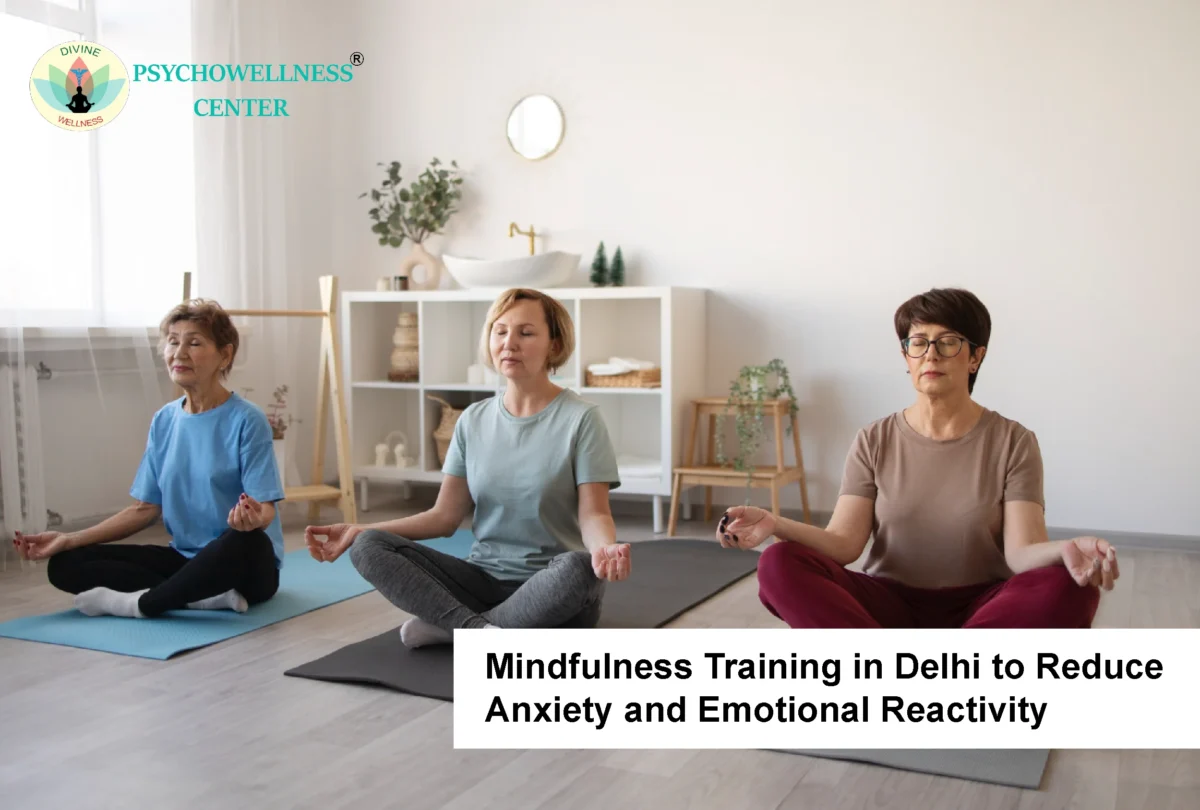
In today’s fast-paced urban lifestyle, stress, anxiety, and emotional overwhelm have become increasingly common. People frequently experience panic attacks, racing thoughts, anger, emotional outbursts, and trouble remaining composed under pressure. As awareness about mental health grows, mindfulness training has emerged as one of the most effective approaches for improving emotional balance and reducing anxiety naturally.
Mindfulness is not simply meditation; it is the practice of becoming fully aware of the present moment without judgment. It teaches individuals how to observe thoughts, emotions, and bodily sensations calmly rather than reacting impulsively. In cities like Delhi, where daily pressures from work, academics, relationships, and traffic contribute to mental fatigue, mindfulness-based interventions are becoming an important tool for emotional well-being.
Research suggests that mindfulness training can significantly reduce anxiety symptoms and improve emotional regulation by changing how the brain responds to stress. Studies on mindfulness-based stress reduction (MBSR) have shown improvements in anxiety, emotional resilience, and stress reactivity.
Understanding Anxiety and Emotional Reactivity
Anxiety is more than occasional worry. It may involve persistent fear, restlessness, overthinking, difficulty concentrating, muscle tension, rapid heartbeat, or sleep disturbances. Emotional reactivity, on the other hand, refers to reacting strongly and impulsively to emotional triggers. Individuals may become easily irritated, defensive, angry, overwhelmed, or emotionally exhausted.
The nervous system is frequently kept in a “fight or flight” state by modern lifestyles. Continuous exposure to stress can make people hyper-alert and emotionally sensitive. Even minor obstacles could start to feel too much to handle. Over time, this can affect relationships, work productivity, and physical health.
Mindfulness training helps individuals create a pause between emotion and reaction. Instead of reacting automatically, they learn to respond thoughtfully and calmly. Research indicates that mindfulness reduces emotional reactivity and enhances recovery from stressful experiences.
How Mindfulness Training Works
Mindfulness training involves structured exercises that improve awareness and emotional regulation. These practices help calm the mind and strengthen attention. Common mindfulness techniques include:
- Breathing awareness
- Body scan meditation
- Mindful walking
- Guided relaxation
- Non-judgmental observation of thoughts
- Grounding exercises
- Mindful eating and daily awareness practices
The goal is not to suppress emotions but to become aware of them without being controlled by them. This process helps individuals develop emotional stability and mental clarity.
Scientific findings show that mindfulness training can influence areas of the brain associated with emotional regulation, including reduced amygdala reactivity and improved prefrontal cortex functioning.
Why Mindfulness Training is Important in Delhi
Delhi’s demanding environment often contributes to chronic stress. Long working hours, academic pressure, competitive lifestyles, social expectations, and digital overload can increase anxiety levels. Many individuals feel emotionally drained and disconnected from themselves.
Mindfulness training offers practical coping skills that can be integrated into daily life. Unlike temporary relaxation methods, mindfulness develops long-term emotional resilience. It helps individuals remain calm even during stressful situations.
People searching for a psychologist near me are increasingly exploring mindfulness-based therapy because it addresses both emotional and physical symptoms of stress. Many mental health professionals now combine mindfulness techniques with evidence-based therapies such as Cognitive Behavioral Therapy (CBT) and Acceptance and Commitment Therapy (ACT).
Benefits of Mindfulness for Anxiety
1. Reduces Overthinking
Anxiety often involves repetitive worrying and negative thought loops. Mindfulness teaches people to observe thoughts without becoming trapped in them. This facilitates clarity and lessens mental clutter.
2. Improves Emotional Control
Individuals become more aware of emotional triggers and learn healthier ways to respond. This helps reduce anger, panic, impulsive reactions, and emotional exhaustion.
3. Enhances Self-Awareness
Mindfulness encourages individuals to understand their emotional patterns, behaviors, and stress responses. Increased self-awareness leads to better decision-making and healthier relationships.
4. Promotes Relaxation
Mindful breathing and meditation activate the body’s relaxation response, lowering stress hormones and calming the nervous system.
5. Improves Focus and Sleep
Regular mindfulness practice improves concentration and reduces mental restlessness, helping individuals sleep better and function more effectively during the day.
Mindfulness and Emotional Reactivity
Emotional reactivity often occurs automatically. Someone may react with anger, fear, frustration, or sadness before fully understanding the situation. The stimulus and the reaction are separated by mindfulness.
Through regular practice, individuals learn to:
- Pause before responding
- Observe emotions calmly
- Reduce impulsive reactions
- Communicate more effectively
- Develop patience and emotional resilience
Many individuals who practice mindfulness regularly report feeling calmer, less reactive, and more emotionally balanced over time. Online discussions and mindfulness communities frequently describe improvements in emotional resilience and stress management after consistent practice.
Who Can Benefit from Mindfulness Training?
Mindfulness training can help people of all age groups, including:
- Students facing academic stress
- Working professionals experiencing burnout
- Individuals with anxiety disorders
- Couples struggling with emotional conflicts
- Parents managing stress
- Individuals coping with grief or trauma
- Elderly individuals dealing with loneliness or emotional distress
Nowadays, a lot of people looking for the best psychologist in India like therapists who utilize mindfulness-based approaches in their treatment plans since these methods are useful, supported by research, and applicable to daily life.
Combining Mindfulness with Professional Counseling
Even while mindfulness is really beneficial, some people may need professional help for more complex emotional issues. In addition to providing individualized mindfulness techniques, a qualified therapist may assist in determining the root causes of anxiety and emotional dysregulation.
Seeking support from the best psychologist in Delhi can help individuals develop healthier coping skills, improve emotional awareness, and manage stress more effectively. Therapy combined with mindfulness often produces better long-term emotional outcomes.
People searching online for a psychologist in Delhi or a counselling psychologist near me are increasingly recognizing the value of mindfulness-based therapy for managing emotional difficulties naturally and sustainably.
Practical Mindfulness Tips for Daily Life
Here are simple mindfulness practices individuals can start today:
Mindful Breathing
Just concentrate on your breathing for five minutes. Observe inhalation and exhalation without trying to change it.
Grounding Exercise
Notice:
- 5 things you can see
- 4 things you can touch
- 3 things you can hear
- 2 things you can smell
- 1 thing you can taste
This lowers worry and refocuses attention on the here and now.
Mindful Pause
Before reacting emotionally, pause for a few seconds and take a deep breath. This small gap can prevent impulsive reactions.
Digital Detox
Limit unnecessary screen time and create moments of silence during the day to reduce mental overstimulation.
Conclusion
Mindfulness training is becoming an essential mental wellness practice for individuals dealing with anxiety and emotional reactivity in Delhi. Mindfulness enhances psychological well-being and quality of life by assisting people in being more conscious, emotionally balanced, and mentally at ease.
Consistent mindfulness practice can reduce stress, improve emotional regulation, enhance self-awareness, and strengthen resilience in everyday situations. When combined with professional counseling, mindfulness can become a powerful pathway toward emotional healing and inner stability.
Professional mental health support is available at centers located in Janakpuri, Delhi and Dwarka Sector 17, Delhi | Contact Numbers: 011-47039812 / 7827208707.
Contributions: Dr. R.K. Suri, Clinical Psychologist, and Ms. Tanu Sangwan, Counselling Psychologist
References
https://www.psychowellnesscenter.com/Blog/creating-mindfulness-in-a-daily-work-routine/
https://www.psychowellnesscenter.com/Blog/how-mindfulness-changes-our-emotional-life/
Arch, J. J., & Craske, M. G. (2006). Mechanisms of mindfulness: Emotion regulation following a focused breathing induction. Behaviour Research and Therapy, 44(12), 1849–1858.
Hoge, E. A., Bui, E., Marques, L., Metcalf, C. A., Morris, L. K., Robinaugh, D. J., Worthington, J. J., Pollack, M. H., & Simon, N. M. (2013). Randomized controlled trial of mindfulness meditation for generalized anxiety disorder: Effects on anxiety and stress reactivity. Journal of Clinical Psychiatry, 74(8), 786–792.
Schreiner, I., & Malcolm, J. P. (2008). The benefits of mindfulness meditation: Changes in emotional states of depression, anxiety, and stress. Behaviour Change, 25(3), 156–168.
Williams, M., Honan, C., & Skromanis, S. (2023). Psychological outcomes and mechanisms of mindfulness-based training for generalized anxiety disorder: A systematic review and meta-analysis. Current Psychology.
Zeidan, F., Johnson, S. K., Diamond, B. J., David, Z., & Goolkasian, P. (2010). Mindfulness meditation improves cognition: Evidence of brief mental training. Consciousness and Cognition, 19(2), 597–605.