
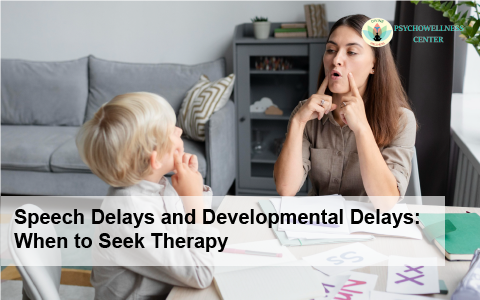
Every child grows and develops at their own pace, but certain milestones help parents and caregivers understand whether a child’s development is on track. When it comes to speech and overall development, delays can sometimes be a natural variation, but in other cases, they may signal the need for professional support from the best child psychologists in Dwarka. Recognising the difference is essential for early intervention and better long-term outcomes.
Understanding Speech and Developmental Delays
Speech delay refers to a child’s difficulty in producing sounds, words, or sentences appropriate for their age. Developmental delay is a broader term that includes delays in areas such as motor skills, cognitive abilities, academic performance, social interaction, and emotional development.
For example, a toddler who is not speaking as many words as expected may have a speech delay. However, if the same child also struggles with eye contact, play skills, or responding to their name, it could indicate a broader developmental concern.
It is important to remember that not all delays are permanent. Many children catch up with the right support, especially when concerns are identified early.
Common Signs of Speech Delays
While each child is unique, some common indicators may suggest a speech delay:
- Limited babbling by 12 months
- Not saying single words by 16–18 months
- Difficulty combining words by age 2
- Speech that is difficult to comprehend beyond the age of three
- Lack of interest in communication or difficulty following simple instructions
Children with speech delays may also show frustration because they are unable to express their needs and emotions effectively.
Signs of Developmental Delays
Developmental delays can affect multiple areas. Some signs to watch for include:
- Delayed walking, sitting, or crawling
- Poor coordination or muscle tone
- Difficulty making eye contact or engaging socially
- Limited interest in play or interaction
- Challenges in understanding or following instructions
- Repetitive behaviours or restricted interests
These signs may vary in intensity, but consistent patterns over time should not be ignored.
Causes of Speech and Developmental Delays
There are many reasons why a child may experience delays. Some common causes include:
- Hearing problems that affect language development
- Neurological conditions
- Autism spectrum-related concerns
- ADHD concerns
- Lack of stimulation or limited interaction
- Premature birth or low birth weight
In many cases, the exact cause may not be immediately clear. This is why professional assessment plays a crucial role in identifying underlying factors.
Why Early Intervention Matters
Early intervention is one of the most important factors in supporting children with delays. The brain is highly adaptable in the early years, making it easier for children to learn new skills with the right guidance.
Seeking therapy early can help:
- Improve communication skills
- Enhance social interaction
- Build self-confidence and independence
- Reduce frustration and behavioural issues
- Support overall developmental progress
Delaying support can make it more difficult for children to catch up later, especially when delays begin to affect academic and social functioning.
When Should You Seek Therapy?
Parents often wonder whether to “wait and watch” or seek professional help from family counseling near me. While mild delays may resolve on their own, certain situations call for timely intervention:
- If your child is not meeting major speech milestones
- If there is a noticeable regression (loss of previously acquired skills)
- If your child shows limited response to sounds or speech
- If communication difficulties lead to frequent frustration, anger issues, tantrums, or behavioural issues
- If developmental concerns are present across multiple areas
Trust your instincts as a parent or caregiver. If something feels concerning, it is always better to seek an evaluation rather than wait.
Types of Therapy That Can Help
Depending on the child’s needs, different therapies may be recommended:
Speech Therapy: Focuses on improving language, articulation, and communication skills.
Occupational Therapy: Helps with fine motor skills, sensory processing, and daily functioning.
Behavioural Therapy: Supports emotional control, social skills, and behaviour management.
Special Education Support: Provides structured learning tailored to the child’s developmental level.
A combination of therapies is often the most effective approach, as development is interconnected across different domains.
Role of Parents and Caregivers
Therapy does not end in the clinic, it continues at home. Parents play a crucial role in reinforcing skills learned during sessions.
Simple strategies include:
- Talking and engaging with your child frequently
- Reading books together
- Encouraging play and interaction
- Being patient and responsive to communication attempts
- Limiting excessive social media use
Consistency and a supportive environment can significantly enhance the effectiveness of ABA therapy.
Overcoming Stigma Around Therapy
Many families hesitate to seek family counseling or parental counseling due to fear, denial, or social stigma. However, seeking therapy is not a sign of failure, it is a proactive step toward your child’s well-being.
Early support can prevent future challenges and empower children to reach their full potential. Open conversations about developmental concerns can also help normalise the process and encourage other families to seek help when needed.
Professional Support and Guidance
If you are concerned about your child’s speech or development, consulting a qualified professional child counselor in India can provide clarity and direction. Comprehensive assessments help identify specific areas of need and guide personalised intervention plans.
At Psychowellness Center, experienced child psychologists and child development specialists offer evidence-based therapies tailored to each child’s unique needs. The center provides a supportive and child-friendly environment where families receive guidance, education, and ongoing support throughout the therapeutic journey. For appointments or inquiries, you can contact 011-47039812 / 7827208707. The center is conveniently located in Dwarka Sector-17 and Janakpuri, Delhi, making it accessible for families across Delhi NCR.
Additionally, TalktoAngel is an online counseling platform that connects individuals with qualified online therapists. It offers flexible, confidential sessions, making mental health support easily accessible from the comfort of your home.
Conclusion
Speech and developmental delays can feel overwhelming, but with the right awareness and timely intervention, children can make significant progress. The key lies in early identification, professional support, and consistent efforts at home.
Every child deserves the opportunity to communicate, connect, and thrive. If you notice any signs of delay, do not hesitate to seek help. Taking that first step today can make a lasting difference in your child’s future.
https://youtube.com/shorts/-CaNfe9czLc?si=aegl5naSeOTKgA3M
https://youtube.com/shorts/ztG6ZYJ-eDg?si=wTTHDH5pALrtXuZJ
https://www.youtube.com/shorts/qwxUUX8GTOw
Contribution: Dr. R.K. Suri, Clinical Psychologist, and Ms. Riya Rathi, Counselling Psychologist
References
American Speech-Language-Hearing Association. (n.d.). Speech and language development milestones. https://www.asha.org
Centers for Disease Control and Prevention. (2023). Developmental milestones. https://www.cdc.gov/ncbddd/actearly/milestones
Guralnick, M. J. (2011). Why early intervention works: A systems perspective. Infants & Young Children, 24(1), 6–28. https://doi.org/10.1097/IYC.0b013e3182002cfe
Kuhl, P. K. (2010). Brain mechanisms in early language acquisition. Neuron, 67(5), 713–727. https://doi.org/10.1016/j.neuron.2010.08.038
https://www.psychowellnesscenter.com/Blog/what-is-speech-delay-signs-every-parent-should-know/
https://www.psychowellnesscenter.com/Blog/guide-to-handle-developmental-delays-in-children/
https://www.psychowellnesscenter.com/Blog/occupational-therapy-in-delhi-for-development-delays/