
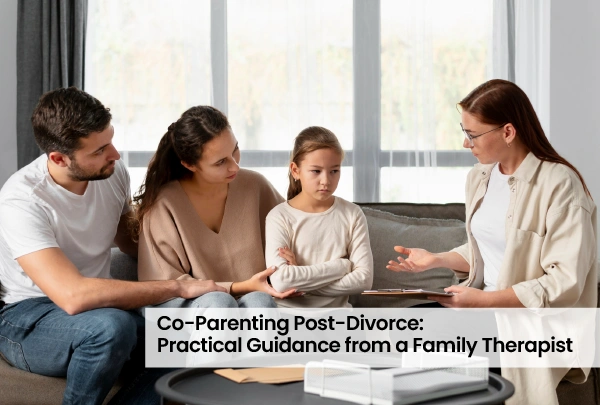
Divorce marks the end of a marital relationship, but it does not end the responsibilities of parenthood. Co-parenting is the process through which separated or divorced parents continue working together to raise their children by making shared decisions about their education, healthcare, emotional well-being, and daily lives. Rather than focusing on past conflicts, effective co-parenting prioritizes the child’s needs through respectful communication, consistency, and cooperation. Some families benefit from marriage counselling before or after separation, while others seek Family Counseling to strengthen co-parenting skills and reduce conflict.
Although the legal process of divorce may end, the emotional adjustment often continues for months or even years. During this time, children may experience stress, anxiety, sadness, or uncertainty as they adapt to new family routines. Research shows that children generally adjust better when parents communicate respectfully, maintain consistent routines, and work together despite living separately.
Why Children Benefit from Healthy Co-Parenting
Children are highly sensitive to the emotional climate surrounding them. Following a divorce, they often seek reassurance that both parents will continue to love and care for them. When parents communicate respectfully and cooperate on parenting decisions, children experience greater stability and security despite changes in family structure.
Effective co-parenting has been associated with numerous positive outcomes, including:
- Better emotional control and resilience.
- Lower levels of anxiety and depression.
- Improved academic performance.
- Stronger self-esteem.
- Healthier peer and family relationships.
- Greater sense of safety and routine.
In contrast, ongoing parental conflict, rather than divorce itself has been linked to emotional distress, behavioural issues, loyalty conflicts, and adjustment problems in children. Family therapists often remind parents that children should never feel responsible for managing adult disagreements or choosing between parents.
Common Challenges Faced by Co-Parents
While the goal of co-parenting is straightforward, achieving it can be emotionally demanding. Many parents enter the co-parenting relationship while still coping with grief, disappointment, resentment, or unresolved conflict from the marriage. These emotions can unintentionally influence parenting decisions and communication.
Some of the most common challenges include:
- Managing lingering anger or resentment.
- Different parenting styles and household rules.
- Poor or inconsistent communication.
- Disagreements about finances, schooling, or healthcare.
- Introducing new romantic partners.
- Balancing work responsibilities with shared parenting schedules.
- Helping children adjust to transitions between homes.
Family therapists encourage parents to recognize that successful co-parenting is a skill that develops over time, not something that happens immediately after separation. It requires patience, flexibility, and a willingness to shift the focus away from past relationship conflicts toward the long-term well-being of the child.
Successfully Navigating Co-Parenting After Divorce
Successfully navigating co-parenting after divorce does not require former spouses to become friends. Instead, it requires them to develop a respectful, child-focused partnership that prioritizes their children’s emotional and developmental needs. Psychological counselling near me or professional couples counselling can sometimes help separated parents improve communication, manage conflict, and create healthier co-parenting strategies. Family therapists often remind parents that while the marital relationship has ended, the parenting relationship continues for life.
The following evidence-based strategies can help separated or divorced parents build a healthier co-parenting relationship.
1. Keep the Child at the Centre of Every Decision
Making decisions based on the child’s best interests rather than one’s feelings for the former partner is one of the most crucial principles of effective co-parenting. It should never be the responsibility of children to settle adult disputes or take sides between parents.
Family therapists encourage parents to ask themselves before making important decisions:
- Will this benefit my child emotionally?
- Am I reacting to my ex-partner, or responding to my child’s needs?
- What impact will this choice have on my child’s sense of security?
Maintaining this child-centred perspective helps reduce conflict and promotes healthier emotional regulation for both parents and children. Studies show that children adapt more successfully when parents consistently prioritize cooperation over conflict
2. Talk Not Like Former Spouses, But Like Parenting Partners
Since unresolved feelings may still persist after a divorce, communication often becomes emotionally charged. Family therapists advise switching to communication that is solution-focused rather than emotional.
Effective communication includes:
- Keeping conversations brief, respectful, and focused on the child.
- Discussing schedules, school, healthcare, and important events without revisiting past relationship issues.
- Using text messages, emails, or co-parenting applications when face-to-face conversations frequently lead to conflict.
- Responding calmly rather than reacting impulsively during disagreements.
Parents should avoid using children as messengers between households, asking them to report on the other parent, or involving them in adult conflicts. Such behaviours can increase anxiety, loyalty conflicts, and emotional distress in children. Instead, direct communication between parents creates greater consistency and reduces unnecessary emotional pressure on children.
- Create Consistent Routines Across Both Homes
Although parenting styles do not have to be identical, children benefit from predictable routines regardless of which parent they are staying with. Consistency provides a sense of safety during a period of significant life transition.
Family therapists recommend discussing shared expectations regarding:
- Bedtimes and daily routines.
- Homework and academic responsibilities.
- Screen time and digital device use.
- Discipline strategies.
- Healthcare and medication.
- Extracurricular activities.
Children who know what to expect in both households generally experience less confusion and greater emotional security. Consistent routines also strengthen resilience, allowing children to adapt more confidently to post-divorce family life.
Common Mistakes to Avoid, When to Seek Professional Help, and Moving Forward
Successful co-parenting is not about achieving perfection; it is about consistently creating an environment where children feel safe, loved, and supported by both parents. Even parents with the best intentions can make mistakes during the emotional transition following a divorce. Acknowledging these difficulties and getting the help you need can improve the co-parenting dynamic and encourage better results for the whole family.
Common Co-Parenting Mistakes to Avoid
Family therapists often observe that children struggle most when they become caught in ongoing parental conflict rather than the divorce itself. Certain behaviours, although unintentional, can increase a child’s stress, anxiety, and emotional insecurity.
Some common co-parenting mistakes include:
- Disparaging the other parent in front of the child.
- Making children feel responsible for choosing sides.
- Competing to become the “preferred” parent through inconsistent rules or excessive leniency.
- Allowing unresolved marital conflicts to influence parenting decisions.
- Making major decisions about education, healthcare, or relocation without consulting the other parent.
These behaviours can create loyalty conflicts, reduce children’s sense of stability, and interfere with healthy emotional development. Family therapists emphasize that children should be free to maintain loving relationships with both parents whenever it is safe and appropriate to do so. Parents who communicate respectfully and maintain consistent expectations across households help children feel more secure during periods of family transition.
When Should Parents Seek Family Therapy?
While many separated parents successfully develop healthy co-parenting relationships over time, some situations require professional support. Seeking help is not a sign of failure but a proactive step toward improving family functioning.
A Family Therapist or Relationship Counsellor may be helpful when:
- Communication repeatedly results in arguments or hostility.
- Children show signs of persistent anxiety, depression, behavioural changes, or academic decline.
- Parents struggle to agree on discipline, education, or healthcare decisions.
- One or both parents continue to experience unresolved anger, grief, or resentment.
- Children are exposed to frequent parental conflict or feel pressured to take sides.
- New family dynamics, such as remarriage or blended families, create additional challenges.
Co-parenting counselling provides a neutral environment where parents can develop healthier communication strategies, resolve disagreements, establish parenting goals, and strengthen their parenting partnership without revisiting past marital conflicts. In high-conflict situations, therapists may also recommend parallel parenting, structured communication techniques, or parenting coordination to reduce conflict while protecting children’s emotional well-being.
Strengthen your family relationships with expert support at Psychowellness Center. Our experienced best psychologists in Delhi, best counselors near me, best relationship counselors near me, and best child psychologists in Dwarka provide compassionate, evidence-based counselling at our Janakpuri and Dwarka Sec-17 centres. To book a consultation or learn more, call 7827208707 or 011-47039812.
Conclusion
Co-parenting after divorce requires patience, flexibility, and a shared commitment to putting children’s needs first. By communicating respectfully, maintaining consistency, and seeking professional guidance when needed, parents can create a nurturing environment where children continue to thrive.
When co-parenting conflicts become difficult to manage, seeking Family Counseling near me or marriage counseling near me can provide practical strategies to improve communication, reduce conflict, and strengthen the co-parenting relationship for the benefit of the entire family
If you are finding it difficult to navigate co-parenting after divorce, seeking professional support can help you build healthier communication, reduce conflict, and prioritise your child’s well-being. TalktoAngel offers convenient online counselling with experienced relationship and family counsellors, while Psychowellness Center provides evidence-based co-parenting, family, and divorce counselling services to help parents create a positive and supportive environment for their children.
Contributions: Dr. R.K. Suri, Clinical Psychologist, and Ms. Ishita , Counselling Psychologist
References
https://www.psychowellnesscenter.com/Blog/tools-to-co-parent-after-divorce/
https://www.psychowellnesscenter.com/our-doctors/
https://www.psychowellnesscenter.com/
Blackstone, J., & Hill, D. L. (2020). Co-parenting Through Separation and Divorce: Putting Your Children First. American Academy of Pediatrics.
Emery, R. E. (2004). The Truth About Children and Divorce: Dealing with the Emotions So You and Your Children Can Thrive. Viking.
American Academy of Pediatrics. (2016). Helping Children and Families Deal With Divorce and Separation. Pediatrics, 138(6)