
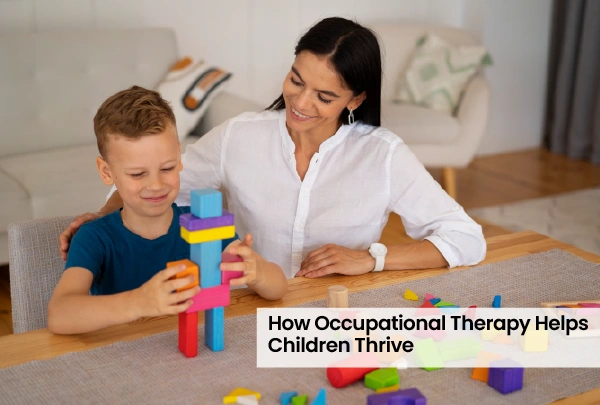
Every child develops at their own pace, acquiring skills that help them participate in everyday activities such as playing, learning, communicating, dressing, eating, and interacting with others. While many children naturally achieve these developmental milestones, some may experience delays or challenges that affect their independence and participation in daily life. Occupational therapy (OT) is a child-centred, evidence-based intervention that helps children develop the physical, cognitive, sensory, emotional, and social skills needed to thrive at home, school, and within the community.
Occupational therapists work collaboratively with children, parents, teachers, child psychologists, and other healthcare professionals to identify strengths, address developmental challenges, and promote functional independence. Rather than focusing solely on a diagnosis, occupational therapy aims to help every child reach their fullest potential by improving participation in meaningful daily activities.
Understanding Developmental Challenges
Children experiencing developmental or behavioural concerns often encounter emotional difficulties alongside functional challenges. Academic demands, social expectations, and daily routines may contribute to stress, particularly when children struggle to perform tasks that seem effortless for their peers.
Some children may also experience anxiety when faced with unfamiliar environments, classroom expectations, or social interactions. If these worries become persistent, they may interfere with learning, participation, and emotional well-being.
Similarly, depression in children and adolescents may present differently from that in adults. Rather than expressing sadness openly, children may become irritable, withdrawn, lose interest in activities, or demonstrate declining academic performance.
Children diagnosed with generalised anxiety disorder (GAD) often experience excessive worry about school, friendships, family situations, or everyday activities. Occupational therapy, combined with psychological intervention when appropriate, helps children develop coping skills and adaptive routines that reduce emotional distress.
Supporting Emotional and Social Development
Development involves much more than physical abilities. Emotional and social skills are equally important for successful participation in daily life.
Children who experience prolonged loneliness may find it difficult to build meaningful peer relationships, affecting both emotional well-being and self-confidence.
Developing healthy goal-setting skills encourages children to work toward achievable objectives while building confidence through gradual success. Occupational therapists frequently divide larger developmental goals into manageable steps that promote motivation and independence.
Some children have difficulty managing anger, particularly when they become frustrated by sensory sensitivities, communication challenges, or academic demands. Therapy helps children identify emotional triggers and develop healthier ways to express their feelings.
Others may demonstrate low motivation due to repeated experiences of failure or frustration. Positive reinforcement, engaging therapeutic activities, and individualised intervention plans help rebuild confidence and encourage active participation.
Teaching assertiveness enables children to communicate their needs respectfully, establish healthy boundaries, and advocate for themselves within school and social environments.
Developing emotional control supports children’s ability to regulate emotional responses during challenging situations, improving both classroom behaviour and family interactions.
Strengthening Everyday Functional Skills
Occupational therapy focuses on improving the practical skills children need to participate successfully in everyday life.
Children may receive support for:
- fine motor development
- handwriting skills
- dressing and self-care
- feeding skills
- sensory processing
- visual-motor coordination
- classroom participation
- attention and organization
- executive functioning
- play skills
Some children also experience phobias related to medical procedures, school attendance, social situations, or specific sensory experiences. Occupational therapists often collaborate with psychologists to gradually reduce avoidance behaviours through supportive interventions.
Children experiencing interpersonal problem patterns may struggle to cooperate with peers, interpret social cues, or resolve disagreements. Structured therapeutic activities teach social problem-solving, empathy, cooperation, and emotional awareness.
The Role of Mindful Activities
Occupational therapy frequently incorporates mindfulness techniques to help children improve attention, emotional regulation, and self-awareness.
Simple breathing exercises, guided relaxation, sensory regulation activities, yoga-based movement, and grounding exercises encourage children to recognise emotional states before becoming overwhelmed.
Mindfulness-based interventions also improve concentration, reduce impulsivity, and enhance classroom engagement. These strategies become valuable lifelong coping skills that support emotional resilience well beyond childhood.
Building Positive Peer Relationships
Healthy peer interactions play a significant role in emotional and social development.
Developing strong friendship skills requires communication, empathy, cooperation, emotional regulation, and problem-solving abilities. Occupational therapy often uses group activities, role-playing, and cooperative games to strengthen these social competencies.
Children who experience bullying, social anxiety, or developmental differences may require additional support to develop confidence in peer interactions. Positive social experiences help improve self-esteem while encouraging greater participation in school and community settings.
Some children also experience a communication disorder that affects expressive language, receptive language, speech clarity, or social communication. Occupational therapists frequently collaborate with speech-language pathologists and psychologists to provide coordinated interventions addressing multiple developmental needs.
Supporting Families Throughout Development
Parents play an essential role in reinforcing therapeutic progress outside clinical settings. Effective parenting involves understanding children’s developmental needs while creating supportive home environments that encourage independence.
Family-centered therapy provides parents with practical strategies for managing daily routines, promoting positive behaviour, supporting emotional regulation, and encouraging skill development at home.
Occupational therapy is particularly beneficial for child & adolescent populations because intervention plans are individualised according to developmental stage, strengths, interests, and family goals.
Children diagnosed with autism often benefit from occupational therapy interventions targeting sensory processing, daily living skills, emotional regulation, play skills, motor coordination, and social participation. The goal of therapy is to increase a child’s functional independence while honoring their specific uniqueness and talents.
Promoting Overall Well-Being
Occupational therapy recognises that emotional, cognitive, sensory, and physical development are closely interconnected.
Supporting physical health through movement-based activities improves balance, coordination, strength, endurance, posture, and motor planning. Increased physical competence often enhances confidence and encourages greater participation in sports, recreation, and everyday activities.
Comprehensive intervention also addresses sleep routines, sensory regulation, nutrition-related skills, classroom participation, and adaptive functioning, promoting holistic child development.
When Professional Support Is Beneficial
Parents should consider seeking professional evaluation if a child demonstrates persistent developmental delays, sensory sensitivities, emotional regulation difficulties, handwriting challenges, poor coordination, self-care delays, attention concerns, or social communication difficulties.
Early intervention significantly improves developmental outcomes by addressing challenges before they interfere with academic achievement, emotional well-being, or social participation.
Families searching for the Best Psychologists in Delhi, seeking psychological counselling in Delhi, or looking for the best Child counselor in Delhi can benefit from multidisciplinary services that integrate occupational therapy with evidence-based psychological care. Collaborative intervention ensures children receive comprehensive support tailored to their developmental, emotional, behavioural, and educational needs.
Conclusion
Occupational therapy empowers children to participate more confidently in everyday activities while strengthening the skills needed for lifelong independence and well-being. By addressing physical, emotional, sensory, cognitive, and social development together, occupational therapy helps children overcome challenges, build resilience, and reach their full potential. Early identification and intervention allow children to develop essential life skills that positively influence academic success, family relationships, social participation, and overall quality of life.
Professional psychological support is available through TalktoAngel, an online counselling platform, and Psychowellness Center, which offers comprehensive mental health services. Comprehensive psychological therapy is available in Janakpuri, Delhi, and Dwarka Sector 17, Delhi. People can call 011-47039812 or 7827208707 for appointments or other information. Seeking professional support early can help strengthen emotional resilience, support healthy child development, improve adaptive functioning, and encourage healthier patterns of thinking, behaviour, and overall well-being.
Contributions: Dr. R.K. Suri, Clinical Psychologist, and Mr. Harshit, Counselling Psychologist
References
https://www.psychowellnesscenter.com/Blog/understanding-childhood-anger-whats-normal-and-whats-not/
https://www.psychowellnesscenter.com/Blog/occupational-therapy-in-delhi-for-developmental-delays/
https://www.psychowellnesscenter.com/best-occupational-therapist-near-me/delhi-ncr/
American Occupational Therapy Association. (2020). Occupational therapy practice framework: Domain and process (4th ed.). American Journal of Occupational Therapy, 74(Suppl. 2), 7412410010. https://doi.org/10.5014/ajot.2020.74S2001
American Psychiatric Association. (2022). Diagnostic and statistical manual of mental disorders (5th ed., text rev.). American Psychiatric Association Publishing.
Case-Smith, J., O’Brien, J. C., & Kuhaneck, H. (2024). Case-Smith’s occupational therapy for children and adolescents (9th ed.). Elsevier.
Schaaf, R. C., & Mailloux, Z. (2015). Clinician’s guide for implementing Ayres Sensory Integration®: Promoting participation for children with autism. American Journal of Occupational Therapy, 69(5), 6905185010p1–6905185010p9.
World Health Organization. (2022). World mental health report: Transforming mental health for all. World Health Organization.