
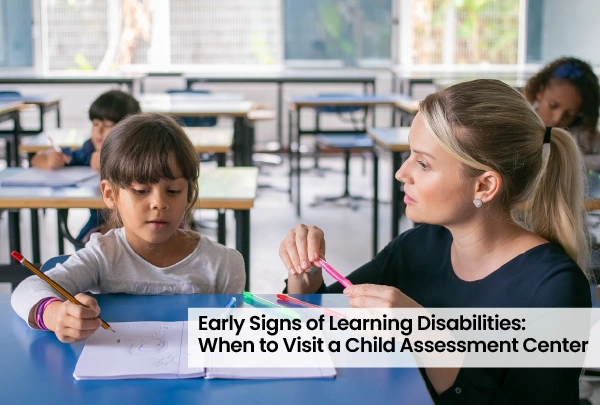
Every child develops at their own pace, but some developmental differences may require closer attention. While occasional struggles with reading, writing, or concentration are common, persistent challenges can indicate underlying learning concerns. Early identification and timely intervention play a vital role in helping children overcome academic, emotional, and social difficulties. Visiting a child assessment center allows professionals to identify the root causes of these challenges and recommend appropriate interventions before they significantly affect a child’s confidence and overall development.
Understanding Learning Disabilities
Learning disabilities are neurologically based conditions that affect how children process, understand, store, or communicate information. They are unrelated to intelligence; in fact, many children with learning disabilities possess average or above-average intellectual abilities. However, they may experience persistent difficulties in academic skills such as reading, writing, spelling, reasoning, or mathematics.
The term specific learning disabilities refers to conditions such as dyslexia, dysgraphia, and dyscalculia. These conditions require comprehensive assessment and individualized support to help children achieve their full potential both academically and emotionally.
Early Signs Parents Should Watch For
Recognizing early warning signs can make a significant difference in a child’s future. Some indicators may appear during preschool years, while others become more noticeable once formal schooling begins.
1. Delays in Developmental Milestones
Children who experience developmental delay may take longer to develop language, motor coordination, memory, or social skills compared to their peers. While not every delay indicates a learning disability, persistent developmental differences should be professionally evaluated.
2. Difficulty with Reading and Writing
A child may struggle to recognize letters, connect sounds with words, confuse similar-looking letters, skip lines while reading, or avoid reading altogether. Difficulties with handwriting, spelling, sentence formation, and written expression may also become evident during early school years.
3. Challenges in Mathematics
Children may have trouble recognizing numbers, understanding mathematical concepts, remembering basic calculations, or solving simple word problems. These struggles often continue despite regular classroom instruction.
4. Poor Memory and Attention
Some children frequently forget instructions, lose personal belongings, struggle to complete assignments, or have difficulty concentrating during classroom activities. Although attention issues may have various causes, persistent difficulties warrant professional assessment.
5. Difficulty Following Instructions
Children with learning difficulties may struggle to understand multi-step instructions or complete tasks independently. Parents and teachers may notice repeated requests for clarification or incomplete work.
6. Emotional and Behavioural Changes
Repeated academic struggles can gradually affect a child’s confidence. Some children may become withdrawn, frustrated, anxious, or exhibit low motivation toward schoolwork because they feel unable to keep up with classmates.
Other Conditions That May Co-Occur
Learning disabilities sometimes occur alongside other developmental or psychological conditions. For example, some children may also experience sensory processing disorder, where the brain has difficulty organizing sensory information from the environment. These children may become overly sensitive to sounds, textures, lights, or movement, affecting both learning and classroom participation.
Attention-Deficit/Hyperactivity Disorder (ADHD), anxiety disorders, speech and language difficulties, and autism spectrum disorder may also co-exist with learning disabilities, making comprehensive evaluation even more important.
Why Early Assessment Matters
Early assessment helps identify a child’s strengths, challenges, and individual learning profile. Rather than focusing only on academic performance, child assessment centers evaluate cognitive abilities, language development, attention, memory, emotional functioning, and behavioural patterns.
Early identification offers several benefits:
- Prevents academic gaps from widening.
- Improves self-confidence and classroom participation.
- Enables individualized educational planning.
- Reduces emotional distress and school-related anxiety.
- Guides parents and teachers in providing appropriate support.
The earlier interventions begin, the better the chances of long-term academic and personal success.
What Happens at a Child Assessment Center?
A comprehensive child assessment typically involves multiple stages to understand the child’s overall functioning.
The process may include:
- Parent interviews and developmental history.
- Behavioural observations.
- Standardized psychological and educational assessments.
- Intelligence and cognitive testing.
- Academic achievement testing.
- Attention, executive functioning, and memory evaluation.
- Feedback sessions with parents along with recommendations for intervention.
Following the assessment, professionals prepare a detailed report outlining strengths, areas of concern, diagnostic findings (if applicable), and intervention strategies.
Treatment and Intervention Options
Learning disabilities cannot be “cured,” but they can be managed effectively with timely intervention and individualized support.
Intervention plans may include:
Educational Support
Special educators design personalized teaching methods that accommodate the child’s learning style while strengthening weaker academic areas.
Psychological Support
A qualified child psychologist helps children manage anxiety, frustration, poor self-esteem, and emotional challenges associated with learning difficulties. Psychological support also empowers families to understand their child’s unique needs more effectively.
Behavioural and Emotional Interventions
Children experiencing emotional distress may benefit from play therapy, which provides a safe environment to express feelings, develop coping skills, and improve emotional regulation through structured play activities.
Parent Guidance
Parents receive practical strategies to reinforce learning at home, establish supportive routines, encourage independence, and promote self-improvement by celebrating progress rather than perfection.
Learning Disabilities Counselling
Professional learning disabilities counseling or ABA therapy supports children and families in understanding diagnoses, developing coping strategies, improving study skills, and fostering resilience throughout the educational journey.
When Should Parents Seek Professional Help?
Parents should consider visiting a child assessment center if their child:
- Continues to struggle academically despite extra help.
- Shows persistent reading, writing, or mathematical difficulties.
- Frequently avoids school-related tasks.
- Displays increasing frustration or behavioural concerns.
- Has difficulty remembering instructions or completing assignments.
- Experiences developmental concerns that affect everyday functioning.
- Receives repeated concerns from teachers regarding learning progress.
Searching for a Child Counseling Near Me service can help families connect with qualified professionals who specialize in developmental and educational assessments.
Choosing the Right Professional
Selecting experienced mental health professionals ensures accurate diagnosis and effective intervention planning. Parents should look for child psychologists, developmental specialists, and multidisciplinary assessment teams experienced in childhood learning disorders.
Families seeking the best Child counseling in Delhi NCR should choose centers that provide comprehensive psychological assessments, individualized intervention plans, parent guidance, and ongoing therapeutic support. Likewise, if parents are searching for a child psychologist in Dwarka, it is important to select professionals with expertise in developmental assessments, learning disorders, behavioural concerns, and emotional well-being.
Conclusion
A child’s IQ and potential are not determined by their learning problems. With early recognition, comprehensive assessment, and evidence-based interventions, children can develop the skills and confidence needed to thrive both academically and personally.
To better understand and address academic difficulties, behavioural concerns, developmental challenges, and other childhood learning issues, children and their families can seek professional support at Psychowellness Center. In-person services are offered in Dwarka and Janakpuri, New Delhi; call 011-47039812 or 7827208707. With the guidance of experienced mental health professionals, families can receive comprehensive child psychological assessments, learning disability evaluations, developmental screenings, individualized intervention plans, behavioural management strategies, parent guidance, play therapy, instruction in social and emotional skills, suggestions for academic support, and evidence-based therapeutic interventions that encourage healthy growth, boost learning results, and improve general emotional well-being.
Recognizing academic and developmental challenges early enables children to receive timely support that strengthens their confidence and learning potential. Understanding the significance of psychological guidance for young minds and seeking help for childhood-related learning challenges can foster better emotional well-being, improved academic progress, and healthier overall development.
Contributions: Dr. R.K. Suri, Clinical Psychologist, and Ms. Mahima, Counselling Psychologist
References
Cortiella, C., & Horowitz, S. H. (2014). The state of learning disabilities: Facts, trends and emerging issues. National Center for Learning Disabilities.
Lerner, J. W., & Johns, B. (2018). Learning disabilities and related disabilities: Strategies for success (13th ed.). Cengage Learning.
National Institute of Child Health and Human Development. (2020). Learning disabilities. https://www.nichd.nih.gov
Shaywitz, S. E. (2020). Overcoming dyslexia (2nd ed.). Vintage Books.
https://www.psychowellnesscenter.com/Blog/things-to-know-about-children-with-learning-disability/
https://www.psychowellnesscenter.com/service-learning-difficulties-ot/