
Families have an impact on how people feel, think, speak, and respond to challenges in life. While many family traditions and behaviours are healthy, some patterns, such as unresolved conflicts, ineffective communication, emotional neglect, or unhealthy coping mechanisms, can persist across generations. These deeply rooted patterns often influence emotional well-being, interpersonal functioning, and overall quality of life. Fortunately, family counselling provides a supportive environment where these recurring cycles can be understood, addressed, and transformed into healthier ways of relating to one another.
Understanding Deeply Rooted Family Patterns
Every family develops its own ways of interacting. These patterns are influenced by cultural values, childhood experiences, parenting styles, communication habits, and life events. Over time, certain behaviours become automatic and are passed from one generation to the next.
For example, families may avoid discussing emotions, respond to disagreements with anger, or struggle to express affection. What initially begins as a coping strategy may gradually evolve into a recurring family problem that affects every member of the household.
These patterns often remain unnoticed because they become part of everyday family life. However, when conflicts become frequent or emotional connections weaken, professional intervention can help identify and change these unhealthy dynamics.
How Family Patterns Affect Mental Health
Family interactions play a significant role in emotional development. When communication is supportive and respectful, family members are more likely to develop self-confidence, emotional security, and healthy coping skills. Conversely, persistent criticism, unresolved conflicts, or emotional distance may contribute to psychological distress.
Children growing up in stressful family environments may develop emotional difficulties that continue into adulthood. Adults may also experience heightened anxiety, difficulty trusting others, or challenges in maintaining healthy interpersonal relationships due to unresolved family experiences.
Because family systems are interconnected, the emotional struggles of one member often influence the entire household.
What Is Family Counseling?
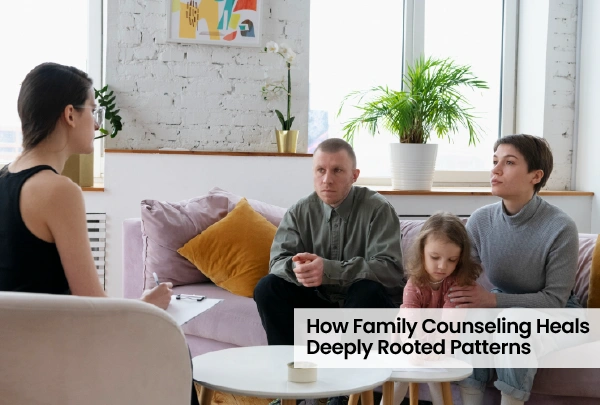
Family counselling is a therapeutic approach that focuses on improving communication, resolving conflicts, strengthening emotional connections, and promoting healthier interactions among family members. Rather than identifying one individual as the source of difficulties, family therapy views the family as an interconnected system where every member influences one another.
Sessions may involve parents, children, siblings, grandparents, or other significant family members depending on the concerns being addressed. The therapist helps family members recognize unhealthy interaction patterns while encouraging collaborative problem-solving and emotional understanding.
How Family Counseling Heals Generational Patterns
1. Identifying Unhealthy Communication Cycles
Many families unknowingly repeat communication habits that contribute to misunderstandings and conflict. Therapy helps members recognize these recurring cycles and replace blame, criticism, or avoidance with respectful dialogue and active listening.
2. Improving Emotional Awareness
Family members often struggle to express emotions openly because of learned behavioural patterns. Counselling encourages individuals to identify, understand, and communicate their feelings in constructive ways, strengthening every relationship within the family.
3. Resolving Unresolved Emotional Wounds
Relationships in the present may still be impacted by past events like sorrow, trauma, conflict, or neglect. Family counselling provides a safe environment where these experiences can be acknowledged and processed, reducing emotional burdens carried across generations.
4. Strengthening Parenting Practices
Healthy parenting plays an essential role in children’s emotional and psychological development. Therapy helps caregivers develop consistent discipline strategies, improve communication, understand children’s emotional needs, and foster supportive home environments that encourage healthy growth.
5. Building Healthy Coping Skills
Families frequently encounter stressful situations involving work, education, financial responsibilities, illness, or life transitions. Counselling equips family members with practical coping strategies that encourage cooperation instead of conflict during challenging times.
Evidence-Based Therapeutic Approaches
Family therapists utilize several scientifically supported interventions depending on each family’s needs.
One widely used approach is Acceptance and Commitment Therapy, which encourages individuals to accept difficult emotions while committing to behaviours that align with their personal values. Rather than avoiding emotional discomfort, family members learn psychological flexibility and healthier ways of responding to challenges.
Another effective intervention is Mindfulness Therapy, which helps individuals become more aware of their thoughts, emotions, and reactions without judgment. Practising mindfulness improves emotional control, reduces impulsive reactions, and enhances compassionate communication during family interactions.
Benefits of Family Counseling
Family counselling offers numerous long-term benefits that extend beyond resolving immediate conflicts.
Some important outcomes include:
- Improved communication among family members.
- Stronger emotional bonds and mutual understanding.
- Better conflict-resolution skills.
- Increased empathy and emotional awareness.
- Healthier boundaries and mutual respect.
- Greater emotional resilience during stressful life events.
- Improved mental well-being for both children and adults.
When families learn healthier ways of interacting, these positive changes often benefit future generations as well.
When Should Families Seek Professional Help?
Families should consider seeking counselling when they experience:
- Frequent arguments or unresolved conflicts.
- Emotional distance among family members.
- Parenting disagreements.
- Behavioural concerns in children or adolescents.
- Difficulty adjusting to divorce, relocation, illness, or loss.
- Ongoing stress affecting daily family functioning.
- Communication breakdowns that persist despite personal efforts.
Early intervention often prevents small concerns from becoming long-term emotional difficulties.
Choosing the Right Family Counselor
Selecting an experienced family therapist is essential for achieving positive therapeutic outcomes. Families should seek licensed mental health professionals trained in systemic family therapy and evidence-based interventions.
Individuals searching online for Family Counseling near me should consider professionals who provide comprehensive family assessments, collaborative treatment planning, and individualized therapeutic approaches tailored to each family’s unique needs.
For those seeking psychological counselling in Delhi, choosing a multidisciplinary mental health center with experienced psychologists and family therapists can provide access to comprehensive services for children, adolescents, adults, couples, and families.
Likewise, individuals searching for a qualified therapist near me should look for professionals with expertise in family systems, communication difficulties, parenting concerns, emotional regulation, and conflict resolution.
Conclusion
Deeply rooted family patterns do not develop overnight, and meaningful change also takes time. However, with professional guidance, families can recognize unhealthy interaction cycles, heal unresolved emotional wounds, and build stronger, healthier relationships based on trust, empathy, and mutual respect.
To better understand and address communication breakdowns, recurring family conflicts, parenting concerns, emotional distress, and other family-related challenges, individuals and families can seek professional support at Psychowellness Center. Services are available in person at Dwarka and Janakpuri, New Delhi (Contact: 011-47039812 / 7827208707) and online through TalktoAngel. With the guidance of experienced mental health professionals, families can receive comprehensive family assessments, evidence-based family therapy, individualized treatment plans, conflict resolution strategies, communication skills training, parenting support, emotional regulation interventions, behavioural management techniques, family relationship counseling, and personalized guidance that strengthens emotional bonds, improves family functioning, promotes resilience, and fosters long-term psychological well-being for every family member.
Family counselling encourages caregivers to adopt effective child-rearing strategies that nurture stronger parent–child connections, creating a supportive and emotionally secure home environment. Addressing challenges within the household early through professional guidance helps families improve communication, resolve conflicts, and build healthier relationships that last across generations.
Contributions: Dr. R.K. Suri, Clinical Psychologist, and Ms. Mahima, Counselling Psychologist
References
Hayes, S. C., Strosahl, K. D., & Wilson, K. G. (2016). Acceptance and commitment therapy: The process and practice of mindful change (2nd ed.). Guilford Press.
Nichols, M. P., & Davis, S. D. (2020). Family therapy: Concepts and methods (12th ed.). Pearson.
Siegel, D. J. (2020). The developing mind: How relationships and the brain interact to shape who we are (3rd ed.). Guilford Press.
https://www.psychowellnesscenter.com/Blog/handling-the-pressure-of-maintaining-family-bonds/
https://www.psychowellnesscenter.com/Blog/techniques-to-be-a-cycle-breaker-of-generational-trauma/
https://www.psychowellnesscenter.com/Blog/building-a-calm-and-connected-family-dynamic/