
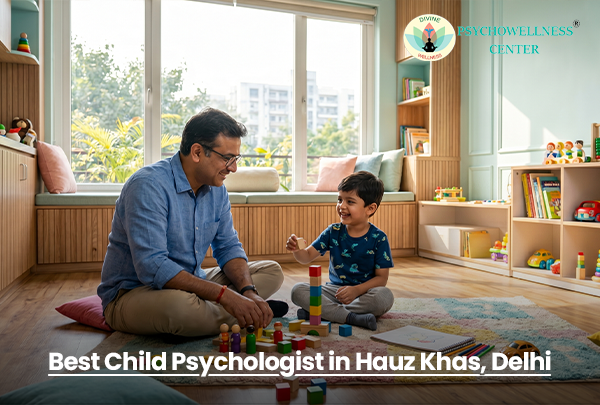
Watching your child struggle — whether it’s a meltdown that won’t stop, a teacher’s note about focus, or a quiet worry that keeps them up at night — is one of the hardest parts of parenting. You want answers, not another waitlist. If you’ve been searching for a child psychologist near me in Hauz Khas or anywhere in South Delhi, this guide walks you through what these specialists actually do, the signs that mean it’s time to book a session, and how to choose someone your child will genuinely trust.
What Does a Child Psychologist Actually Do?
A child psychologist is trained to understand how kids think, feel, and behave at each stage of growth — and to spot when something needs extra support. Unlike adult therapy, sessions with children often use play, drawing, storytelling, and structured games so the child feels safe rather than “examined.”
Common reasons families in Hauz Khas reach out include:
- Difficulty adjusting to school or new environments
- Frequent tantrums or emotional outbursts
- Trouble making or keeping friends
- Sudden changes in sleep, appetite, or mood
- Concerns flagged by a teacher or pediatrician
How Do You Know Your Child Needs Professional Support?
Every child has off days. The real question is whether a pattern is affecting their daily life at home or school. Here are the areas parents most often bring up in consultation.
Is Your Child Behind on Milestones?
Delayed developmental milestones—late speech, slow motor coordination, or difficulty with age-appropriate self-care — are one of the most common early flags. Catching this early matters, because the brain’s plasticity in the first few years makes intervention far more effective than waiting.
Does Your Child Seem Constantly Anxious?
If your child worries excessively about school, separation, or “what if” scenarios, they may need help with emotional worry management. A psychologist can teach breathing techniques, grounding exercises, and age-appropriate ways to name and process fear instead of suppressing it.
Are Meltdowns Becoming a Daily Struggle?
Every child gets angry, but frequent aggression, property damage, or outbursts that escalate quickly point to a need for anger regulation strategies. Therapists use tools like emotion charts, calm-down corners, and role-play to help children recognise triggers before they boil over.
Is Your Child Struggling to Concentrate?
Teachers reporting daydreaming, incomplete homework, or restlessness may be describing attention and focus difficulties. These aren’t always ADHD—sometimes anxiety, sleep issues, or classroom pace are the real cause, which is why a proper assessment matters before labelling a child.
Could It Be Autism?
If your child shows repetitive behaviours, sensory sensitivities, or challenges with social communication, early autism spectrum support can make an enormous difference. Structured therapy, sensory-friendly routines, and skill-building programmes help children build independence at their own pace.
What About Support for Parents?
Therapy isn’t only for the child. Good clinics also offer parenting guidance and support, helping caregivers understand their child’s behaviour, set consistent boundaries, and respond calmly during difficult moments — because a supported parent raises a steadier child.
How Do You Choose the Right Specialist Nearby?
When searching for Child Counseling Near me, look beyond location. Check for:
- Relevant qualifications — an M.Phil or PhD in Clinical or Child Psychology, and RCI registration where applicable.
- Age-appropriate methods — play therapy, art-based tools, or behavioural techniques suited to your child’s age.
- Clear communication — you should get a simple explanation of the concern and the plan, not just clinical jargon.
- Flexibility — in-clinic sessions for younger children, online options for busy families or teenagers who prefer privacy.
If you’re weighing your options among the best Child psychologist in Delhi NCR, ask for an initial consultation before committing to a full programme. It gives both you and your child a feel for whether the fit is right.
Where Can You Find Trusted Support in and around Hauz Khas?
Two established platforms make this search easier for Delhi families:
Psychowellness Center runs in-clinic services across Delhi NCR (Dwarka and Janakpuri centres), bringing together clinical psychologists, counselling psychologists, psychiatrists, and occupational therapists under one roof for children and adults alike. TalkToAngel is an online platform for counselling, offering online counselling with RCI-registered and internationally trained therapists — a practical choice if commuting to Hauz Khas isn’t convenient or your child feels more at ease from home.
10 Counsellors Worth Knowing
- Dr. R.K. Suri:- Founder and Clinical Psychologist with 40+ years’ experience; works with anxiety, developmental concerns, and child and adolescent issues.
- Mrs. Kala Sengupta:- Clinical Psychologist with 35+ years in medical and social psychology, supporting families through emotional and behavioural challenges.
- Dr. Kamal Agarwal:- Child and Occupational Therapist specialising in developmental therapy, sensory processing, and hands-on skill building for young children.
- Dr. Karuna Singh:-Psychotherapist with 25 years’ experience helping families navigate emotional and behavioural concerns through structured therapy.
- Mrs. Molly George:- Psychologist with 35 years’ experience, known for a warm, practical approach to parenting and child-related concerns.
- Ms. Sakshi Dhankhar:- Counselling Psychologist trained in rehabilitation psychology, supporting children and families through structured coping strategies.
- Mr. Utkarsh Yadav:- Counselling Psychologist combining psychology training with an MBA background, focused on practical, goal-oriented guidance for families.
- Ms. Sudipta Das:- Counselling Psychologist with 15 years’ experience and a strong track record supporting emotional wellbeing in children and adults.
- Mrs. Neetu Rathore:- Psychologist with 23 years’ experience and hundreds of client sessions, offering steady, experienced support for behavioural concerns.
- Mrs. Mandeep Kaur:- Rehabilitation Psychologist with 14 years’ experience, focused on developmental delays and long-term skill-building support.
Conclusion
Your child doesn’t need to be in crisis for support to help — early conversations often prevent small struggles from becoming bigger ones. Whether you choose an in-clinic visit through Psychowellness Center or a private session on TalkToAngel, the most important step is simply starting.
Every family’s timeline looks different, and there’s no “wrong” moment to ask for support. Some children need just a handful of sessions to feel steadier; others benefit from a longer, structured relationship with a therapist who understands their pace. What matters most is that your child feels heard, safe, and never rushed through the process. Progress in child therapy is rarely a straight line, so give both your child and yourself room to move forward gradually. If you’re still unsure where to begin, a short introductory call with a counsellor at Psychowellness Center or TalkToAngel is often the easiest first step — it costs you little more than a conversation, and it could be the start of real change for your child.
Frequently Asked Questions
At what age should I first consult a child psychologist?
There’s no fixed age — some parents seek guidance as early as toddlerhood for developmental concerns, while others reach out during the school years for focus, behaviour, or emotional issues. If a concern is affecting your child’s daily functioning or your family’s peace of mind, that’s reason enough to book an initial consultation.
Is online counselling as effective as in-person sessions for children?
For many concerns — mild anxiety, parenting guidance, teen counselling — online sessions work well and are often more convenient. For younger children, hands-on developmental or occupational therapy, or more complex behavioural work, in-clinic sessions are usually recommended.
How do I talk to my child about seeing a psychologist without making them feel “different”?
Keep the framing simple and positive — describe it as a person who helps kids understand and manage big feelings, similar to how a doctor helps with a sore throat. Avoid words like “problem” or “wrong,” and let the psychologist take the lead in building trust during the first session.
Contributions: Dr. R.K. Suri, Clinical Psychologist, and Ms. Mahima, Counselling Psychologist
References
- American Academy of Child and Adolescent Psychiatry. (2013). Children who can’t pay attention/ADHD (Facts for Families No. 6). https://www.aacap.org/AACAP/Families_and_Youth/Facts_for_Families/FFF-Guide/Children-Who-Cant-Pay-Attention-ADHD-006.aspx
- American Psychological Association. (2019). Anxiety in children. https://www.apa.org/topics/anxiety/children
- American Psychological Association. (n.d.). Parenting. https://www.apa.org/topics/parenting
- Centers for Disease Control and Prevention. (2022). CDC’s developmental milestones. U.S. Department of Health and Human Services. https://www.cdc.gov/ncbddd/actearly/milestones/index.html