
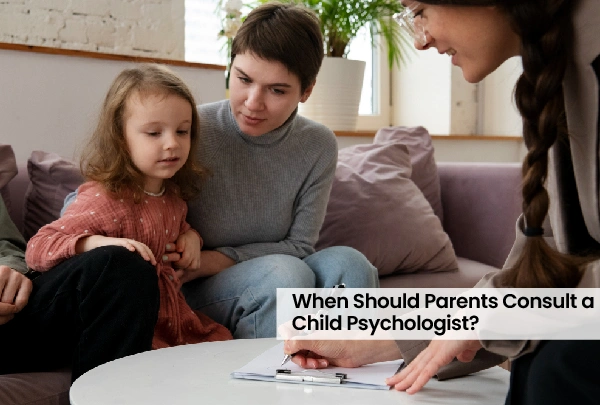
Parenting doesn’t come with an instruction manual, and it’s completely normal to feel uncertain when your child’s behaviour starts changing. Occasional temper tantrums, temporary fears, or brief periods of restlessness are a standard part of growing up. However, when these struggles persist, impact school performance, or strain family relationships, seeking professional advice can provide much-needed clarity.
Instead of relying on internet self-diagnoses or comparisons with other children, a professional evaluation helps you understand what your child is actually trying to communicate through their behavior.
How Do I Know If My Child Needs to See a Child Psychologist?
There is no fixed age at which a child should consult a mental health specialist. What matters most is how intense, frequent, and long-lasting the behavioral issues are. According to clinical guidance, parents should consider professional evaluation when a child exhibits:
- Sudden or extreme shifts in mood and emotional regulation.
- Ongoing academic difficulties or teacher-reported behavioral concerns.
- Frequent emotional meltdowns that seem disproportionate to the trigger.
- Noticeable social withdrawal or loss of interest in favorite activities.
- Persistent disruption in daily routines—such as knowing how to manage child sleep and eating issues when basic habits fall apart.
What Are the Warning Signs of Anxiety and Depression in Children?
Children rarely have the emotional vocabulary to say, “I am feeling anxious.” Instead, emotional distress usually shows up through behavioral changes, physical complaints, or social avoidance.
Persistent stress in children often looks like excessive worrying, extreme separation anxiety, or repeated stomach aches before school. If you are learning how to spot anxiety symptoms in kids early, keep an eye out for patterns of avoidance.
When these emotional shifts begin interfering with school, family life, or their ability to help child build healthy friendships, early professional intervention becomes crucial. Seeking timely child mental health treatment helps young minds develop healthy coping mechanisms. If severe distress or panic symptoms persist, consulting a specialist for targeted anxiety treatment in Delhi ensures your child gets safe, expert clinical care tailored to their needs.
Could My Child Have ADHD or Autism? How to Tell the Difference
It is completely natural for young children to be energetic, curious, or easily distracted. However, when hyperactivity, impulsivity, or trouble focusing consistently affect their daily life across both home and school settings, a structured assessment is the safest next step.
Because neurodevelopmental traits frequently overlap, many parents often search for a reliable Autism and ADHD assessment in Delhi to understand whether their child’s behaviors are linked to attention difficulties, sensory processing, or both. Early evaluation makes a world of difference in helping neurodivergent children thrive academically and socially, ensuring they receive a personalized and compassionate support plan tailored to their unique needs.
When Should Developmental Concerns Be Evaluated?
Developmental milestones provide useful information about how children are progressing in areas such as language, movement, learning, social interaction, and behaviour. If a child is consistently not reaching expected milestones, parents should discuss their concerns with a healthcare professional.
A developmental delay does not automatically mean that a child has a particular diagnosis. It indicates that further assessment may be useful to understand the child’s strengths, needs, and developmental profile.
The CDC recommends developmental monitoring and screening because early identification can help children and families access appropriate support sooner. The American Academy of Pediatrics recommends developmental screening at 9, 18, and 30 months, with specific autism screening at 18 and 24 months.
What If Parents Suspect Autism?
Parents may seek professional guidance when they notice differences in social communication, interaction, play, repetitive behaviours, sensory responses, or developmental progression.
Autism cannot be diagnosed through a single questionnaire or observation. A formal evaluation may involve developmental history, parent interviews, observation of the child, and assessment by appropriately trained professionals. The CDC notes that a developmental evaluation may involve specialists such as a child psychologist, developmental paediatrician, speech-language pathologist, or occupational therapist.
Seeking an assessment does not mean parents have already decided what the diagnosis will be. The purpose is to understand the child more accurately and identify appropriate support.
Can School Difficulties Be a Reason to Seek Help?
Yes. Academic difficulties may sometimes reflect learning needs, emotional challenges, attention difficulties, social problems, or changes in the child’s environment.
Parents should consider professional guidance if a child consistently struggles despite appropriate teaching and support, strongly avoids schoolwork, experiences frequent distress about school, or shows a noticeable decline in academic functioning.
Speaking with teachers can provide useful information about whether the concern occurs only at home, only at school, or across different settings. This distinction can help professionals understand the broader picture.
How Can Parents Recognise the Effects of Family or Environmental Stress?
Children can react strongly to changes in their surroundings. Moving homes, parental separation, family conflict, bereavement, bullying, academic pressure, or other major changes may affect behaviour and emotional functioning.
Ongoing stress may present as irritability, withdrawal, sleep changes, concentration difficulties, increased fears, or regression in previously developed skills. A child may not directly say that they are struggling, so changes in behaviour can sometimes provide an important clue.
Parents do not need to wait for symptoms to become severe before seeking guidance. A consultation can help families understand whether a reaction is developmentally expected or requires additional support.
How Can Parents Find the Right Professional?
When searching for a child psychologist near me, parents should look beyond convenience. Qualifications, experience with children, areas of specialisation, assessment methods, communication style, and the professional’s approach to working with parents should all be considered.
Parents can ask:
- What age groups does the professional work with?
- What concerns do they commonly assess or treat?
- Will parents be involved in the sessions?
- What assessment methods are used?
- Will recommendations be shared with the school when appropriate?
- How will progress be monitored?
For families exploring the best Child counseling in Delhi NCR, it is particularly important to verify the professional’s credentials and choose services suited to the child’s specific developmental and emotional needs.
What Happens During a Child Psychology Consultation?
An initial consultation commonly involves understanding the child’s developmental history, current concerns, family environment, school experience, strengths, and behaviour. Depending on the concern, the professional may use interviews, observation, standardised assessment tools, or information from teachers and caregivers.
A child psychologist may also work directly with parents by teaching strategies for communication, routines, behaviour management, emotional control, and positive reinforcement. The aim is not simply to label a child but to understand what is happening and determine what support may be useful.
Why Is Early Support Important?
Early identification can make it easier to connect children with appropriate interventions and educational or developmental support. It can also help parents understand their child’s behaviour and respond more effectively.
Parents searching for the best Child psychologist in India should therefore focus on professional expertise, appropriate assessment, evidence-informed practice, and a child-centred approach rather than relying only on rankings or online reviews.
Most importantly, parents should not feel guilty about seeking help. Consulting a professional is not an indication of poor parenting; it is a proactive way to understand a child’s needs and support healthy development.
Conclusion
Parents should consider consulting a child mental health professional when emotional, behavioural, developmental, or academic concerns persist, become more intense, or interfere with everyday functioning. Early assessment can provide clarity, reduce uncertainty, and help families access suitable support.
Parents concerned about their child’s emotional, behavioural, developmental, academic, or social difficulties can seek professional support at Psychowellness Center, with services available at Dwarka and Janakpuri, New Delhi (Contact: 011-47039812 / 7827208707). Experienced professionals can provide personalised child psychological assessment, counselling, and practical guidance for concerns related to behaviour, attention, emotional regulation, learning, and developmental needs. TalktoAngel is an online counseling platform that also provides convenient access to professional mental health support for children and families.
Parents should not wait for a child’s difficulties to become severe before considering professional support. Early guidance can help children understand emotions, manage challenges, and build healthier coping skills. Seeking support for a child’s emotional and developmental wellbeing can be especially valuable when concerns begin affecting school, relationships, behaviour, or daily functioning.
FAQ’s
1. When should parents consult a child psychologist?
Parents may consider consulting a professional when emotional, behavioural, developmental, academic, or social difficulties persist over time, become more intense, or interfere with the child’s daily functioning, school performance, or relationships.
2. How can parents find the right child psychologist for their child?
Parents should consider the professional’s qualifications, experience with children, areas of expertise, assessment methods, therapeutic approach, and ability to involve caregivers appropriately. It is also important to choose someone who makes the child feel comfortable and supported.
3. Is professional help necessary if a child’s difficulties are affecting school performance?
If academic difficulties persist despite appropriate support, or are accompanied by emotional distress, attention problems, school avoidance, or changes in behaviour, professional guidance can be helpful. An assessment can identify underlying factors and guide appropriate support.
Contributed by: Dr. R.K. Suri, Clinical Psychologist, and Ms. Mahima Mathur, Counselling Psychologist
References
American Psychological Association. (2010, September 1). Talking with your child’s pediatrician about behavioral problems and medication. https://www.apa.org/topics/children/medication-children
Centers for Disease Control and Prevention. (2025, April 15). Screening for autism spectrum disorder. https://www.cdc.gov/autism/diagnosis/index.html
https://www.psychowellnesscenter.com/Blog/signs-your-child-needs-child-counseling-near-me/
https://www.psychowellnesscenter.com/Blog/signs-your-child-needs-professional-child-counselling/