
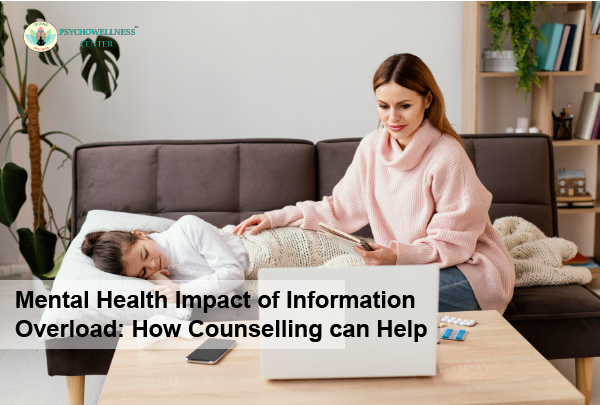
In today’s hyperconnected world, information is everywhere. From social media notifications and constant news updates to emails, blogs, and videos, we are exposed to an overwhelming amount of content every single day. While access to information has its advantages, excessive exposure can lead to what is commonly known as information overload. This phenomenon is increasingly affecting mental health, leading to stress, anxiety, and reduced emotional well-being. Understanding its impact and seeking timely support through counselling can make a significant difference.
What is Information Overload?
When a system receives more input than it can handle, information overload happens. In simple terms, it happens when our brain struggles to process the vast amount of information we consume daily. With smartphones, laptops, and constant internet access, people rarely get a mental break. The pressure to stay updated, informed, and socially connected can quickly become overwhelming.
Mental Health Effects of Information Overload
The human brain is not designed to process endless streams of information without rest. When overloaded, it can lead to several mental health concerns:
- Increased Anxiety and Stress
Constant exposure to news, especially negative or distressing content, can heighten anxiety levels. People may begin to feel a lack of control over their environment, leading to chronic stress.
- Decision Fatigue
When faced with too many choices or too much information, individuals may find it difficult to make decisions. This can result in procrastination, confusion, and frustration.
- Reduced Concentration and Productivity
Frequent distractions, such as notifications and multitasking, can impair focus. Over time, this reduces productivity and creates a sense of inefficiency and dissatisfaction.
- Sleep Disturbances
Excessive screen time, especially before bedtime, disrupts sleep patterns. Poor sleep further affects emotional control and mental clarity.
- Emotional Burnout
Consuming large amounts of information, particularly emotionally charged content, can lead to burnout. Individuals may feel mentally exhausted, detached, or even numb.
Why It’s Hard to Disconnect
Many individuals find it difficult to limit their information intake due to fear of missing out (FOMO), workplace demands, or social expectations. The habit of constant scrolling and checking updates becomes automatic, reinforcing a cycle of dependency. Over time, this pattern can negatively shape thought processes and emotional responses.
How Counselling Can Help
Counselling provides a structured and supportive environment to address the mental health challenges caused by information overload. Professional guidance can help individuals regain control over their thoughts, behaviors, and emotional well-being.
- Identifying Triggers and Patterns
A counsellor helps individuals recognize what type of information or situations trigger stress or anxiety. This awareness is the first step toward change.
- Developing Healthy Boundaries
Counselling encourages setting boundaries with technology and media consumption. This may include limiting screen time, scheduling digital detox periods, or reducing exposure to negative content.
- Cognitive Restructuring
Through techniques such as Cognitive Behavioral Therapy (CBT), individuals learn to challenge negative thought patterns caused by excessive information intake. This helps reduce anxiety and improve mental clarity.
- Stress Management Techniques
Counsellors often introduce relaxation strategies such as mindfulness, meditation, and breathing exercises. These techniques help calm the mind and improve emotional balance.
- Improving Focus and Productivity
By learning time management and attention-control strategies, individuals can enhance concentration and reduce the effects of constant distractions.
- Emotional Support and Validation
Sometimes, simply having a safe space to express feelings can be incredibly healing. Counselling provides emotional support without judgment, helping individuals feel understood and supported.
Role of Professional Support
Seeking professional help is not a sign of weakness; it is a proactive step toward better mental health. Institutions like Psychowellness Center offer specialized counselling services to address issues like anxiety, stress, burnout, and digital overload.
The center provides expert guidance through trained best psychologists in India, best counselors in Dwarka, and best counselors near me who understand the complexities of modern-day mental health challenges. With accessible locations in Janakpuri and Dwarka Sector-17, individuals can easily seek help in a comfortable and professional setting.
For those looking to take the first step toward managing information overload and improving mental well-being, you can reach out at 011-47039812 / 7827208707 to book a consultation.
Practical Tips to Manage Information Overload
While counselling offers structured support, individuals can also adopt simple strategies in daily life:
- Set Time Limits: Allocate specific times for checking emails, social media, and news.
- Prioritize Information: Focus only on relevant and meaningful content.
- Take Digital Breaks: Engage in offline activities like reading, walking, or hobbies.
- Practice Mindfulness: Stay present and avoid multitasking excessively.
- Organize Your Day: Use planners or to-do lists to reduce mental clutter.
- Turn off non-Less Limit Notifications: Essential alerts to minimize distractions.
Building a Healthier Relationship with Information
The goal is not to completely avoid information but to develop a balanced relationship with it. Being mindful of what you consume and how it affects your mental state is crucial. With the right strategies and professional support from the psychological counseling in Delhi it is possible to stay informed without feeling overwhelmed.
Conclusion
Information overload is a growing concern in the digital age, significantly impacting mental health. From anxiety and stress to burnout and poor concentration, its effects can be far-reaching. However, with the help of counselling, individuals can learn to manage their information intake, develop healthier habits, and restore emotional balance.
Seeking support from professionals at centers like Psychowellness Center can provide the guidance needed to navigate these challenges effectively. By combining counselling with practical lifestyle changes, individuals can reclaim control over their minds and lead a more focused, peaceful, and fulfilling life.
Contributions: Dr. R.K. Suri, Clinical Psychologist, and Ms. Sakshi Dhankhar, Counselling Psychologist
References
American Psychological Association. (2020). Publication manual of the American Psychological Association (7th ed.). American Psychological Association.
https://www.psychowellnesscenter.com/Blog/expert-tip-to-gain-mental-clarity/
https://www.psychowellnesscenter.com/Blog/environment-and-its-affect-on-our-mental-health/
https://www.psychowellnesscenter.com/Blog/role-of-community-mental-health-worker-in-online-world/
https://www.psychowellnesscenter.com/Blog/rise-of-digital-burnout-and-its-consequences/
https://www.psychowellnesscenter.com/Blog/why-do-you-feel-restless-and-unable-to-concentrate/
Bawden, D., & Robinson, L. (2009). The dark side of information: Overload, anxiety and other paradoxes and pathologies. Journal of Information Science, 35(2), 180–191. https://doi.org/10.1177/0165551508095781
Eppler, M. J., & Mengis, J. (2004). The concept of information overload: A review of literature from organization science, accounting, marketing, MIS, and related disciplines. The Information Society, 20(5), 325–344. https://doi.org/10.1080/01972240490507974