
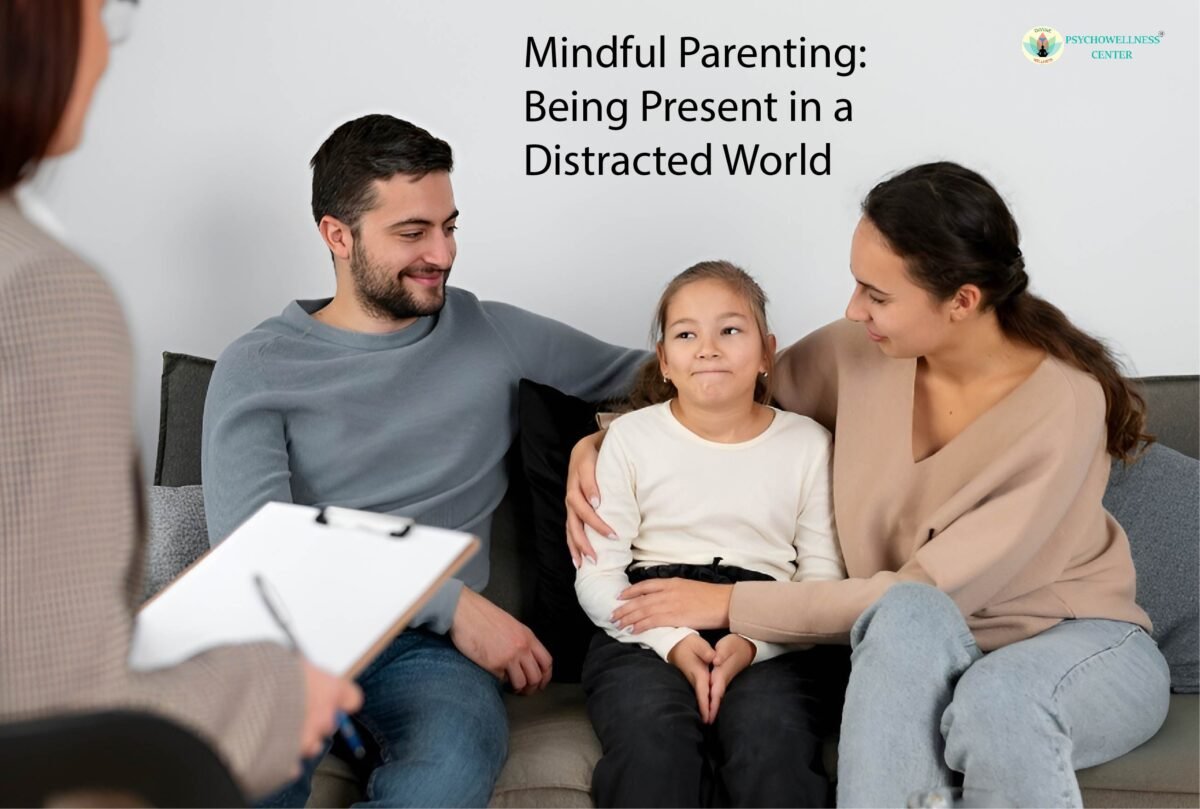
In today’s fast-paced, screen-filled, constantly “connected” world, parenting can feel more overwhelming than ever. As we juggle work, home responsibilities, social media, and the emotional demands of life, it becomes increasingly difficult to remain grounded and truly present for our children. But now more than ever, mindful parenting is not just a luxury, it’s a necessity.
Mindful parenting isn’t about being a perfect parent. It’s about being present, emotionally available, attentive, and responsive to our children’s needs. It means tuning in, listening deeply, and resisting the urge to react impulsively. It means creating a safe space where children feel seen, heard, and valued.
Why is this so important in a distracted world?
Because the emotional and psychological well-being of our children is at stake.
The Modern Parent’s Challenge: Distraction and Disconnection
Many parents are raising children while navigating their own unresolved trauma, anxiety, depression, and emotional stress. These challenges can make it difficult to stay emotionally available. When our minds are constantly occupied with to-do lists, financial concerns, or endless scrolling through our phones, we risk creating emotional distance between ourselves and our children.
In this environment, kids can start to feel isolated, misunderstood, or even invisible. And that emotional distance can lead to a cascade of long-term issues such as low self-esteem, low self-confidence, and difficulty forming healthy relationships.
The truth is, a distracted parent, even one with the best intentions, can inadvertently become emotionally unavailable. Children notice when we aren’t fully present, even if they can’t articulate it. They feel it in the way we respond, the eye contact we don’t make, the questions we brush off.
This disconnection can foster feelings of loneliness, isolation, and emotional insecurity, all fertile ground for issues like anxiety, depression, and behavioral problems.
The Link Between Parenting and Emotional Health
There is a strong connection between the way we parent and the emotional health of our children. Numerous studies have shown that children who grow up with emotionally responsive, mindful parents tend to have:
- Higher self-esteem
- Better emotional control
- Lower levels of anxiety and depression
- Stronger resilience and problem-solving skills
- Healthier social relationships
On the flip side, children who grow up in homes where parents are distracted, emotionally unavailable, or reactive may struggle with stress, low motivation, and a lack of self-worth. In cases where emotional abuse or chronic neglect is present, the long-term impact can be deeply traumatic.
These children may internalize the belief that their needs aren’t important or that they are not worthy of attention or love, core wounds that often carry into adulthood.
Understanding the Impact of Trauma and Emotional Abuse
Many parents today are unknowingly parenting through the lens of their own trauma. Childhood experiences of emotional abuse, neglect, or inconsistency may have shaped how we respond to our children today. If we were never taught to sit with our emotions, or if our own emotions were dismissed or punished, it’s easy to repeat those patterns with our children, even when we deeply desire to do better.
Mindful parenting helps break this cycle.
It allows us to pause, notice our triggers, and respond from a place of intention rather than reaction. It gives us the tools to heal while creating a more nurturing environment for our children.
Children who grow up with mindful parents are more likely to develop emotional intelligence, healthy coping strategies, and a strong sense of self. They are less likely to suffer from anxiety, depression, and feelings of worthlessness later in life.
What Is Mindful Parenting?
Mindful parenting is rooted in the principles of mindfulness, awareness, presence, compassion, and non-judgment. It involves:
- Listening with full attention: Turning off distractions and truly hearing what your child is saying, both verbally and nonverbally.
- Emotional awareness: Recognizing and validating both your emotions and your child’s emotions without shame or dismissal.
- Self-regulation: Not reacting impulsively when frustrated or stressed. Taking a breath, stepping back, and choosing a calm response.
- Compassion: Offering love, empathy, and understanding even in moments of conflict.
- Non-judgment: Accepting your child as they are, without trying to force them into a mold or projecting your unmet needs onto them.
This doesn’t mean you’re permissive or avoid discipline, it means you approach discipline as a teaching opportunity, not a power struggle.
The Cost of Disconnection
Many children and teens today report feeling disconnected from their parents, even when they live in the same home. The rise of screen addiction, both among parents and children, has created emotional silos within families.
When emotional needs aren’t met consistently, children may begin to withdraw. They might stop sharing their thoughts, isolate themselves, or seek validation in unhealthy places such as social media or toxic friendships. Others may act out through defiance or aggression, signaling unmet needs through behavior rather than words.
Over time, this disconnection can breed low self-confidence, poor coping skills, and in more severe cases, depression, anxiety, and self-harm.
The good news? Repair is always possible.
How to Practice Mindful Parenting in Everyday Life
You don’t need to be a meditation expert or therapist to parent mindfully. Small, regular adjustments can have a big impact. Here are some exercises to begin with:
1. Put Away the Phone
Designate times each day when you’re fully unplugged. Meal times, bedtime routines, and car rides are great opportunities to connect without distraction.
2. Validate Emotions
Instead of dismissing your child’s feelings (“You’re overreacting” or “It’s not a big deal”), try acknowledging them: “That sounds really frustrating” or “I can see why you’re upset.” Validation fosters emotional safety.
3. Pause Before Reacting
When your child triggers you, pause. Inhale.”What is my child’s true need? “How do I feel right now?” Reactive patterns are broken by this self-awareness.
4. Repair After Conflict
No one gets it right all the time. If you lose your temper or shut down, own it. Apologize. Repair is one of the most powerful parts of mindful parenting and teaches kids that relationships can survive mistakes.
5. Model Emotional Resilience
Discuss your personal emotions in a constructive manner. Let your kids see you navigating stress or disappointment with self-compassion rather than self-criticism.
6. Create Safe Routines
Children thrive on predictability. Even simple routines, a bedtime story, a weekly walk, or a few minutes of one-on-one time, can be grounding, especially in a chaotic world.
When Parenting Feels Overwhelming
If you’re struggling with anxiety, depression, family problems, or your own history of trauma, parenting mindfully can feel nearly impossible. You’re not alone. Many parents carry emotional burdens that make presence and patience harder to access.
Seeking support, whether through therapy, support groups, or even mindful parenting workshops, is not a sign of weakness. It’s an act of courage and love. The more we heal ourselves, the more we can show up for our children.
Conclusion
Mindful parenting isn’t about always being calm, patient, or emotionally regulated. It’s about striving to be present, aware, and connected, even when life is messy. Even when you’re tired. Even when your child is having a meltdown in the cereal aisle.
When you slow down, notice, listen, and respond with empathy, you send a powerful message: You matter. I see you. I’m here.
And that, more than anything else, is what children need to grow into confident, resilient, emotionally healthy adults.
In a world full of noise, mindful parenting is the quiet revolution our families, and our future, desperately need.
If mindful parenting feels difficult to practice consistently due to stress, emotional exhaustion, or unresolved personal challenges, seeking professional support can be a meaningful step. Psychowellness Center offers expert guidance for parents through individual therapy, family counselling, and parenting support programs that focus on emotional regulation, trauma healing, and strengthening parent–child bonds. With experienced psychologists available at the Dwarka Sector-17 and Janakpuri centers, parents can learn practical tools to become more present, patient, and emotionally attuned. For appointments or support, contact the Psychowellness Center at 011-47039812 / 7827208707. Additionally, TalktoAngel provides convenient online counselling for parents who prefer flexible sessions from the comfort of home, helping families cultivate mindfulness, connection, and emotional wellbeing in today’s distracted world.
Contribution: Dr. R.K. Suri, Clinical Psychologist, and Ms. Drishti Rajore, Counselling Psychologist
REFERENCES
- gives an overview of what mindful parenting is, how it helps reduce parental stress and improve parent/child relationship. Healthline
- looks at randomized trials, outcomes for both parents and children, including internalizing and externalizing symptoms. PubMed
- how parental emotional expression, shared parent‑youth positive emotion, etc., link with adolescent risk behaviors. PubMed+1
- more recent work, showing how mindful parenting moderates symptom development. link.springer.com
- https://www.psychowellnesscenter.com/Blog/a-guide-to-mindful-parenting/
- https://www.psychowellnesscenter.com/Blog/how-constant-notifications-disrupt-emotional-presence/
- https://www.psychowellnesscenter.com/Blog/building-a-calm-and-connected-family-dynamic/
- https://www.psychowellnesscenter.com/Blog/role-of-mindful-communication-in-cultivating-connection-and-mental-well-being/
- https://blog.americanwellnesscenter.ae/psychology/parenting-with-presence/
- https://www.psychowellnesscenter.com/Blog/mindfulness-and-meditation-eap-delight-for-employees/
- https://www.psychowellnesscenter.com/Blog/how-to-strengthen-the-parental-bond-with-your-child/
- https://www.psychowellnesscenter.com/Blog/10-ways-to-help-your-child-break-free-from-phone-addiction/
- https://www.psychowellnesscenter.com/Blog/finding-calm-within-hustle-obsessed-culture/
- https://www.psychowellnesscenter.com/Blog/feeling-unable-to-focus-and-concentrate/
- https://www.psychowellnesscenter.com/Blog/finding-calm-within-hustle-obsessed-culture/
- https://www.talktoangel.com/blog/5-practices-of-mindfulness-for-stress-reduction