
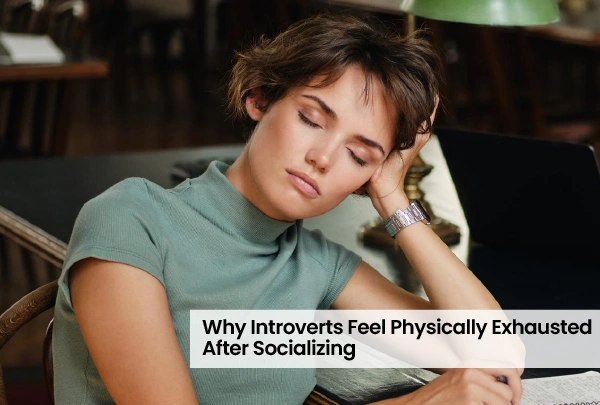
Have you ever spent an enjoyable evening with friends only to come home feeling completely drained, as though you’d run a marathon instead of having a conversation? For many introverts, this experience is surprisingly common. Even when social interactions are positive, they can leave introverts feeling mentally, emotionally, and physically exhausted.
This often leads to misunderstandings. Friends may assume an introvert is antisocial, unfriendly, or simply doesn’t enjoy being around people. In reality, most introverts value meaningful relationships and social connection. The difference lies not in whether they enjoy socializing, but in how their minds and bodies respond to prolonged social stimulation. If this pattern begins causing significant distress or affecting daily life, discussing it with a counselling psychologist in Delhi or seeking psychological counselling in Delhi can help distinguish normal personality differences from concerns such as Social Anxiety or chronic stress.
What Is Introversion?
Rather than being a mental ailment or psychological problem, introversion is a personality attribute. According to personality psychology, introverts generally prefer lower levels of external stimulation and often recharge by spending time alone or in calm, familiar environments.
This does not mean that introverts:
- Dislike people.
- Have poor social skills.
- Lack of confidence.
- Want to avoid relationships.
Many introverts enjoy social events, public speaking, and leadership roles. They simply tend to regain their energy through solitude rather than continuous interaction. Personality exists on a spectrum, and many people fall somewhere between introversion and extroversion.
Why Does Socializing Feel Physically Draining?
Social interaction is one of the brain’s most demanding activities. During conversations, your brain is constantly processing facial expressions, body language, tone of voice, social expectations, and emotional cues while deciding how to respond appropriately.
Research suggests that introverts are generally more sensitive to environmental stimulation, including noise, crowds, and rapidly changing social situations. As stimulation increases, the nervous system has to work harder to process incoming information, leading to mental fatigue that many people experience as physical exhaustion. This is why an introvert may enjoy spending time with friends yet still feel the need to rest afterward.
The Brain Science Behind Social Exhaustion
Many people assume introverts feel drained after socializing simply because they’re shy. In reality, research suggests the experience is linked to how the brain processes stimulation, not a lack of social ability. Socializing requires constant attention, emotional control, and decision-making, all of which consume mental energy.
Your Brain Is Constantly Working
During even a casual conversation, your brain is simultaneously:
- Listening and interpreting what others are saying.
- Reading facial expressions and body language.
- Managing emotions and social expectations.
- Filtering background noise and other distractions.
This continuous processing places a significant demand on the brain. After several hours of interaction, many people experience social fatigue, but introverts often reach this point sooner because they tend to be more sensitive to external stimulation.
The Role of Overstimulation
Busy restaurants, crowded parties, networking events, or family gatherings expose us to multiple conversations, loud sounds, bright lights, and constant social cues. Research suggests introverts are generally more responsive to these environmental stimuli, causing their nervous system to work harder to process everything happening around them. As a result, they may feel mentally foggy, physically tired, or emotionally “switched off” after prolonged social interaction.
The “Social Battery” Is More Than Just a Trend
The popular idea of a “social battery” has a psychological basis. Every social interaction requires attention, emotional regulation, and cognitive effort. Once that mental energy is depleted, people often need time to recover before they feel ready to engage again. This doesn’t mean introverts dislike people, it simply means they recharge differently. Spending quiet time alone, reading, listening to music, or taking a walk can help restore their energy.
The “Introvert Hangover”
Some introverts describe feeling as though they have an “introvert hangover” after long periods of socializing. They may experience mental fog, irritability, difficulty concentrating, or an overwhelming need for solitude. While this isn’t a medical diagnosis, psychologists recognize social exhaustion as a common response to prolonged stimulation, particularly among individuals who naturally prefer quieter environments.
How Introverts Can Socialize Without Feeling Completely Drained
You don’t have to completely avoid people if you feel worn out after socializing. Instead, it means understanding your energy limits and learning how to manage them. Just as physical energy needs to be replenished after exercise, social energy also requires recovery, especially for introverts. Research suggests that respecting these limits can help reduce social fatigue while still allowing people to enjoy meaningful relationships.
1. Plan Recovery Time
Many introverts make the mistake of scheduling back-to-back social commitments. Instead, try leaving some quiet time before or after social events. Reading, taking a walk, listening to music, or simply spending time alone can help your mind recover from prolonged stimulation. Recovery is a crucial component of preserving emotional health; it is not avoidance.
2. Choose Meaningful Interactions Over Large Gatherings
Introverts often find deep, one-on-one conversations less tiring than navigating large groups or crowded events. Smaller gatherings usually involve less background noise, fewer social demands, and more genuine connection, making them feel less overwhelming.
3. Don’t Ignore Your “Social Battery”
Because they don’t want to come out as impolite, many people continue to socialize long after they start to feel mentally worn out. However, constantly pushing beyond your limits can lead to irritability, difficulty concentrating, and emotional burnout. Learning to leave a gathering when your energy is running low is a healthy boundary, not a sign of being antisocial.
4. Stop Comparing Yourself to Extroverts
Our culture often celebrates being outgoing, talkative, and constantly social. As a result, introverts may feel guilty for needing time alone. But needing solitude doesn’t mean something is wrong with you. Introversion is a normal personality trait, and people recharge in different ways. Recognizing and accepting your own social rhythm is an important part of maintaining good mental health.
5. When Social Exhaustion Becomes More Than Introversion
Occasionally feeling drained after socializing is normal for many introverts. However, if you begin avoiding people because of acute fear, suffer persistent distress in social situations, or find that weariness is affecting your work, relationships, or daily life, it may be helpful to speak with a best counsellor near me or seek psychological counselling in Delhi. Sometimes, concerns such as Social Anxiety, chronic stress, or burnout can overlap with introversion, and understanding the difference is important for getting the right support.
When to Look for Help and Conclusions
Feeling physically exhausted after socializing is a normal experience for many introverts. Needing quiet time to recharge does not mean something is wrong with you or that you need to become more outgoing. Introversion is a healthy personality trait, and respecting your own energy levels is an important part of maintaining emotional well-being.
When Should You Seek Professional Support?
While introversion itself isn’t a mental health condition, it can sometimes overlap with concerns such as Social Anxiety, chronic stress, burnout, or depression. It may be helpful to seek psychological counselling in Delhi if:
- You avoid social situations because of intense fear rather than preference.
- Social exhaustion doesn’t improve even after adequate rest.
- You experience persistent anxiety, low mood, or irritability.
- Fatigue begins affecting your work, relationships, or daily responsibilities.
- You feel emotionally overwhelmed or isolated most of the time.
A qualified best psychologist in Delhi, or I, can help determine whether your exhaustion reflects normal introversion or whether another mental health concern may be contributing to it. Early support can also help you develop healthier coping strategies and improve your overall well-being. For professional psychological support, Psychowellness Center provides evidence-based counselling at its Janakpuri and Dwarka Sec-17 centres. Contact 011-47039812 or 7827208707 to arrange a consultation.
Conclusion
Living in a world that often celebrates constant social interaction can make introverts feel as though they need to change who they are. In reality, there is nothing unhealthy about preferring quieter environments or needing time alone after socializing. Understanding how your mind and body respond to stimulation allows you to set healthy boundaries, recharge without guilt, and build meaningful relationships in ways that suit your personality.
Rather than measuring yourself against someone else’s social style, focus on understanding your own. Social energy isn’t a limitless resource and protecting it isn’t selfish, it’s an important form of self-care. By embracing your natural temperament and recognizing when additional support may be helpful, you can enjoy social connections while maintaining your mental and emotional balance.
If you find yourself feeling physically and emotionally drained after social interactions, seeking professional support can help you better understand your social energy, develop healthy coping strategies, and maintain emotional well-being without compromising meaningful relationships. TalktoAngel offers convenient online counselling with experienced psychologists, while Psychowellness Center provides evidence-based psychological assessment and therapy services to help individuals manage social exhaustion, build emotional resilience, and improve overall mental well-being.
Contributions: Dr. R.K. Suri, Clinical Psychologist, and Ms. Ishita Wahi, Counselling Psychologist
Reference
https://www.talktoangel.com/area-of-expertise/social-isolation
https://www.psychowellnesscenter.com/service-anxiety-counselling-delhi/
https://www.psychowellnesscenter.com/
https://www.psychowellnesscenter.com/our-doctors/
American Psychological Association. (2018). Introversion. APA Dictionary of Psychology. https://dictionary.apa.org/introversion
Leikas, S., Ilmarinen, V.-J., Verkasalo, M., Lönnqvist, J.-E., & Salmela-Aro, K. (2020). Sociable behavior is related to later fatigue: Moment-to-moment patterns of behavior and tiredness. Personality and Individual Differences, 152, 109575. https://doi.org/10.1016/j.paid.2019.109575
Orentas, G. (2021, June 2). How to deal with social exhaustion when you’re an introvert. Psych Central. https://psychcentral.com/blog/social-exhaustion-avoiding-introvert-burnout
Psychology Today. (2025). Introversion. https://www.psychologytoday.com/us/basics/introversion
Rosenberg, M. (2017, August 8). Why socializing drains introverts more than extroverts. Psychology Today. https://www.psychologytoday.com/us/blog/the-secret-lives-introverts/201708/why-socializing-drains-introverts-more-extroverts
Arthur, A. (2026, July 8). The simple ways to make socialising less exhausting. BBC Science Focus Magazine. https://www.sciencefocus.com/the-human-body/socialising-exhaustion