
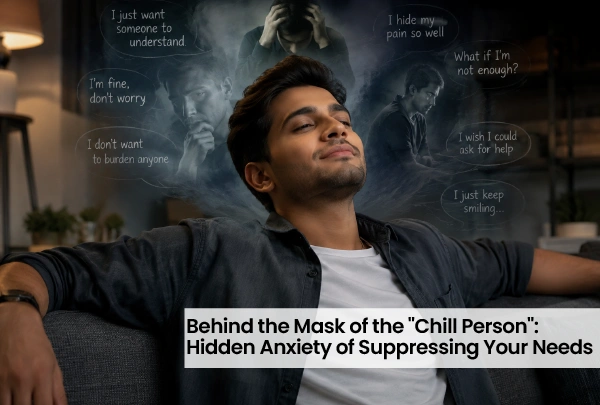
“I’m fine.” “It’s okay.” “Whatever works for everyone.”
Have you ever found yourself saying these phrases even when they weren’t true?
Many people pride themselves on being the “chill person”, someone who never complains, avoids conflict, and always adapts to others. They are often described as easy-going, flexible, and emotionally stable. While these qualities may appear admirable, constantly suppressing your own needs to maintain peace can come at a significant emotional cost.
Behind the calm exterior often lies hidden anxiety, emotional exhaustion, and an overwhelming fear of disappointing others. The person who seems the most relaxed may actually be carrying an invisible burden.
The “Chill Person” Persona
Being genuinely relaxed is healthy. However, there is a difference between choosing peace and feeling obligated to avoid expressing your thoughts, emotions, or needs.
A person who suppresses their needs may:
- Say “yes” when they want to say “no.”
- Avoid asking for help, even when overwhelmed.
- Prioritize everyone else’s comfort over their own.
- Hide disappointment, frustration, or sadness.
- Feel guilty for expressing personal needs or setting boundaries.
Over time, this behavior becomes automatic. They may convince themselves that their needs are “not important” or that expressing them would make them difficult, selfish, or demanding.
Why Do People Suppress Their Needs?
Hidden anxiety often develops through repeated life experiences rather than appearing overnight. Several psychological factors contribute to this pattern.
Fear of Rejection
Many individuals worry that speaking up will lead others to dislike them or distance themselves. They believe that keeping everyone happy is the safest way to maintain relationships.
Childhood Experiences
Growing up in environments where emotions were dismissed, criticized, or ignored may teach children that expressing needs is unsafe. As adults, they continue minimizing their emotions because they learned that staying quiet prevents conflict.
People-Pleasing Tendencies
Some individuals derive their sense of self-worth from helping others. While kindness is valuable, constantly sacrificing personal well-being can become emotionally draining.
Fear of Conflict
Conflict can feel uncomfortable. To avoid disagreements, many people suppress opinions, tolerate unhealthy situations, and convince themselves that “it’s not worth bringing up.”
Unfortunately, avoiding conflict does not eliminate emotional discomfort, it simply pushes it inward.
The Hidden Anxiety Beneath the Surface
People often assume anxiety always looks like panic attacks or constant worrying. Anxiety can actually be considerably more subdued.
Someone who appears calm may constantly wonder:
- “Did I upset someone?”
- “Am I asking for too much?”
- “What if they think I’m selfish?”
- “What if saying no disappoints them?”
This internal dialogue creates ongoing stress. The body remains in a heightened state of alertness even when the individual appears perfectly composed.
Over time, suppressed emotions may contribute to:
- Chronic stress
- Emotional exhaustion
- Difficulty relaxing
- Irritability
- Low self-esteem
- Sleep disturbances
- Increased anxiety symptoms
- Despite being surrounded by people, loneliness
Ironically, the more someone hides their emotions, the more disconnected they often feel from others.
The Cost of Always Being “Easy”
Being accommodating occasionally is healthy. However, constantly neglecting your own emotional needs can have long-term consequences.
Continuously putting others first leaves little emotional energy for yourself. Many people experience mental and physical exhaustion because they rarely pause to consider their own needs.
Resentment
Although they rarely express anger, suppressed emotions often accumulate over time. Eventually, individuals may feel resentful toward the very people they have been trying to please.
Loss of Identity
When decisions are always based on what others want, people may lose touch with their own preferences, goals, and values.
Questions like:
- “What do I actually want?”
- “What makes me happy?”
- “Who am I without pleasing others?”
can become surprisingly difficult to answer.
Unhealthy Relationships
Relationships thrive on honesty and mutual understanding. Constantly hiding emotions prevents authentic communication and may unintentionally create emotional distance.
Signs You Might Be Suppressing Your Needs
You may be struggling with hidden anxiety if you:
- Feel guilty after setting boundaries.
- Frequently apologize, even when unnecessary.
- Struggle to ask for emotional support.
- Say “yes” despite feeling overwhelmed.
- Avoid expressing disagreement.
- Feel emotionally exhausted after social interactions.
- Constantly worry about disappointing others.
- Have trouble recognizing your own emotions.
Recognizing these patterns is not a sign of weakness, it is the first step toward healthier emotional well-being.
Learning to Express Yourself
Suppressing your needs for years cannot be changed overnight. However, small, consistent steps can make a meaningful difference.
Practice Identifying Your Feelings
Before responding automatically, pause and ask yourself:
- What am I feeling right now?
- What do I actually need?
- Am I agreeing because I want to, or because I’m afraid to disappoint someone?
Self-awareness is the foundation of emotional growth.
Start Setting Small Boundaries
You don’t have to make significant adjustments. Begin with simple statements like:
- “I need some time before I decide.”
- “I’m unable to help today.”
- “I’d prefer something different.”
Healthy boundaries strengthen relationships rather than weaken them.
Accept That Discomfort Is Normal
Speaking up may initially feel uncomfortable. That discomfort does not mean you are doing something wrong, it often means you are developing healthier communication habits.
Seek Professional Support
If suppressing emotions has become a long-standing pattern or is contributing to anxiety, stress, or relationship difficulties, working with a qualified mental health professional can help. Therapy provides a safe and non-judgmental space to explore emotional patterns, develop assertive communication skills, and build healthier coping strategies.
You Don’t Need to Be Quiet to Gain Love
Your thoughts, emotions, and needs deserve attention just as much as anyone else’s.
Being compassionate does not require constant self-sacrifice. Healthy relationships allow space for honesty, vulnerability, and mutual respect. Learning to express your needs does not make you demanding, it makes you authentic.
If you recognize yourself behind the mask of the “chill person,” remember that your voice matters. Choosing to speak honestly about your feelings is not selfish; it is an important step toward emotional well-being and healthier relationships.
Conclusion
If you are experiencing anxiety, chronic stress, people-pleasing patterns, or difficulty expressing your emotions, professional support can help you better understand yourself and develop healthier coping strategies.
If you are experiencing anxiety, stress, relationship concerns, emotional control difficulties, or other mental health challenges, seeking professional support can be an important step toward improved well-being. Psychowellness Center offers compassionate, evidence-based psychological services tailored to each individual’s unique needs in a safe, confidential, and supportive environment. With experienced best psychologists in Delhi NCR, psychological counseling near me, and best counselors near me dedicated to promoting mental wellness, the center provides personalized care to help clients navigate emotional and psychological concerns effectively. You can visit Psychowellness Center at its Janakpuri or Dwarka Sector-17 locations. For appointments or enquiries, please contact 011-47039812 or 7827208707.
Contributions: Dr. R.K. Suri, Clinical Psychologist, and Ms. Sakshi Dhankhar, Counselling Psychologist
References
American Psychiatric Association. (2022). Diagnostic and statistical manual of mental disorders (5th ed., text rev.; DSM-5-TR). American Psychiatric Association Publishing.
https://www.psychowellnesscenter.com/Blog/ways-to-overcome-emotional-supression/
https://www.psychowellnesscenter.com/Blog/signs-of-hidden-tension-that-could-ruin-your-relationship/
https://www.psychowellnesscenter.com/Blog/lifestyle-self-care-strategies-to-manage-anxiety/
https://www.psychowellnesscenter.com/Blog/is-your-hidden-depression-affecting-your-relationship/
Linehan, M. M. (2015). DBT® skills training manual (2nd ed.). Guilford Press.
Neff, K. D. (2011). Self-compassion: The proven power of being kind to yourself. William Morrow.
Rogers, C. R. (1961). On becoming a person: A therapist’s view of psychotherapy. Houghton Mifflin.