
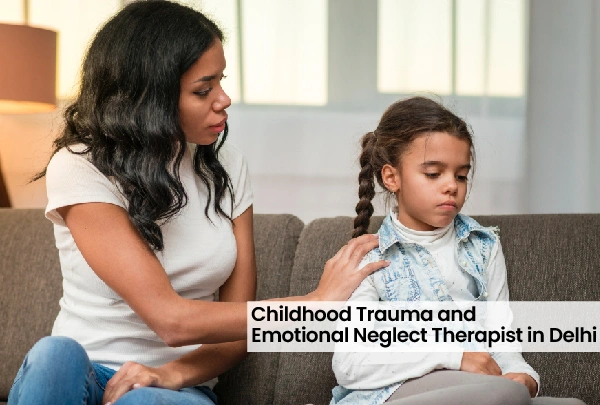
Childhood is a crucial period for emotional, cognitive, and social development. Children need safety, affection, attention, consistency, and supportive relationships to develop a healthy sense of self. When a child repeatedly experiences frightening situations, emotional unavailability, rejection, abuse, loss, family conflict, or neglect, these experiences can leave a lasting psychological impact. Childhood trauma does not always involve a visibly dramatic event. Sometimes, the absence of emotional support and responsiveness can be equally significant.
When a child’s emotional needs are routinely disregarded or ignored, it is known as emotional neglect. A child may have food, clothing, education, and physical care but still feel unheard, unseen, or emotionally unsupported. Research indicates that neglect can interfere with emotional control, learning, attention, relationships, and healthy development, particularly when it occurs during early childhood.
What Is Childhood Trauma?
Childhood trauma refers to experiences that overwhelm a child’s ability to cope and create a sense of fear, helplessness, insecurity, or emotional distress. These experiences may include abuse, neglect, domestic violence, parental separation, sudden loss, serious illness, bullying, accidents, or exposure to violence.
Trauma can affect children differently depending on their age, personality, developmental stage, support system, and the nature and duration of the experience. Young children may not have the vocabulary to explain what they are experiencing, so their distress may appear through behaviour rather than words.
Understanding Emotional Neglect
Emotional neglect is often difficult to recognize because there may be no obvious physical signs. A child experiencing emotional neglect may repeatedly hear statements such as “Stop crying,” “You are overreacting,” or “There is nothing to be upset about.” When children’s feelings are consistently ignored, they may gradually learn that their emotions are unimportant.
Over time, some children may stop expressing their feelings altogether. Others may become excessively dependent on reassurance, fearful of rejection, unusually quiet, aggressive, anxious, or highly sensitive to criticism.
Importantly, emotional neglect does not always mean that parents intentionally hurt their child. Parents may themselves be dealing with stress, emotional difficulties, demanding work schedules, relationship conflict, or limited awareness of children’s emotional needs. Recognizing the problem is not about blaming parents; it is about understanding the child’s experience and creating healthier patterns.
Signs That a Child May Be Struggling
Parents, teachers, and caregivers should pay attention to significant changes in a child’s behaviour or emotional functioning. Possible signs include:
- Frequent anger, irritability, or emotional outbursts
- Excessive fear or anxiety
- Withdrawal from family or friends
- Difficulty trusting others
- Low self-esteem or feelings of worthlessness
- Sleep disturbances or recurring nightmares
- Difficulty concentrating or declining academic performance
- Regressive behaviours
- Strong reactions to criticism or rejection
- Difficulty identifying or expressing emotions
- Problems forming or maintaining friendships
- Avoidance of particular people, places, or situations
Children exposed to complex trauma may become hypervigilant, have difficulty regulating emotions, or respond intensely to situations that remind them of earlier experiences.
How Childhood Trauma Can Affect Development
Trauma can influence several areas of a child’s life. Emotionally, children may experience anxiety, sadness, anger, shame, or difficulty calming themselves. Behaviourally, they may become oppositional, impulsive, withdrawn, or unusually compliant.
Trauma may also influence concentration, learning, sleep, and social relationships. Some children become highly alert to changes in adults’ moods because they have learned to monitor their environment for signs of danger. Others may avoid emotional closeness because relationships have become associated with disappointment or insecurity.
However, experiencing trauma does not mean that a child is destined to develop lifelong psychological difficulties. Supportive relationships, stable environments, early intervention, and appropriate therapy can act as important protective factors and promote resilience.
How a Child Therapist Can Help
A qualified child psychologist or therapist can first assess the child’s emotional, behavioural, developmental, and family circumstances. Therapy should be age-appropriate and sensitive to the child’s ability to communicate.
Depending on the child’s needs, treatment may incorporate play therapy, cognitive-behavioural approaches, trauma-focused interventions, emotional regulation strategies, parent counselling, family therapy, and behaviour therapy. The goal is not simply to make a child “behave better.” Effective therapy aims to help children feel safe, understand their emotions, develop healthy coping skills, strengthen relationships, and rebuild their confidence.
Parents also play an important role in recovery. A therapist can guide caregivers in responding to difficult behaviour with greater understanding, establishing predictable routines, validating emotions, and creating a safe environment for communication.
Finding the Right Therapist in Delhi
For parents searching for the best child psychologist near me, it is important to look beyond online ratings and consider the professional’s qualifications, experience with children, therapeutic approach, and ability to work collaboratively with parents.
Families looking for the best child psychologist in India should also consider whether the professional has experience with trauma, emotional neglect, anxiety, behavioural concerns, family difficulties, and developmental needs.
For families living in Delhi and surrounding areas, choosing a Best Child Psychologist in Delhi NCR can make ongoing sessions more practical and accessible. Psychowellness Center provides psychological and counselling services for children and families in Delhi, including its locations in Janakpuri and Dwarka Sector 17.
Creating a Safe Emotional Environment at Home
Parents can support recovery by listening without immediately judging or correcting, acknowledging the child’s feelings, maintaining predictable routines, offering age-appropriate choices, and spending regular one-to-one time with the child. Simple statements such as “I can see that you are upset” or “You can talk to me when you are ready” can help children experience emotional safety.
If a child’s distress is persistent, worsening, or interfering with school, relationships, sleep, or everyday functioning, professional assessment should be considered. Early support can help prevent difficulties from becoming more deeply established.
Conclusion
Childhood trauma and emotional neglect can significantly affect a child’s emotional well-being, behaviour, relationships, learning, and self-esteem, but these experiences do not have to define their future. With timely professional support, stable relationships, emotional validation, and a safe environment, children can develop healthy coping skills and resilience. If a child is experiencing persistent emotional, behavioural, academic, or social difficulties, consulting a qualified child psychologist or therapist can provide appropriate guidance and support. Psychowellness Center provides psychological and counselling services for children, adolescents, and families dealing with emotional, behavioural, and psychological concerns, including childhood trauma and emotional difficulties. The centre has locations in Janakpuri and Dwarka Sector 17, Delhi, making professional support accessible to families across Delhi NCR. To schedule a consultation or enquire about services, contact 011-47039812 / 7827208707.
Contributions: Dr. R.K. Suri, Clinical Psychologist, and Ms. Tanu Sangwan, Counselling Psychologist
FAQs
- Can emotional neglect cause trauma in children?
Yes. Persistent emotional neglect can contribute to traumatic stress, particularly when a child’s need for safety, responsiveness, comfort, and emotional connection is repeatedly unmet.
- How do I know if my child needs a psychologist?
Consider professional support when emotional or behavioural changes are persistent, intense, or interfere with school, sleep, relationships, or daily functioning.
- Can childhood trauma affect academic performance?
Yes. Trauma and neglect can be associated with difficulties in attention, concentration, learning, sleep, and emotional regulation.
- Can children recover from childhood trauma?
Yes. Recovery is possible. Stable relationships, supportive caregivers, early intervention, and appropriate trauma-informed therapy can promote resilience and healthy development.
- Should parents attend therapy with their child?
It depends on the child’s age and needs. Parent involvement is often valuable because caregivers can learn strategies to support emotional regulation, communication, safety, and positive behaviour at home.
References
https://www.psychowellnesscenter.com/service-trauma-counselling-delhi/
https://www.psychowellnesscenter.com/Blog/best-child-psychologist-in-palam/
https://www.psychowellnesscenter.com/Blog/best-child-psychologists-in-south-east-delhi/
American Psychological Association. (2024). Childhood trauma. Psychological Trauma: Theory, Research, Practice, and Policy, 16(S1).
Felitti, V. J., Anda, R. F., Nordenberg, D., Williamson, D. F., Spitz, A. M., Edwards, V., Koss, M. P., & Marks, J. S. (1998). Relationship of childhood abuse and household dysfunction to many of the leading causes of death in adults. American Journal of Preventive Medicine, 14(4), 245–258.
National Child Traumatic Stress Network. (n.d.). Complex trauma. National Center for Child Traumatic Stress.