
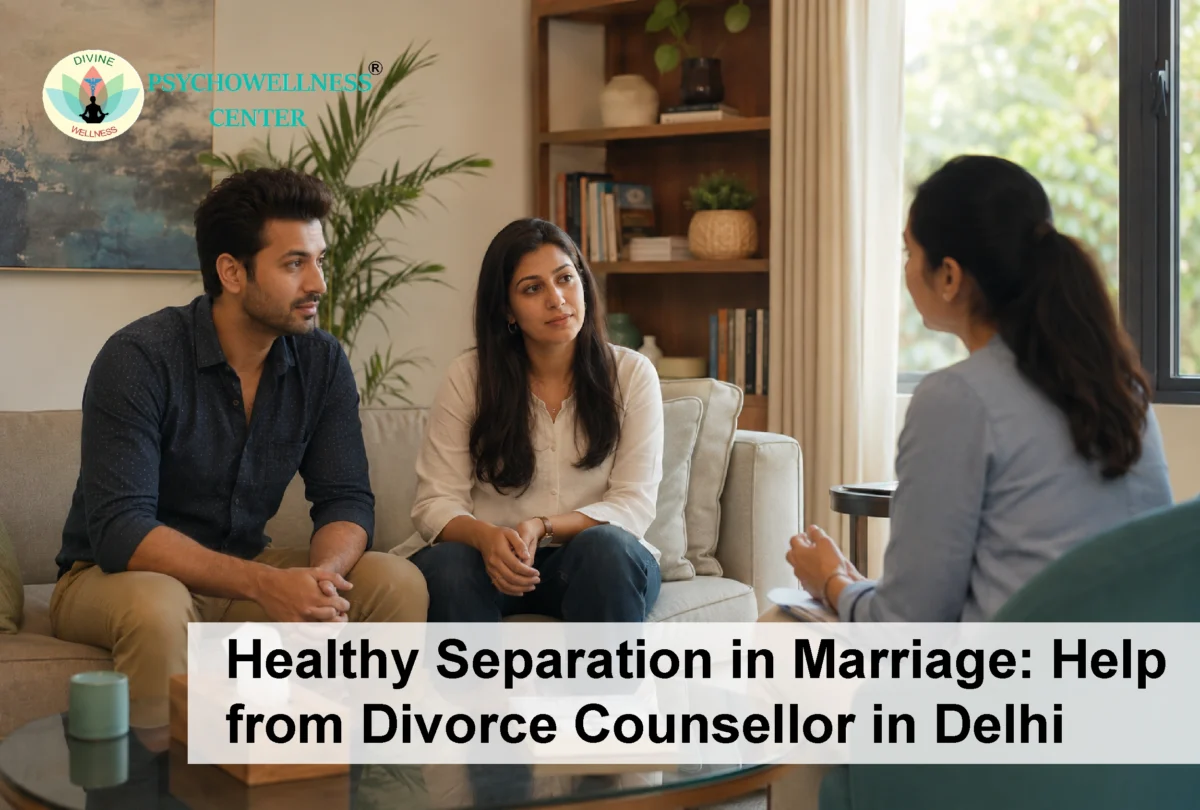
Marriage is often viewed as a lifelong commitment built on love, trust, and companionship. However, not all relationships progress as expected. Sometimes couples reach a stage where ongoing conflict, emotional distance, or irreconcilable differences make living together difficult. In such situations, separation may become a practical option. While separation can be emotionally overwhelming, a healthy separation can help individuals move forward with dignity, respect, and emotional stability.
Seeking support from a divorce counsellor can make this challenging transition smoother. Professional counseling helps couples navigate the emotional, psychological, and practical aspects of separation while minimizing unnecessary conflict. Research suggests that counseling and structured interventions can improve psychological adjustment and help individuals cope more effectively with separation and divorce-related stress.
Understanding Healthy Separation
Healthy separation does not mean the absence of pain. Instead, it refers to a process where both partners manage the transition respectfully, communicate effectively, and prioritize emotional well-being. Unlike hostile separations characterized by blame, resentment, and prolonged disputes, healthy separations focus on mutual understanding and constructive decision-making.
A healthy separation may involve:
- Respectful communication
- Clear boundaries
- Cooperative co-parenting
- Emotional healing
- Fair decision-making regarding finances and responsibilities
- Support from mental health professionals
Studies indicate that high-conflict separations can negatively impact both partners and children, whereas cooperative approaches often lead to better psychological outcomes.
Emotional Challenges During Separation
Separation often brings a wide range of emotions, including:
Grief and Loss
Even when separation is mutually agreed upon, individuals may grieve the loss of shared dreams, routines, and emotional connections.
Anxiety About the Future
Questions about finances, parenting arrangements, social relationships, and personal identity can create significant stress.
Guilt and Self-Blame
Many individuals struggle with feelings of failure or regret after deciding to separate.
Anger and Resentment
Unresolved conflicts may continue to affect interactions between partners.
Research has shown that separation and divorce are associated with increased emotional distress, particularly when coping strategies and support systems are lacking.
How a Divorce Counsellor Can Help
Professional counseling offers a safe and neutral environment where individuals and couples can process emotions and make informed decisions.
Facilitating Healthy Communication
One of the primary roles of a divorce counsellor is to improve communication. Many couples struggle to express their concerns without escalating conflicts.
Counselors help partners:
- Listen actively
- Express emotions constructively
- Reduce blame and criticism
- Develop conflict-resolution skills
Better communication can significantly reduce hostility during separation and create a healthier environment for all family members.
Providing Emotional Support
A counselor helps individuals process grief, anger, sadness, and uncertainty. Through therapeutic techniques, clients learn healthier coping strategies and emotional regulation skills.
Many people who seek counseling during separation report greater clarity, improved emotional well-being, and increased confidence in their decisions.
Supporting Decision-Making
Some couples are uncertain whether to reconcile or proceed with divorce. Counseling can help them evaluate their relationship objectively and make decisions based on realistic expectations rather than emotional reactions.
According to research on discernment therapy, structured therapeutic approaches can lessen conflict while assisting couples in gaining clarity about their relationship’s future.
Assisting with Co-Parenting
When children are involved, separation affects the entire family. Counselors help parents create healthy co-parenting plans that prioritize children’s emotional and developmental needs.
Effective co-parenting includes:
- Consistent routines
- Cooperative decision-making
- Reduced exposure to parental conflict
- Open communication about children’s needs
Evidence indicates that cooperative parenting after separation contributes to better outcomes for children.
The Importance of Psychological Counselling
Separation is not merely a legal process; it is also a psychological transition. Many individuals benefit from professional psychological counselling in Delhi because it addresses emotional wounds that may otherwise remain unresolved.
Counseling can help individuals:
- Build resilience
- Improve self-esteem
- Manage anxiety and depression
- Develop healthier relationship patterns
- Prepare for future relationships
Therapeutic support can be particularly valuable for individuals experiencing prolonged stress, loneliness, or difficulty adjusting to post-separation life.
Finding Professional Support in Delhi
Couples and individuals seeking guidance often search for the best marriage counselor in Delhi NCR to help them navigate relationship challenges and separation-related concerns. An experienced professional can provide personalized support tailored to the unique circumstances of each family.
Similarly, many people consult the best relationship counselor in Delhi when communication difficulties, emotional disconnect, or ongoing conflicts begin affecting their quality of life.
For couples who wish to improve understanding before making final decisions, working with the best couple counselor in Delhi can provide valuable insights and practical strategies.
Many individuals also look online for the best marriage counselor near me when facing urgent emotional challenges and seeking professional guidance close to home.
Psychowellness Center: Supporting Couples Through Separation
Psychowellness Center, with centers located in Janakpuri and Dwarka Sector 17, Delhi, offers professional counseling services for couples and families dealing with marital conflicts, separation concerns, and emotional distress. Their experienced mental health professionals provide compassionate support to help individuals manage relationship transitions effectively.
For appointments and counseling support, individuals can contact:
011-47039812 or 7827208707.
Conclusion
Healthy separation is not about winning or losing; it is about moving forward with emotional maturity, respect, and personal growth. Professional counseling can help couples reduce conflict, manage emotional distress, improve communication, and make thoughtful decisions during one of life’s most challenging transitions. Research consistently highlights the value of counseling interventions in promoting psychological adjustment and healthier outcomes during separation and divorce.
Psychowellness Center, located in Janakpuri and Dwarka Sector 17, Delhi, provides specialized support for couples and families navigating separation and relationship difficulties. Their experienced professionals focus on emotional healing, conflict resolution, and healthy co-parenting strategies.
Additionally, TalktoAngel offers accessible online counseling services, enabling individuals and couples to receive expert guidance from qualified psychologists and relationship counselors from the comfort of their homes. Together, these platforms help people navigate separation with greater clarity, resilience, and hope for the future.
Contributions: Dr. R.K. Suri, Clinical Psychologist, and Ms. Tanu Sangwan, Counselling Psychologist
References
https://www.psychowellnesscenter.com/best-marriage-counselling-near-me/delhi-ncr/
https://www.psychowellnesscenter.com/Blog/divorce-counselling-healing-beyond-legal-separation/
https://www.psychowellnesscenter.com/Blog/best-relationship-counsellor-in-north-west-delhi/
https://www.psychowellnesscenter.com/Blog/best-marriage-counsellor-in-dwarka-sector-20-dwarka-delhi/
Amato, P. R. (2010). Research on divorce: Continuing trends and new developments. Journal of Marriage and Family, 72(3), 650–666.
Birnbaum, G. E., Orr, I., Mikulincer, M., & Florian, V. (1997). When marriage breaks up: Does attachment style contribute to coping and mental health? Journal of Social and Personal Relationships, 14(5), 643–654.
Moral, M. A., González-Sáez, M. E., & Landero-Hernández, R. (2021). The relationship between differentiation of self and psychological adjustment to separation. Healthcare, 9(7), 835.
Mutchler, M. S. (2017). Family counseling with high-conflict separated parents: Challenges and strategies. The Family Journal, 25(4), 372–378.
Strouse, J., & Röhrle, B. (2011). A meta-analysis of intervention outcome studies for adults undergoing separation and divorce. International Journal of Mental Health Promotion, 13(4), 17–29.