
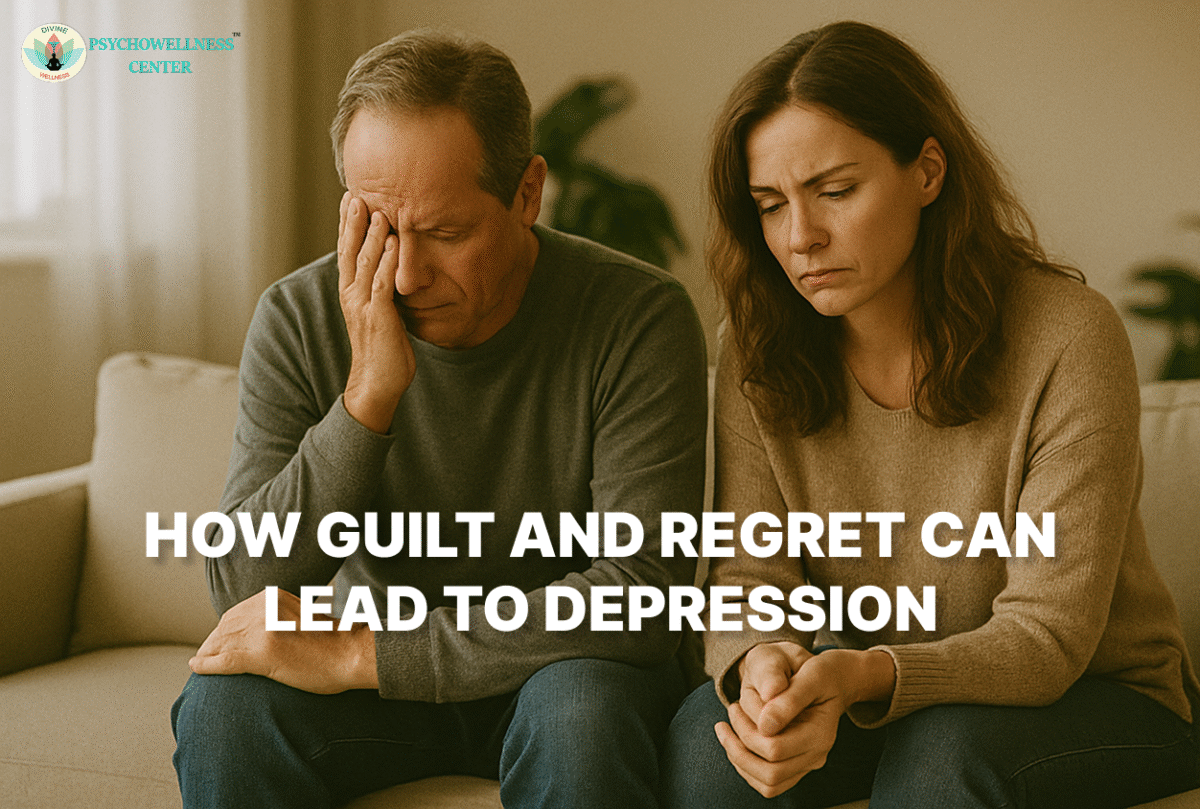
We all carry emotional baggage. Some of it is light and manageable, while other parts weigh heavily on our minds. Two emotions that often linger longer than we’d like are guilt and regret. Though they’re part of the human experience, when these emotions go unresolved or become persistent, they can quietly evolve into something much more serious: depression.
In this blog, we’ll explore the emotional impact of guilt and regret, how they differ, how they affect mental health, and ways to manage them before they develop into deeper psychological distress.
Understanding the Emotions: Guilt vs. Regret
While guilt and regret are often used interchangeably, they carry different meanings:
- Guilt is typically linked to a sense of responsibility for something we did—or failed to do—that we believe was wrong. It often comes with a moral or ethical weight. For example, you may feel guilty for hurting someone’s feelings or failing to keep a promise.
- Regret is more reflective. It’s a sense of disappointment about a choice or missed opportunity. You may regret not speaking up during an important moment, or wish you had taken a different path in your career or relationship.
Both emotions involve reflection on the past, but guilt is often about actions, while regret is more about decisions and outcomes. When left unchecked, both can lead to emotional patterns that are difficult to break.
The Hidden Connection Between These Emotions and Depression
Guilt and regret are not inherently harmful. They can be signs of a strong moral compass and self-awareness. But when they’re experienced intensely or over a long period, they can begin to affect mental health.
Here’s how they contribute to depression:
1. Negative Self-Focus
People experiencing ongoing guilt often internalise their actions as a reflection of who they are. Thoughts like “I’m a bad person” or “I always mess things up” can become a recurring internal narrative. Similarly, someone caught in a cycle of regret might constantly think, “I ruined my chances” or “I’ll never recover from that mistake.” This kind of thinking diminishes self-esteem and fuels the hopelessness that is central to depression.
2. Chronic Overthinking and Rumination
Both guilt and regret can lead to rumination, where the mind replays events repeatedly, searching for a way to “fix” what happened. This obsessive mental loop drains emotional energy and keeps people stuck in the past. The inability to stop dwelling on what could have been different feeds anxiety and often evolves into depression.
3. Emotional Isolation
Feelings of guilt may lead individuals to withdraw from others because they believe they don’t deserve support or forgiveness. Regret can also lead to withdrawal, especially when people compare their lives to others and feel they’ve fallen behind or missed out. This social disconnection can intensify feelings of loneliness, a key factor in depression.
4. Sense of Powerlessness
Guilt and regret often relate to events that can’t be changed. When people feel like they can’t fix the past or move forward from it, they may begin to feel helpless. This loss of perceived control is closely linked with depressive symptoms, including apathy and low motivation.
Common Scenarios That Trigger Guilt and Regret
Countless situations can give rise to these emotions, including:
- Parenting decisions (e.g., not spending enough time with a child)
- Relationship breakdowns (e.g., ending a friendship or romantic relationship poorly)
- Career choices (e.g., turning down an opportunity that later seemed better)
- Family dynamics (e.g., unresolved conflicts with parents or siblings)
- Loss and grief (e.g., feeling guilt for surviving or not being present before a loved one passed away)
In each of these scenarios, the inability to change what happened is what often leads people to get stuck in emotional loops.
Strategies to Prevent Guilt and Regret from Leading to Depression
Thankfully, there are ways to work through guilt and regret before they become overwhelming. Here are some strategies that can help:
1. Accept That Mistakes Are Human
Perfection isn’t realistic. Everyone makes decisions they wish they could undo. Remind yourself that growth often comes from imperfection, and mistakes are opportunities to learn, not life sentences.
2. Instead of seeing regret as a roadblock, use it as a guide
Regret can teach us what we value. Instead of staying stuck in what went wrong, try asking: What does this experience tell me about what matters to me? Use the insight to make better choices moving forward.
3. Apologise or Make Amends (When Appropriate)
If your guilt is related to someone else, a sincere apology or act of repair can go a long way. Even if the situation can’t be fully resolved, acknowledging your role and expressing remorse can help release emotional pressure.
4. Practice Mindfulness
Mindfulness helps you stay present instead of getting lost in past regrets or guilt. Mental spiraling can be lessened and emotional space can be created with just a few minutes of daily concentrated breathing, meditation, or grounding techniques.
5. Seek Support
You don’t have to carry these emotions alone. Talking to a mental health professional can help you unpack what you’re feeling and learn coping strategies. Therapy can also help you shift how you think about the past and strengthen your sense of self-worth.
Conclusion
Guilt and regret are part of being human—but when these emotions go unresolved, they can gradually lead to emotional exhaustion, isolation, and even depression. Left unchecked, they can trap you in cycles of self-blame and sadness, making it difficult to move forward or find peace within yourself.
The good news is that healing is possible. When guilt and regret are faced with compassion and professional guidance, they can be transformed into powerful catalysts for growth and emotional resilience. If you find yourself stuck in painful patterns or emotionally draining relationships, reaching out for support can be a life-changing step.
If you’re searching for the “best psychologist near me”, know that expert help is within reach. Qualified therapists at the Psychowellness Center in Janakpuri and Dwarka Sector-17, Delhi, specialise in helping individuals understand and overcome deep-rooted emotional patterns like repetition compulsion, often fueled by unresolved guilt and regret. For those who prefer support from the comfort of their home, TalktoAngel connects you with some of the best psychologists across India through secure, confidential online therapy.
One of the most powerful decisions you can make is to take back your emotional space, which is the first step in ending the pattern. Call 011-47039812 or 7827208707 to begin your journey toward healing, forgiveness, and lasting emotional well-being. Remember: your past does not define your future—you deserve peace, and you don’t have to walk this path alone.
Developed with insights from Dr. R. K. Suri, Clinical Psychologist, and Ms. Riya Rathi, Counselling Psychologist. Take the first step in your support journey by booking a session.
This blog was posted on 23 July 2025
References
Nolen-Hoeksema, S. (1991). Responses to depression and their effects on the duration of depressive episodes. Journal of Abnormal Psychology, 100(4), 569–582.
Orth, U., Berking, M., & Burkhardt, S. (2006). Self-conscious emotions and depression: Rumination explains why shame but not guilt is maladaptive. Personality and Social Psychology Bulletin, 32(12), 1608–1619. https://doi.org/10.1177/0146167206292958
Tamir, M., & Lerner, J. S. (Eds.). (2009). The moral mind: How morality develops and why it matters. Oxford University Press.
Watkins, E. R. (2008). Depressive Rumination: Investigating mechanisms to improve cognitive behavioural treatments. Behaviour Research and Therapy, 46(9), 983–991.
https://doi.org/10.1016/j.brat.2008.06.003
Depression | Depression Counselling in Delhi | Psychowellness Center
Ways to Come Out of Inappropriate Guilt | Psychowellness Center