
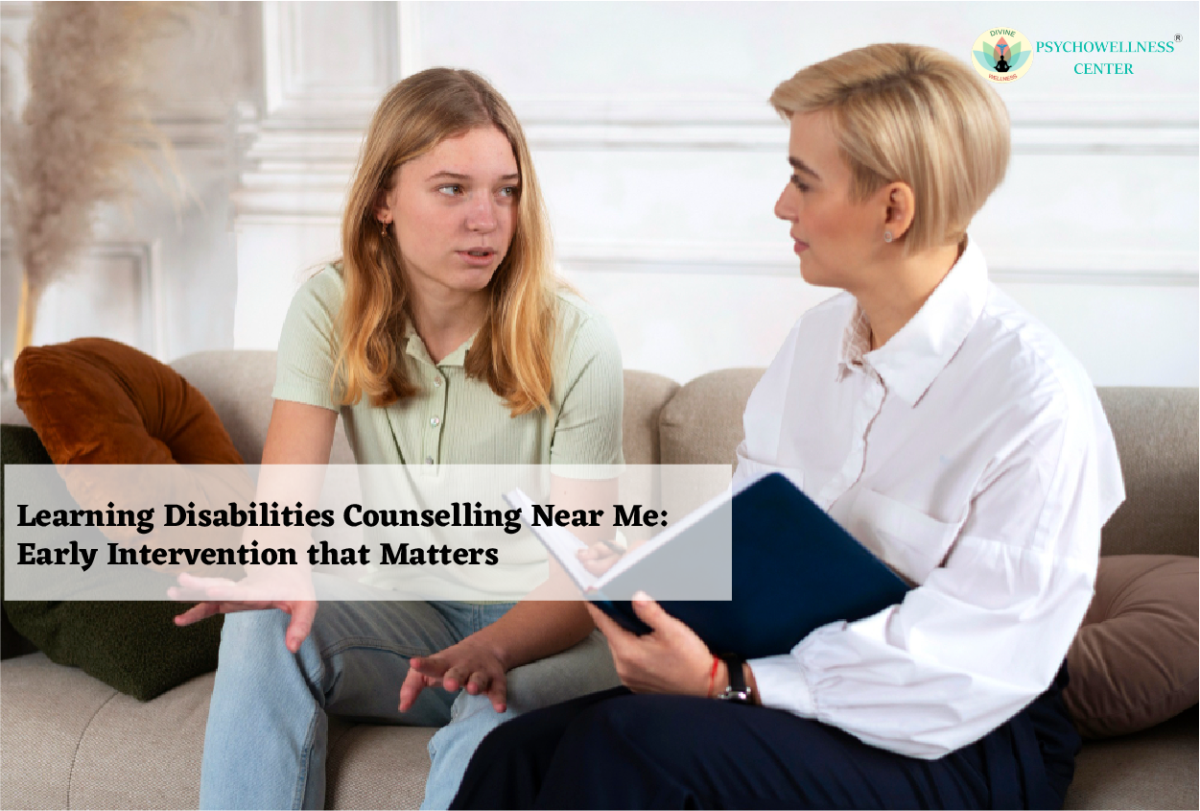
Learning disabilities affect how children process information, read, write, calculate, or organize thoughts. While many children face occasional academic struggles, learning disabilities involve persistent challenges that interfere with a child’s ability to keep up with school expectations. Early identification and timely counselling can make a remarkable difference in helping children build confidence and develop effective learning strategies. Parents and educators who seek early support can empower children to overcome obstacles and reach their full potential.
Understanding Learning Disabilities
Learning disabilities are neurological conditions that influence how the brain receives, processes, and communicates information. These challenges do not reflect a child’s intelligence or motivation. In fact, many children with learning disabilities possess strong creativity, curiosity, and problem-solving skills.
Common learning disabilities include dyslexia, which affects reading and language processing; dysgraphia, which impacts writing abilities; and dyscalculia, which interferes with mathematical understanding. In many cases, children with learning difficulties may also experience conditions such as Attention Deficit Hyperactivity Disorder, which can affect focus, organisation, and impulse control.
Because these difficulties often appear during early school years, parents and teachers play a crucial role in identifying warning signs. Delayed reading development, difficulty remembering instructions, poor handwriting, or frequent frustration during academic tasks may indicate that a child needs additional support.
Why Early Intervention is Crucial
Early intervention can significantly improve outcomes for children with learning disabilities. When support is provided during the early stages of development, children can learn strategies that help them manage academic challenges more effectively.
Without timely intervention, children may begin to feel discouraged or believe they are incapable of succeeding in school. These experiences can lead to emotional distress, increased Stress, and feelings of inadequacy. Over time, academic struggles may also affect self-esteem and motivation.
Early counselling and educational support help children understand that their learning style is simply different, not inferior. With appropriate strategies and encouragement, they can learn to navigate challenges and develop confidence in their abilities.
Emotional Impact of Learning Difficulties
Academic struggles often affect more than just school performance. Children who repeatedly experience difficulty in the classroom may develop emotional challenges that influence their overall well-being.
Some children may withdraw socially or avoid classroom participation due to embarrassment. Others may experience frustration, irritability, or low self-worth. In certain cases, repeated academic difficulties can contribute to anxiety and depression, particularly if children feel misunderstood or constantly compared to peers.
These emotional responses highlight the importance of addressing both academic and psychological needs. Counselling helps children process their experiences, develop resilience, and recognise their strengths beyond academic performance.
The Role of Counselling in Supporting Children
Professional counselling plays a vital role in helping children cope with learning disabilities. Through structured psychological counselling near me, children receive guidance that supports both emotional well-being and academic adaptation.
Counsellors help children identify their learning strengths, develop coping strategies, and build confidence. Therapy sessions may also focus on improving emotional control, managing frustration, and strengthening problem-solving skills.
Parents benefit from parental counselling as well. They receive practical guidance on how to support their child’s learning needs at home while maintaining a nurturing and encouraging environment.
Cognitive Behavioural Strategies for Learning Challenges
One effective therapeutic approach used in supporting children with learning difficulties is CBT (cognitive-behavioral therapy). CBT helps children recognize and challenge negative thoughts about their abilities.
For example, a child who repeatedly struggles with reading may begin to think, “I’m not smart enough.” Through CBT techniques, therapists help children replace such beliefs with more constructive thoughts like, “I learn differently, and with practice, I can improve.”
This shift in mindset encourages persistence and resilience. Children learn to view challenges as opportunities for growth rather than signs of failure.
The Importance of Family Support
Family involvement is essential in helping children with learning disabilities succeed. Supportive parents can create a positive environment where effort and progress are celebrated rather than focusing solely on results.
In many cases, therapists recommend Family Therapy to improve communication and understanding between family members. This approach helps parents recognise their child’s emotional needs and develop strategies that encourage learning without pressure.
Family therapy also strengthens parent-child relationships, allowing children to feel supported rather than criticised during difficult learning experiences.
Building Confidence and Academic Skills
Children with learning disabilities often require tailored learning techniques to succeed academically. Counsellors and educators may introduce strategies such as structured routines, visual learning aids, and step-by-step problem-solving methods.
When children experience small successes through these strategies, their confidence gradually improves. They begin to realise that their challenges do not define their intelligence or potential.
Support from trained professionals, including a child psychologist in Delhi NCR, ensures that interventions are designed according to the child’s individual needs and learning style.
Addressing Social and School Challenges
Academic struggles can sometimes affect a child’s social life as well. Children who feel different from their peers may withdraw from group activities or hesitate to participate in classroom discussions.
These difficulties can contribute to work or school problems, including reduced engagement, declining grades, or school avoidance. Counselling helps children develop social confidence and communication skills, enabling them to interact comfortably with classmates and teachers.
In some cases, group therapy or peer support programs allow children to connect with others who share similar challenges. These experiences help them realise they are not alone and encourage mutual encouragement.
Creating a Supportive Educational Environment
Teachers and schools play an important role in supporting children with learning disabilities. When educators understand a child’s learning needs, they can implement classroom accommodations that improve academic participation.
Such accommodations may include extra time during tests, modified assignments, or alternative teaching methods. Collaboration between parents, teachers, and mental health professionals ensures that children receive consistent support both at school and at home.
A supportive educational environment helps children focus on learning rather than worrying about failure or comparison with peers.
Conclusion
Learning disabilities can present challenges for children and families, but with early identification and appropriate support, these challenges can be successfully managed. Early intervention allows children to develop effective learning strategies, build resilience, and strengthen their confidence.
Professional guidance through child counselling helps children cope with emotional difficulties while developing practical tools for academic success.
Parents seeking support may begin by searching for a Child psychologist in Dwarka to access professional guidance for their child’s development. At Psychowellness Center, experienced professionals provide specialised support for children facing learning challenges. Additionally, online platforms connect families with the Best Child Psychologist in India, ensuring accessible care through both in-person and virtual therapy.
The Psychowellness Center (Contact: 011-47039812 / 7827208707), located in Dwarka Sector-17 and Janakpuri, New Delhi, offers personalised therapeutic care designed to support children with learning difficulties and their families. For parents searching for the best psychologist near me, platforms like TalktoAngel provide access to experienced online therapists who guide children toward improved learning skills, emotional self-confidence, and long-term academic success.
Contribution: Dr. R.K. Suri, Clinical Psychologist, and Ms. Arushi Srivastava, Counselling Psychologist
References
American Psychiatric Association. (2022). Diagnostic and Statistical Manual of Mental Disorders (5th ed., text rev.).
National Institute of Child Health and Human Development. (2020). Learning disabilities: Overview and early intervention strategies.
Snowling, M. J., & Hulme, C. (2019). The science of reading: A handbook. Wiley-Blackwell.
Fletcher, J. M., Lyon, G. R., Fuchs, L. S., & Barnes, M. A. (2018). Learning disabilities: From identification to intervention. Guilford Press.
International Dyslexia Association. (2021). Early identification and intervention for learning disabilities.
https://www.psychowellnesscenter.com/Blog/guide-to-handle-developmental-delays-in-children/
https://www.psychowellnesscenter.com/Blog/is-a-developmental-therapist-right-for-toddlers/