
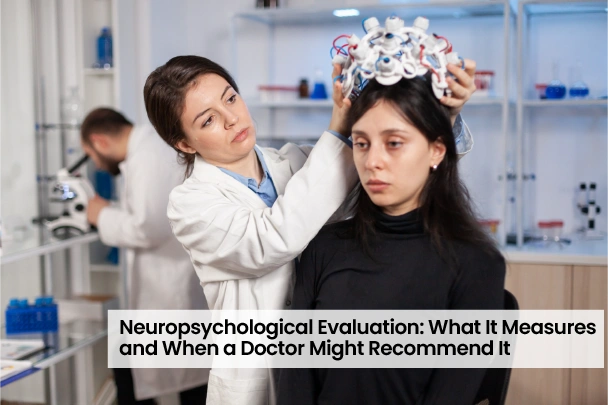
The brain is responsible for thinking, learning, memory, emotions, language, attention, and problem-solving. When changes occur in these abilities, they can significantly affect daily life, work, education, and social functioning. Sometimes these changes are subtle, while in other cases they become noticeable enough to interfere with routine activities. A neuropsychological evaluation is a comprehensive assessment designed to understand how the brain is functioning and identify areas of cognitive strength and difficulty.
Unlike a routine medical examination or brain scan, a neuropsychological evaluation focuses on how well different brain functions are working through standardized tests and clinical observation. Understanding what these evaluations measure and when they are recommended can help individuals and families make informed decisions about diagnosis, treatment, and rehabilitation.
What Is a Neuropsychological Evaluation?
A neuropsychological evaluation is a detailed assessment conducted by a trained neuropsychologist to examine cognitive, emotional, and behavioral functioning. It involves a series of standardized tasks that measure different aspects of brain performance, allowing professionals to identify patterns of strengths and weaknesses.
The process is not designed to determine intelligence alone. Instead, it provides a detailed picture of how the brain processes information and how neurological or psychological conditions may be affecting everyday functioning.
Many healthcare providers recommend neuropsychological testing when they need additional information that cannot be obtained through imaging studies such as MRI or CT scans.
What Does a Neuropsychological Evaluation Measure?
A comprehensive assessment may evaluate several cognitive domains depending on the individual’s concerns.
Attention and Concentration
The evaluation measures the ability to focus, sustain attention, and shift between tasks. Attention difficulties can affect academic performance, workplace productivity, and daily activities.
Learning and Memory
Memory assessments examine both short-term and long-term recall, verbal learning, visual memory, and recognition abilities. These tests help distinguish between normal forgetfulness and clinically significant memory impairment.
Executive Functioning
Executive functions include planning, organizing, decision-making, reasoning, and problem-solving. These higher-order skills are essential for managing everyday responsibilities independently.
Language Skills
The evaluation may assess comprehension, naming, reading, writing, verbal fluency, and expressive language abilities.
Visual-Spatial Abilities
These tests examine how individuals perceive, interpret, and organize visual information, which is important for navigation, drawing, driving, and recognizing objects.
Processing Speed
Processing speed measures how quickly a person can understand and respond to information. Slower processing may occur following brain injury or in several neurological conditions.
Emotional and Behavioral Functioning
Neuropsychological evaluations also explore emotional factors that may influence cognitive performance. Symptoms of anxiety, depression, or persistent anger can affect concentration, memory, and decision-making, making it important to consider emotional well-being alongside cognitive functioning.
When Might a Doctor Recommend a Neuropsychological Evaluation?
Healthcare providers recommend these assessments for a variety of medical, neurological, and psychological concerns.
After a Brain Injury
Individuals who have experienced a concussion or traumatic brain injury may continue experiencing memory problems, reduced concentration, or slower thinking despite normal imaging results. Neuropsychological testing helps identify these difficulties and guide rehabilitation.
Suspected Dementia or Memory Disorders
Older adults experiencing progressive memory loss or confusion may undergo evaluation to differentiate normal aging from conditions such as Alzheimer’s disease or other forms of dementia.
Neurological Conditions
People with epilepsy, stroke, multiple sclerosis, Parkinson’s disease, or other neurological disorders may benefit from evaluation to determine how the condition affects thinking and daily functioning.
Learning Difficulties
Children, adolescents, and adults with persistent academic challenges may undergo assessment to identify learning disorders, attention difficulties, or developmental conditions.
Mental Health Conditions
Persistent emotional distress can influence cognitive performance. Individuals experiencing low motivation, emotional difficulties, or significant changes in thinking may benefit from a comprehensive evaluation that distinguishes psychological factors from neurological conditions.
What Happens During the Evaluation?
The assessment usually begins with a clinical interview that includes medical history, educational background, developmental history, current symptoms, medications, and daily functioning.
The testing session may last several hours depending on the referral question and the number of cognitive domains being assessed.
Tasks may include:
- Remembering words or stories
- Solving puzzles
- Drawing shapes
- Answering questions
- Completing attention exercises
- Language tasks
- Problem-solving activities
The tests are designed to measure performance rather than pass or fail. Breaks are provided when needed to reduce fatigue.
How Are the Results Used?
The neuropsychologist compares an individual’s performance with standardized norms based on age, education, and other demographic factors.
The final report typically includes:
- Cognitive strengths
- Areas of impairment
- Diagnostic impressions
- Functional implications
- Personalized treatment recommendations
The results help physicians, neurologists, psychiatrists, psychologists, educators, and rehabilitation professionals develop individualized care plans.
Treatment Following an Evaluation
A neuropsychological evaluation does not itself provide treatment; rather, it guides future interventions.
Depending on the findings, recommendations may include:
- Cognitive rehabilitation
- Speech therapy
- Occupational therapy
- Educational accommodations
- Lifestyle modifications
- Medication review
- Psychotherapy
When emotional factors contribute to cognitive difficulties, approaches such as cognitive behavioural therapy may help individuals develop healthier thinking patterns, improve coping strategies, and enhance overall functioning.
Many individuals also discover that improving daily routines, sleep habits, stress management, and self-improvement practices can positively influence cognitive health over time.
The Importance of Early Assessment
Early identification of cognitive difficulties allows timely intervention before problems significantly interfere with work, education, independence, or quality of life.
Family members also benefit from understanding the nature of cognitive changes, enabling them to provide more effective support and realistic expectations.
Additionally, identifying cognitive strengths helps clinicians design rehabilitation plans that build upon preserved abilities while addressing areas requiring assistance.
Seeking Professional Guidance
If you or a loved one notices persistent changes in memory, attention, language, or thinking abilities, consulting a healthcare professional is an important first step. Individuals often begin by searching online for a therapist near me or counsellor near me, but concerns involving cognition may also require referral to a neuropsychologist for specialized assessment.
For those seeking psychological counselling in Delhi or consulting an experienced psychologist in Delhi NCR, a comprehensive evaluation can provide valuable insight into the relationship between cognitive functioning, emotional well-being, and daily performance. It also helps improve communication within the family and strengthen every important relationship by providing a clearer understanding of the challenges an individual may be experiencing.
Conclusion
A neuropsychological evaluation is a powerful tool for understanding how the brain functions across multiple areas of cognition and behavior. Rather than relying solely on medical imaging, it provides detailed information about memory, attention, language, executive functioning, and emotional health.
To better understand cognitive, emotional, and behavioural functioning, individuals experiencing concerns related to memory, attention, learning, executive functioning, brain injury, or neurological conditions can seek professional support at Psychowellness Center. Services are available in person at Dwarka and Janakpuri, New Delhi (Contact: 011-47039812 / 7827208707) and online through TalktoAngel. With the guidance of experienced clinical psychologists and mental health professionals, comprehensive neuropsychological evaluations can help identify cognitive strengths and challenges, clarify diagnoses, support treatment planning, monitor recovery or disease progression, recommend appropriate educational or workplace accommodations, and provide evidence-based interventions tailored to each individual’s unique needs, ultimately improving daily functioning, quality of life, and overall psychological well-being.
Contributions: Dr. R.K. Suri, Clinical Psychologist, and Ms. Mahima Mathur , Counselling Psychologist
References
Strauss, E., Sherman, E. M. S., & Spreen, O. (2006). A compendium of neuropsychological tests: Administration, norms, and commentary (3rd ed.). Oxford University Press.
American Academy of Clinical Neuropsychology. (2007). American Academy of Clinical Neuropsychology (AACN) practice guidelines for neuropsychological assessment and consultation. The Clinical Neuropsychologist, 21(2), 209–231. https://doi.org/10.1080/13854040601095713
https://www.psychowellnesscenter.com/service-neuro-psychology-delhi/
https://www.psychowellnesscenter.com/service-neuropsychological-test-in-delhi/