
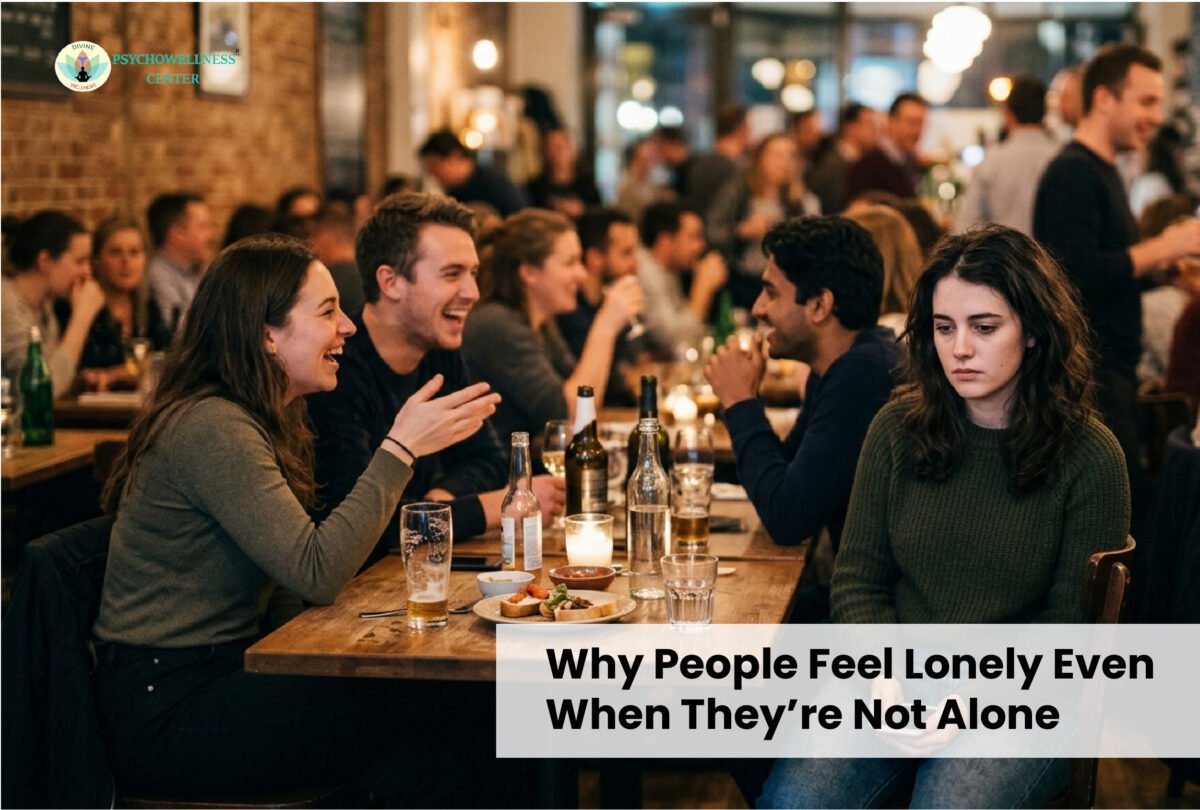
Loneliness is often imagined as physical isolation, being alone in a room, away from people, disconnected from society. Even in the presence of friends, relatives, or coworkers, many people still feel profoundly alone. This paradox, feeling lonely in the presence of others, is becoming increasingly common in today’s fast-paced, digitally connected world. Understanding why this happens is crucial to addressing emotional well-being and fostering meaningful connections.
The Distinction Between Feeling Lonely versus Being Alone
Being alone is a physical state, whereas loneliness is an emotional experience. A person can enjoy solitude and feel content, while another may be in a crowd yet feel invisible or disconnected. Emotional loneliness stems from a lack of meaningful, fulfilling relationships rather than simply the absence of people.
This distinction is crucial because it emphasizes that loneliness is more about the quality of interactions than their quantity. People who lack deep emotional bonds often feel misunderstood, unheard, or unsupported, even if they are socially active.
Emotional Disconnection in Modern Relationships
Emotional detachment is one of the main causes of loneliness in persons who are not alone. Nowadays, a lot of relationships are based more on superficial exchanges than on profound emotional closeness. Conversations often revolve around routine topics rather than personal thoughts, feelings, or vulnerabilities.
In families, for example, members may live under the same roof but remain emotionally distant. Similarly, in workplaces, colleagues may collaborate daily but rarely connect on a personal level. This lack of emotional depth can create a sense of emptiness and isolation.
The Role of Technology and Social Media
While technology has made communication more accessible, it has also contributed to emotional isolation. Social media platforms often promote curated versions of life, leading individuals to compare themselves with others and feel inadequate or excluded.
Constant online interaction can replace meaningful face-to-face communication, resulting in shallow connections. Feelings of loneliness can be exacerbated by the delusion of being “connected,” which can conceal the lack of real emotional support.
Unmet Emotional Needs
Every individual has emotional needs such as validation, empathy, understanding, and belonging. When these conditions are not met, loneliness can happen even in close relationships. For instance, a person may have a partner or family, but still feel lonely if they do not feel emotionally supported or valued.
Unexpressed emotions also play a role. Many people struggle to communicate their feelings due to fear of judgment, rejection, or conflict. Over time, this emotional suppression can lead to a sense of isolation.
Past Experiences and Attachment Patterns
Childhood experiences and attachment styles significantly influence how individuals form and maintain relationships. People with insecure attachment styles may find it difficult to trust others or open up emotionally. They may find it difficult to establish meaningful connections, which might result in loneliness even in partnerships.
Past trauma, rejection, or betrayal can also create emotional barriers. People may defend themselves by avoiding vulnerability, which might impede true connection, even if it may feel secure.
The Pressure to Appear “Okay”
In many cultures, including urban environments like Delhi NCR, there is often pressure to appear strong, successful, and emotionally stable. This societal expectation can discourage people from expressing vulnerability or seeking help.
People may so conceal their own emotions beneath a façade, which can result in emotional loneliness. When people feel they cannot be their authentic selves, even close relationships can feel distant.
Lack of Self-Connection
Sometimes, loneliness is not just about disconnection from others but also from oneself. People who are not aware of their own needs, feelings, or identity may find it difficult to build deep relationships with other people.
Self-awareness and self-acceptance are essential for building healthy relationships. Without understanding oneself, it becomes difficult to communicate effectively or connect deeply with others.
Transitional Life Phases
Significant life changes, such as relocating, changing employment, getting married, or starting a family, can also cause loneliness. Even positive transitions can disrupt existing support systems and create emotional gaps.
In metropolitan areas like Delhi, where lifestyles are fast-paced and demanding, people often prioritize work over relationships, unintentionally neglecting emotional connections.
When to Seek Professional Help
Persistent feelings of loneliness can impact mental health, leading to anxiety, depression, or low self-esteem. People might learn more effective coping strategies and comprehend the underlying causes of their loneliness by consulting a psychologist in Delhi.
A qualified psychologist in Delhi NCR can assist in improving communication skills, building emotional awareness, and fostering meaningful relationships. Therapy provides a safe space to express feelings without judgment, helping individuals reconnect with themselves and others.
It is important to choose professionals who focus on personalized care and evidence-based approaches. Many of the best psychologists in Delhi emphasize holistic well-being, addressing both emotional and relational aspects of loneliness.
The Importance of Counselling
Engaging in counselling in Delhi can be a transformative step toward overcoming loneliness. Counselling helps individuals identify patterns in their relationships, understand emotional needs, and develop strategies for deeper connections.
Through psychological counselling in Delhi, individuals can learn to express themselves more openly, set healthy boundaries, and cultivate fulfilling relationships. Therapy also helps in addressing underlying issues such as past trauma, low self-esteem, or social anxiety.
Practical Ways to Cope with Loneliness
Although expert assistance is beneficial, self-help techniques can also lessen feelings of isolation:
- Build Emotional Awareness: Take time to understand your feelings and needs.
- Communicate Openly: Share your thoughts and emotions with trusted individuals.
- Limit Social Media Use: Focus on real-life interactions rather than virtual comparisons.
- Engage in Meaningful Activities: Pursue hobbies or interests that bring joy and connection.
- Strengthen Existing Relationships: Invest time and effort in deepening bonds rather than expanding social circles.
Conclusion
Feeling lonely despite not being alone is a complex emotional experience rooted in disconnection, unmet needs, and modern lifestyle challenges. It highlights the importance of meaningful relationships, emotional intimacy, and self-awareness.
Professional support can play a crucial role in addressing loneliness. Psychowellness Center, with locations in Janakpuri and Dwarka Sector 17, Delhi, offers expert mental health services for individuals seeking emotional well-being. You can reach out at 011-47039812 / 7827208707 for guidance and support.
Additionally, platforms like TalktoAngel provide accessible and reliable online counselling services, helping individuals connect with experienced professionals from the comfort of their homes. Seeking help is a sign of strength, and taking that step can lead to deeper connections and a more fulfilling life.
Contributions: Dr. R.K. Suri, Clinical Psychologist, and Ms. Tanu Sangwan, Counselling Psychologist
References
https://www.psychowellnesscenter.com/Blog/why-loneliness-is-a-complex-emotion/
https://www.psychowellnesscenter.com/Blog/signs-of-deep-loneliness-and-ways-to-overcome-it/
https://www.psychowellnesscenter.com/Blog/psychological-risks-associated-with-social-isolation/
Cacioppo, J. T., & Cacioppo, S. (2018). Loneliness in the modern age: An evolutionary theory of loneliness (ETL). Advances in Experimental Social Psychology, 58, 127–197.
Hawkley, L. C., & Capitanio, J. P. (2015). Perceived social isolation, evolutionary fitness, and health outcomes. Annual Review of Psychology, 66, 429–457.
Peplau, L. A., & Perlman, D. (1982). Loneliness: A sourcebook of current theory, research and therapy. Wiley.
Rokach, A. (2019). The psychological journey to and from loneliness: Development, causes, and effects of social and emotional isolation. Academic Press.
Weiss, R. S. (1973). Loneliness: The experience of emotional and social isolation. MIT Press.