
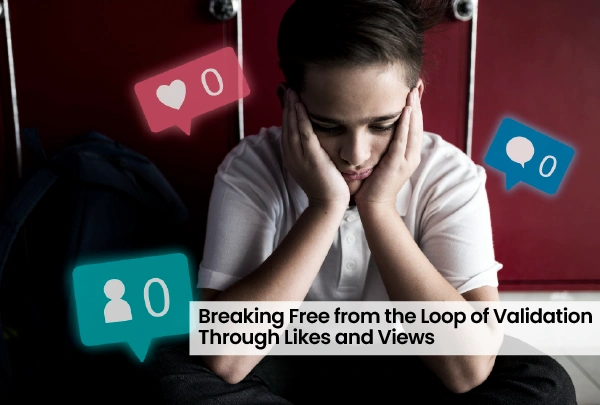
Breaking Free from the Loop of Validation Through Likes and ViewsIn today’s digital world, social media has become an inseparable part of everyday life. Social media sites like Facebook, Instagram, YouTube, and TikTok provide chances for interaction, creation, and experience sharing. However, they have also introduced a subtle yet powerful cycle where self-worth is increasingly measured by likes, comments, shares, followers, and views. While receiving appreciation online can feel rewarding, depending on digital approval for emotional satisfaction can gradually affect confidence, mental health, and personal identity.
Breaking free from the validation loop does not mean quitting social media altogether. Instead, it means learning to value yourself beyond numbers on a screen and developing a healthier relationship with technology.
Understanding the Validation Loop
Human beings naturally seek acceptance and belonging. Positive feedback from others activates the brain’s reward system, making compliments and appreciation feel good. Social media platforms amplify this process by providing instant feedback through notifications, likes, and reactions. Over time, these digital rewards can become psychologically reinforcing, encouraging people to post content primarily for external approval rather than personal expression. Research suggests that social media feedback can temporarily boost self-esteem but may also increase social comparison and emotional dependence when validation becomes the primary source of self-worth.
Initially, checking notifications feels harmless. Eventually, however, many people begin monitoring engagement repeatedly, deleting posts that receive fewer likes, or comparing themselves with others whose content appears more successful.
Why Likes Feel So Important
Every notification creates a small sense of excitement because the brain releases dopamine, a neurotransmitter associated with reward and motivation. This creates anticipation and encourages repeated checking of social media. Unfortunately, the pleasure is often temporary.
When a post performs well, confidence may rise briefly. When it doesn’t, disappointment, self-doubt, or anxiety may follow. This emotional dependence makes self-esteem vulnerable to algorithms and public reactions rather than internal values or achievements. Studies have found that people who rely heavily on online validation often report lower well-being, increased social comparison, and greater psychological distress over time.
The Hidden Cost of Constant Comparison
Social media mostly showcases carefully curated moments, vacations, achievements, celebrations, fitness transformations, or professional milestones. Rarely do users share failures, loneliness, or ordinary routines with equal frequency.
Comparing your everyday life to someone else’s highlight reel creates unrealistic expectations. You may begin believing that everyone else is happier, more attractive, or more successful. These comparisons gradually weaken self-confidence and foster feelings of inadequacy, even when your own life is meaningful and fulfilling.
Signs That You May Be Seeking Too Much External Validation
Some common indicators include:
- Constantly checking likes or views after posting.
- Feeling disappointed when engagement is lower than expected.
- Deleting posts because they did not receive enough attention.
- Measuring personal success by followers instead of real-life achievements.
- Feeling anxious when away from social media.
- Changing your personality or opinions simply to gain approval.
Recognizing these behaviours is the first step toward healthier digital habits.
Building Internal Validation
True confidence develops from within rather than from external approval. Internal validation means appreciating your own efforts, values, and growth regardless of how others respond.
You can strengthen internal validation by:
- Celebrating personal achievements privately.
- Practising gratitude every day.
- Setting meaningful goals unrelated to social media.
- Engaging in hobbies that bring genuine satisfaction.
- Spending quality time with supportive family and friends.
- To identify emotional triggers, engage in mindfulness exercises.
As you become more comfortable with your authentic self, digital approval naturally becomes less influential.
Create Healthier Social Media Habits
Rather than abandoning technology completely, aim for balanced use.
Helpful strategies include:
- Limit daily screen time using digital well-being tools.
- Turn off non-essential notifications.
- Avoid checking social media immediately after waking up or before sleeping.
- Follow accounts that educate, inspire, or promote realistic lifestyles.
- Unfollow content that consistently triggers insecurity or comparison.
- Take regular digital detox days to reconnect with offline experiences.
Research indicates that mindful and intentional social media use is associated with better emotional well-being than passive scrolling.
Strengthening Self-Esteem Offline
Real confidence grows through experiences that cannot be measured by likes.
Develop skills, volunteer, pursue fitness goals, read books, build meaningful friendships, or learn something new. Each accomplishment contributes to lasting self-worth because it reflects personal effort rather than public opinion.
Keeping a journal can also help identify strengths, achievements, and moments of gratitude that often go unnoticed amid the constant flow of online content.
Supporting Teenagers and Young Adults
Young people are particularly vulnerable because identity formation continues throughout adolescence and early adulthood. Parents, teachers, and caregivers should encourage open conversations about social media, emotional health, and self-worth.
Instead of focusing only on limiting screen time, adults can teach critical thinking about edited images, influencer culture, and unrealistic online expectations. Promoting sports, arts, volunteering, and face-to-face interactions helps young people build confidence through real-life experiences rather than digital metrics.
When Professional Support Can Help
If anxiety, sadness, loneliness, depression, low self-esteem, or compulsive social media use begins interfering with daily life, professional counselling can provide valuable support. Therapy helps individuals understand emotional triggers, challenge negative thinking patterns, improve self-esteem, and develop healthier coping strategies.
Those looking for psychologist in Delhi NCR services can benefit from evidence-based counselling that addresses concerns related to social media dependence, anxiety, stress, self-esteem, and emotional well-being. Similarly, individuals searching for the best psychologists in Delhi can seek guidance from qualified mental health professionals who provide personalized therapeutic interventions. Comprehensive counselling in Delhi is available for adolescents, adults, couples, and families experiencing emotional or behavioural concerns.
Conclusion
Breaking free from the validation loop is not about rejecting technology; it is about reclaiming your self-worth. Likes, views, and followers may reflect temporary online engagement, but they should never define your identity, happiness, or value as a person. Real confidence grows through meaningful relationships, personal growth, resilience, and self-acceptance.
Psychowellness Center provides evidence-based psychological assessment, counselling, and psychotherapy services for children, adolescents, adults, couples, and older adults. The center is conveniently located at Janakpuri and Dwarka Sector 17, Delhi. To schedule an appointment, call 011-47039812 or 7827208707.
For individuals seeking flexible mental health support from the comfort of their homes, TalktoAngel offers secure online counselling with experienced psychologists. Together, Psychowellness Center and TalktoAngel are committed to promoting emotional well-being and helping individuals build healthier, more fulfilling lives.
Contributions: Dr. R.K. Suri, Clinical Psychologist, and Ms. Tanu Sangwan, Counselling Psychologist
References
https://www.psychowellnesscenter.com/Blog/why-validation-must-come-from-within/
https://www.psychowellnesscenter.com/Blog/breaking-free-from-people-pleasing-habits/
https://www.psychowellnesscenter.com/Blog/how-social-media-reinforces-romantic-delusions/
American Psychiatric Association. (2024). Diagnostic and statistical manual of mental disorders (5th ed., text rev.).
Burrow, A. L., & Rainone, N. (2017). How many likes did I get? Purpose moderates links between positive social media feedback and self-esteem. Journal of Experimental Social Psychology, 69, 232–236.
Miljeteig, K., & von Soest, T. (2022). An experience sampling study on the association between social media use and self-esteem. Journal of Media Psychology, 34(2), 83–95.
Stapleton, P., Luiz, G., & Chatwin, H. (2017). Generation validation: The role of social comparison in Instagram use among emerging adults. Cyberpsychology, Behavior, and Social Networking, 20(3), 142–149.
Valkenburg, P. M., Meier, A., & Beyens, I. (2022). Social media use and its impact on adolescent mental health: An umbrella review of the evidence. Current Opinion in Psychology, 44, 58–68.