
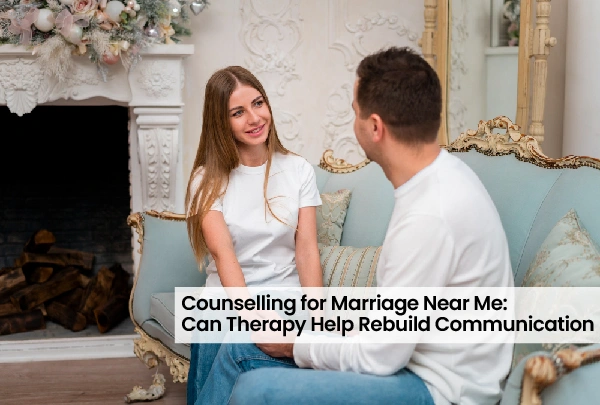
Healthy relationships depend on the ability of two people to communicate openly, listen to each other, express needs, and work through disagreements respectfully. However, communication can gradually become difficult when couples experience unresolved disagreements, changing responsibilities, financial pressures, parenting demands, emotional disconnection, or repeated misunderstandings. Over time, conversations may become limited to practical matters, while important feelings and concerns remain unspoken.
When communication breaks down, partners may begin interpreting each other’s words negatively, avoiding difficult discussions, or responding defensively. These patterns can create emotional distance even when both individuals want the relationship to improve. Professional counselling can provide a structured and supportive environment where partners can understand these patterns and learn healthier ways of communicating.
Marriage counseling does not simply focus on deciding who is right or wrong. Instead, it helps partners understand the interaction patterns affecting their relationship and develop practical strategies for rebuilding trust, emotional connection, and mutual understanding.
Understanding Communication Difficulties
Communication problems rarely develop overnight. They may begin with small misunderstandings that remain unresolved and gradually become recurring patterns. One partner may feel unheard, while the other may feel criticised or pressured. Eventually, both individuals may begin protecting themselves rather than trying to understand each other.
Persistent stress can make constructive conversations more difficult. When individuals feel emotionally overwhelmed, they may have less patience and become more reactive during disagreements. Similarly, anxiety may lead a partner to overthink conversations, anticipate rejection, or avoid expressing concerns.
In some situations, ongoing relationship difficulties can contribute to depression, particularly when a person feels emotionally isolated or believes that repeated attempts to improve the relationship have failed. Difficulties with sleep may further affect mood, concentration, and emotional availability.
Unresolved anger can also interfere with communication. Frequent criticism, shouting, withdrawal, or hostile responses can make both partners feel unsafe during discussions. Therapy can help individuals understand emotional triggers and develop healthier responses.
How Therapy Creates a Safer Conversation
A major benefit of professional therapy is the creation of a structured environment where both partners have an opportunity to express themselves.
A therapist can help couples slow down difficult conversations and identify what is happening beneath an argument. For example, a disagreement about household responsibilities may actually involve feelings of being unappreciated, unsupported, or overwhelmed.
Therapy can also encourage emotional control by helping individuals identify emotional triggers and develop strategies for responding rather than reacting. This does not mean suppressing feelings. Instead, partners learn to communicate difficult emotions in ways that are respectful and constructive.
Another important skill is assertiveness. Partners can learn to express needs clearly without blaming, threatening, or dismissing the other person’s perspective. Statements such as “I feel overwhelmed when responsibilities are unclear” can create more productive conversations than accusations or generalisations.
Rebuilding Emotional Connection
Effective communication involves more than exchanging information. Partners also need to feel emotionally understood.
Therapy can help couples identify emotional needs and recognize patterns of withdrawal, criticism, defensiveness, or avoidance. Once these patterns become visible, partners can begin replacing them with listening, validation, empathy, and collaborative problem-solving.
Intimacy can also be affected when emotional communication deteriorates. Emotional closeness may decrease when partners stop sharing personal experiences, concerns, affection, or appreciation. Rebuilding connection often requires small, consistent behaviours such as spending meaningful time together, expressing gratitude, and discussing feelings without immediately attempting to solve them.
Practising mindfulness can further support healthier conversations. Paying attention to the present moment can help partners notice emotional reactions before responding impulsively. Taking a brief pause during a heated discussion may allow both individuals to return to the conversation with greater clarity.
Developing Shared Relationship Goals
Therapy can help couples identify what they want their relationship to look like in the future. Goal setting can turn broad intentions such as “we want to communicate better” into specific and measurable actions.
For example, partners may decide to:
- Schedule regular conversations without distractions.
- Practise active listening during disagreements.
- Avoid interrupting one another.
- Discuss household responsibilities openly.
- Establish boundaries around arguments.
- Spend intentional time together each week.
- Express appreciation regularly.
These small changes can create a foundation for long-term improvement. Couples do not need to eliminate every disagreement to have a healthy relationship. Instead, they can learn how to disagree without damaging emotional safety.
Supporting Personal Growth Within the Relationship
A relationship consists of two individuals, each bringing personal experiences, expectations, beliefs, and coping patterns. Therapy may therefore involve individual reflection alongside joint sessions.
Self-improvement can involve developing greater awareness of one’s communication style, emotional triggers, expectations, and behavioural patterns. Individuals may discover that certain reactions developed from previous experiences and are being unintentionally carried into the current relationship.
Counselling can also help partners recognise when personal responsibility is necessary. Rebuilding communication requires both individuals to examine their own behaviour rather than focusing exclusively on the other person’s mistakes.
When Couples May Consider Professional Help
Professional support can be valuable when conversations repeatedly end in arguments, silence, emotional withdrawal, or unresolved resentment. Couples may also consider therapy when they are experiencing major life transitions or trying to determine the future direction of their relationship.
Therapy can be useful before significant difficulties emerge. Premarital counselling, for example, can help couples discuss expectations regarding finances, family responsibilities, communication, conflict resolution, boundaries, and plans.
For couples already experiencing serious difficulties, counselling may help them evaluate whether their relationship can be repaired and what changes are required. When partners are considering divorce, professional support can provide a structured setting for understanding concerns and making thoughtful decisions rather than reacting solely during periods of intense conflict.
Individuals seeking the Best Psychologists in Delhi can consider professionals with relevant experience in relationship concerns. Those looking for psychological counselling in Delhi may explore practitioners who provide evidence-based relationship interventions.
People searching for a psychologist in Delhi should consider qualifications, experience, therapeutic approach, and comfort with the practitioner. Families or individuals exploring counselling in Delhi can also ask about the therapist’s approach to relationship concerns and whether sessions are structured for couples, individuals, or both.
Conclusion
Communication difficulties can gradually create emotional distance, but they do not necessarily mean that a relationship cannot improve. With professional guidance, couples can learn to recognise unhealthy interaction patterns, express emotions more constructively, listen with greater empathy, and develop realistic strategies for resolving disagreements. The process requires patience, consistency, and willingness from both individuals to participate in meaningful change.
You can learn more about self-improvement and mindfulness and explore more educational videos on the Psychowellness Center YouTube Channel.
Call For Action
Individuals seeking professional psychological support may consider the services offered by Psychowellness Center. With centres conveniently located in Janakpuri and Dwarka Sec-17, Delhi, the clinic provides confidential and evidence-based mental health care. To book an appointment or learn more about the services, individuals can contact 011-47039812 or 7827208707.
Frequently Asked Questions
1. Can counselling really help rebuild communication in a marriage?
Yes. Professional counselling can help partners identify unhelpful communication patterns, understand each other’s perspectives, practise active listening, and develop healthier ways of handling disagreements. Progress depends on the circumstances and willingness of both partners to participate.
2. Should both partners attend therapy?
Joint participation can be helpful because communication patterns involve both individuals. However, individual sessions may sometimes be appropriate depending on the concerns, safety considerations, or therapeutic needs.
3. How long does relationship therapy take?
There is no fixed duration. Some couples may notice improvements after several sessions, while others require longer-term support because of longstanding conflicts or complex circumstances.
4. Is counselling appropriate if a couple is considering divorce?
Counselling can help partners understand their concerns and explore possible options. It does not require a couple to remain together and can provide a structured environment for thoughtful decision-making.
5. Can therapy help couples who are not married yet?
Yes. Premarital support can help partners discuss expectations, communication styles, finances, family relationships, boundaries, and future responsibilities before entering married life.
Contributions: Dr. R.K. Suri, Clinical Psychologist, and Mr. Harshit Vaid, Counselling Psychologist
References
https://www.psychowellnesscenter.com/Blog/why-one-should-go-for-marriage-counselling/
https://www.psychowellnesscenter.com/best-marriage-counselling-near-me/delhi-ncr/
https://www.psychowellnesscenter.com/Blog/importance-of-marriage-counseling/
https://www.psychowellnesscenter.com/Blog/benefits-of-marriage-counseling/
https://www.psychowellnesscenter.com/Blog/why-couples-are-turning-to-marriage-counselling/
American Psychological Association. (2020). Publication manual of the American Psychological Association (7th ed.). American Psychological Association.
Gottman, J. M., & Silver, N. (2015). The seven principles for making marriage work (Revised ed.). Harmony Books.
Johnson, S. M. (2019). Attachment theory in practice: EFT with individuals, couples, and families. Guilford Press.