
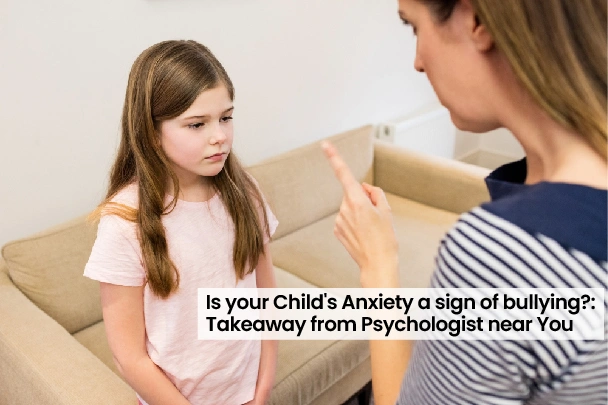
Children experience many emotions while growing up. Feeling nervous before an examination, being worried about making friends, or becoming anxious about a new environment can be a normal part of childhood. However, when anxiety becomes frequent, intense, or noticeably changes a child’s behaviour, parents may need to look beyond everyday stress.
One possible reason behind persistent anxiety is bullying. Bullying can affect a child’s emotional well-being, self-confidence, relationships, academic performance, and sense of safety. Unfortunately, children do not always tell parents when they are being bullied. Instead, they may communicate their distress through changes in behaviour or physical symptoms.
If you are concerned about your child’s anxiety, understanding the possible connection between anxiety, depression, trauma, and bullying can be an important first step. A psychologist near you can also help identify what may be contributing to your child’s distress and provide appropriate support.
What Is Bullying?
Bullying is repeated aggressive behaviour in which there is a real or perceived imbalance of power between children. It can be physical, verbal, social, or psychological.
Bullying may include:
- Teasing, name-calling, or insulting
- Physical pushing, hitting, or threatening
- Deliberately excluding a child from a group
- Spreading rumours or embarrassing information
- Intimidation or threatening behaviour
- Cyberbullying through social media, messaging platforms, or online groups
For some children, bullying may occur at school, while others may experience it through neighbourhood groups, extracurricular activities, or online spaces.
How Can Bullying Lead to Anxiety?
When a child repeatedly feels unsafe, rejected, humiliated, or threatened, their body and mind may remain in a heightened state of alertness. Over time, this can contribute to anxiety.
A child who is being bullied may begin worrying about what could happen at school, during lunch breaks, on the school bus, or even online. This constant anticipation can make ordinary activities feel threatening.
Research has also found associations between bullying victimization and mental health difficulties, including anxiety and depressive symptoms (Moore et al., 2017).
Importantly, anxiety does not automatically mean that a child is being bullied. There can be many possible causes, including academic pressure, family changes, social difficulties, separation anxiety, or other emotional concerns. However, bullying should be considered when the pattern fits.
Signs That Your Child May Be Struggling
Children may not always say, “Someone is bullying me.” Instead, parents may notice subtle changes.
Some possible warning signs include:
1. Sudden School Avoidance
Your child may suddenly complain about not wanting to go to school, frequently ask to stay home, or become particularly anxious before school days.
2. Changes in Mood
A normally cheerful child may become unusually quiet, irritable, tearful, angry, or withdrawn.
3. Physical Complaints
Anxiety can sometimes appear through physical symptoms such as headaches, stomachaches, nausea, tiredness, or difficulty sleeping. These symptoms should not automatically be assumed to be psychological; medical causes should also be considered.
4. Loss of Confidence
A child who is repeatedly criticised, excluded, or humiliated may begin saying things such as, “Nobody likes me,” “I am not good enough,” or “I don’t want to go there.”
5. Changes in Friendships
Sudden withdrawal from friends, avoiding social situations, or losing interest in activities they previously enjoyed may indicate that something is troubling them.
6. Changes in Academic Performance
Difficulty concentrating, reduced participation, declining grades, or reluctance to answer questions in class can sometimes accompany emotional distress.
Why Children May Not Tell Their Parents
Parents often wonder, “Why didn’t my child tell me?”
There can be several reasons. Children may fear that telling an adult will make the situation worse. They may feel embarrassed, believe that nobody will understand, or worry that their parents will immediately confront the bully.
Some children may also believe that bullying is their fault or that they should simply tolerate it.
This is why parents should avoid immediately asking accusatory questions such as, “Why didn’t you stand up for yourself?”
Instead, creating a safe and non-judgmental environment can encourage communication.
What Can Parents Do?
The first step is to listen without immediately judging or trying to solve everything.
You can say:
“I’ve noticed that you’ve seemed worried lately. You can talk to me about anything, and I will listen.”
Take your child’s concerns seriously. Ask gentle, open-ended questions such as:
- “How has school been feeling lately?”
- “Is there anything that makes you uncomfortable at school?”
- “How are things with your classmates?”
- “Has anyone said or done something that made you feel unsafe?”
If bullying is confirmed or strongly suspected, parents should work with the school or relevant adults to address the situation rather than expecting the child to manage it alone.
When Should You Consider Professional Help?
Consider consulting a psychologist when anxiety is persistent, interferes with school or daily functioning, affects sleep or relationships, or is accompanied by significant withdrawal or distress.
A psychologist can help understand whether the child’s anxiety may be connected to bullying or another underlying concern. Professional support can also help children develop healthy coping skills, improve emotional regulation, rebuild confidence, and learn ways to communicate their experiences safely.
Seeking psychological support does not mean that something is “wrong” with your child. It can simply provide them with a safe space to express what they may find difficult to discuss at home.
Takeaway From a Psychologist Near You
If your child’s behaviour has changed noticeably, don’t ignore the changes simply because they may appear to be “just a phase.” Anxiety can have different causes, and bullying is one possibility that deserves attention.
The most important thing parents can provide is safety, patience, validation, and an opportunity to talk.
If you are looking for a best psychologist in Delhi, professional psychological support can help you better understand your child’s emotional concerns and identify appropriate next steps.
Psychological Support at Psychowellness Center
Psychowellness Center provides psychological and mental health support for children, adolescents, adults, and families. If you are concerned about your child’s anxiety, social difficulties, school-related stress, or emotional well-being, professional consultation can help you understand the situation more clearly.
Psychowellness Center is located in Janakpuri and Dwarka Sector 17, Delhi. For appointments and further information, you can contact the centre at 011-47039812 or 7827208707.
Conclusion
A child’s anxiety should not always be dismissed as ordinary childhood behaviour, especially when there are noticeable changes in mood, school attendance, friendships, confidence, sleep, or physical well-being. Bullying can sometimes remain hidden because children may feel afraid, embarrassed, or unsure about how to talk about their experiences. Parents therefore play an important role in creating an environment where children feel heard, believed, and supported.
The goal is not to immediately assume that bullying is the cause of anxiety, but to remain curious about what the child may be experiencing. With patient communication, appropriate support from parents and schools, and professional psychological guidance when needed, children can learn to cope with difficult experiences, rebuild their confidence, and feel safer in their everyday lives.
If you notice persistent anxiety or significant behavioural changes in your child, reaching out to a qualified psychologist can be an important step toward understanding the concern and supporting your child’s emotional well-being.
Frequently Asked Questions
- Can anxiety in children be a sign of bullying?Yes, persistent anxiety can sometimes be associated with bullying. However, anxiety can have many causes, so it is important to understand the child’s overall situation rather than assuming bullying is the reason.
- What are some signs that my child may be experiencing bullying?A child may suddenly avoid school, become withdrawn or irritable, lose confidence, experience sleep difficulties, complain of unexplained physical symptoms, avoid friends, or show changes in academic performance.
- Why might a child hide bullying from their parents?Children may fear that the situation will become worse, feel embarrassed, worry about being blamed, or believe that adults will not understand. Some children may also feel that they should handle the situation themselves.
- How should parents talk to a child they suspect is being bullied?Parents should remain calm and create a safe, non-judgmental environment. Open-ended questions such as “How have things been at school lately?” can encourage a child to share more comfortably.
Contributed by: Dr. R.K. Suri, Clinical Psychologist, and Ms. Sakshi Dhankhar, Counselling Psychologist
References
Moore, S. E., Norman, R. E., Sly, P. D., Whitehouse, A. J. O., Zubrick, S. R., Scott, J., & Goldfeld, S. (2017). The prevalence of bullying victimisation and the association with mental health problems in children and adolescents: A systematic review. Australian & New Zealand Journal of Psychiatry, 51(9), 878–891. https://doi.org/10.1177/0004867417700287
National Academies of Sciences, Engineering, and Medicine. (2016). Preventing bullying through science, policy, and practice. The National Academies Press. https://doi.org/10.17226/23482
https://www.psychowellnesscenter.com/Blog/signs-your-child-may-need-counseling-for-bullying-trauma/
https://www.psychowellnesscenter.com/Blog/signs-your-child-needs-child-counseling-near-me/
https://www.psychowellnesscenter.com/Blog/recognizing-the-signs-of-bullying-in-teens/
https://www.psychowellnesscenter.com/Blog/how-does-bullying-impact-mental-health/