
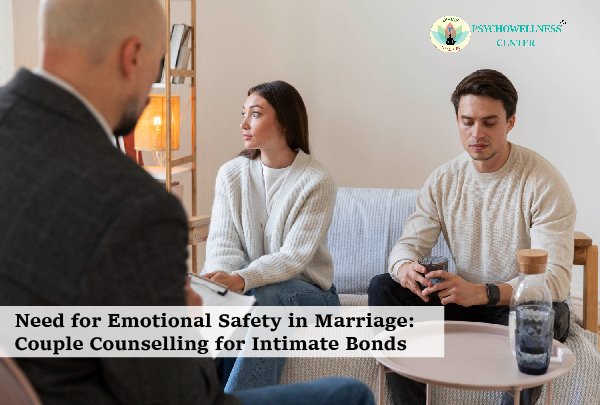
Marriage is not only a legal or social partnership; it is also an emotional bond that requires trust, understanding, respect, and security. In healthy marriages, partners feel emotionally safe enough to express their thoughts, fears, vulnerabilities, and emotions without fear of criticism or rejection. However, when emotional safety is missing, relationships can slowly become filled with tension, misunderstanding, loneliness, and emotional distance.
In today’s fast-paced lifestyle, many couples struggle with communication issues, work stress, parenting responsibilities, and unresolved emotional wounds. As a result, emotional intimacy often weakens over time. This is one of the reasons why many people begin searching for the “best couple counsellor near me” to seek professional support for rebuilding emotional connection and restoring harmony in their marriage.
What Is Emotional Safety in Marriage?
Emotional safety refers to the feeling of being accepted, respected, heard, and valued by one’s partner. It means knowing that you can openly express emotions, opinions, and concerns without being judged, ignored, or emotionally attacked.
Emotionally safe relationships allow partners to:
- Share vulnerabilities comfortably
- Communicate honestly
- Resolve conflicts respectfully
- Feel emotionally connected
- Trust one another deeply
When emotional safety exists, couples feel secure enough to grow individually and together. However, when emotional safety is damaged, even small disagreements can trigger emotional pain and defensiveness.
Why Emotional Safety Is Important for Intimate Bonds
Intimacy is built on emotional trust. Without emotional safety, couples may begin hiding their feelings, avoiding communication, or emotionally withdrawing from each other. Over time, this weakens emotional and physical intimacy.
Emotionally unsafe marriages often involve:
- Frequent criticism
- Blame and defensiveness
- Lack of empathy
- Emotional neglect
- Silent treatment
- Fear of open communication
Psychological studies show that emotionally secure couples experience greater relationship satisfaction, lower stress levels, and better mental health outcomes.
Many couples seeking “Couple Counsellor near me” are often not dealing with a lack of love, but rather a lack of emotional understanding and safe communication within the relationship.
The Psychological Science Behind Emotional Safety
According to attachment theory developed by John Bowlby, humans naturally seek emotional security in close relationships. Marriage often becomes the primary emotional attachment in adulthood.
When emotional needs are consistently ignored or invalidated, individuals may react through:
These emotional reactions are usually protective responses to feeling emotionally unsafe.
Couple counselling helps partners identify these emotional triggers and understand the deeper emotional needs hidden beneath conflict. Instead of attacking each other, couples learn to communicate with empathy and emotional awareness.
How Couple Counselling Helps Build Emotional Safety
Professional relationship counseling provides a safe and structured environment where both partners can openly discuss their emotions and concerns. Therapists guide couples toward healthier interaction patterns and emotional understanding.
People searching for the “best couple counselling in Delhi” are often looking for professional guidance to improve emotional communication and rebuild trust in their marriage.
Couple counselling helps partners:
- Improve listening skills
- Express emotions constructively
- Understand emotional triggers
- Resolve conflicts respectfully
- Strengthen empathy and trust
- Reconnect emotionally
Therapists also help couples recognize negative communication cycles that repeatedly damage emotional intimacy.
Communication: The Foundation of Emotional Security
Communication is one of the strongest pillars of emotional safety in marriage. Many marital conflicts arise not because couples do not care about each other, but because they struggle to express emotions effectively.
Unhealthy communication patterns may include:
- Interrupting
- Criticizing
- Shouting
- Avoiding conversations
- Emotional withdrawal
- Passive-aggressive behavior
Healthy communication, on the other hand, promotes emotional closeness and understanding.
Research by John Gottman suggests that successful couples maintain respectful communication even during disagreements. His research emphasizes the importance of emotional responsiveness, validation, and empathy in long-term relationships.
Couples who seek the “best marriage counselling in Delhi NCR” often learn communication tools that help reduce emotional disconnection and strengthen relationship satisfaction.
Emotional Safety and Mental Health
Mental health and emotional safety are deeply interconnected. When marriages lack emotional support, individuals may experience:
- Anxiety
- Depression
- Loneliness
- Chronic stress
- Low self-esteem
- Emotional burnout
On the other hand, emotionally secure relationships provide comfort, stability, and emotional resilience during stressful life situations.
Couples counselling can help partners understand how stress, trauma, childhood experiences, and emotional insecurities influence marital behavior. This understanding reduces blame and increases compassion within the relationship.
Rebuilding Trust After Emotional Hurt
Trust is one of the most important aspects of emotional safety. Emotional betrayal, dishonesty, neglect, or repeated conflict can gradually weaken trust between partners.
Rebuilding trust requires:
- Honest communication
- Accountability
- Emotional consistency
- Patience
- Mutual effort
Therapy helps couples repair emotional wounds by encouraging emotional openness and rebuilding secure attachment patterns.
Many individuals looking for the “best couple counselling in Janakpuri” seek therapy to restore emotional closeness and rebuild trust after difficult relationship experiences.
The Role of Empathy in Marriage
Empathy is the ability to understand and share another person’s emotions. Emotionally safe marriages are built on empathy, compassion, and emotional validation.
Simple empathetic actions such as:
- Listening without judgment
- Acknowledging emotions
- Offering support
- Showing affection
- Being emotionally available can significantly strengthen intimate bonds.
Couples counselling teaches partners how to respond to each other with emotional sensitivity instead of defensiveness or criticism.
Seeking Help Is a Positive Step
Many couples hesitate to seek counseling because they fear judgment or believe therapy is only for severely troubled marriages. In reality, therapy can benefit couples at any stage of their relationship.
Seeking professional support demonstrates emotional maturity and commitment to the marriage. Counseling helps couples develop healthier emotional habits before conflicts become deeply damaging.
Strong marriages are not built on perfection; they are built on emotional understanding, trust, and willingness to grow together.
Conclusion
Emotional safety is the foundation of a healthy and intimate marriage. It allows partners to communicate openly, trust deeply, and support each other emotionally through life’s challenges. Without emotional safety, relationships can become emotionally distant and stressful, even when love still exists.
Couples counselling helps partners rebuild trust, strengthen communication, improve empathy, and create emotionally secure relationships. Seeking timely support can transform conflict into connection and help couples rediscover emotional closeness.
For professional relationship counseling and emotional wellness support, Psychowellness Center provides services at Janakpuri, Delhi and Dwarka Sector 17, Delhi | Contact Numbers: 011-47039812 / 7827208707.
Contributions: Dr. R.K. Suri, Clinical Psychologist, and Ms. Tanu Sangwan, Counselling Psychologist
References
Bowlby, J. (1988). A secure base: Parent-child attachment and healthy human development. Basic Books.
https://www.psychowellnesscenter.com/service-relationship-issues-counselling-delhi/
https://www.psychowellnesscenter.com/Blog/best-marriage-counselors-in-janakpuri-delhi/
https://www.psychowellnesscenter.com/best-marriage-counselling-near-me/delhi-ncr/
https://www.psychowellnesscenter.com/Blog/best-marriage-counsellor-in-dwarka-sector-21-delhi/
Gottman, J. M., & Silver, N. (2015). The seven principles for making marriage work. Harmony Books.
Johnson, S. M. (2019). Attachment theory in practice: Emotionally focused therapy (EFT) with individuals, couples, and families. Guilford Press.
Lebow, J., Chambers, A., Christensen, A., & Johnson, S. M. (2012). Research on the treatment of couple distress. Journal of Marital and Family Therapy, 38(1), 145–168.
Tatkin, S. (2012). Wired for love: How understanding your partner’s brain and attachment style can help you defuse conflict and build a secure relationship. New Harbinger Publications.