
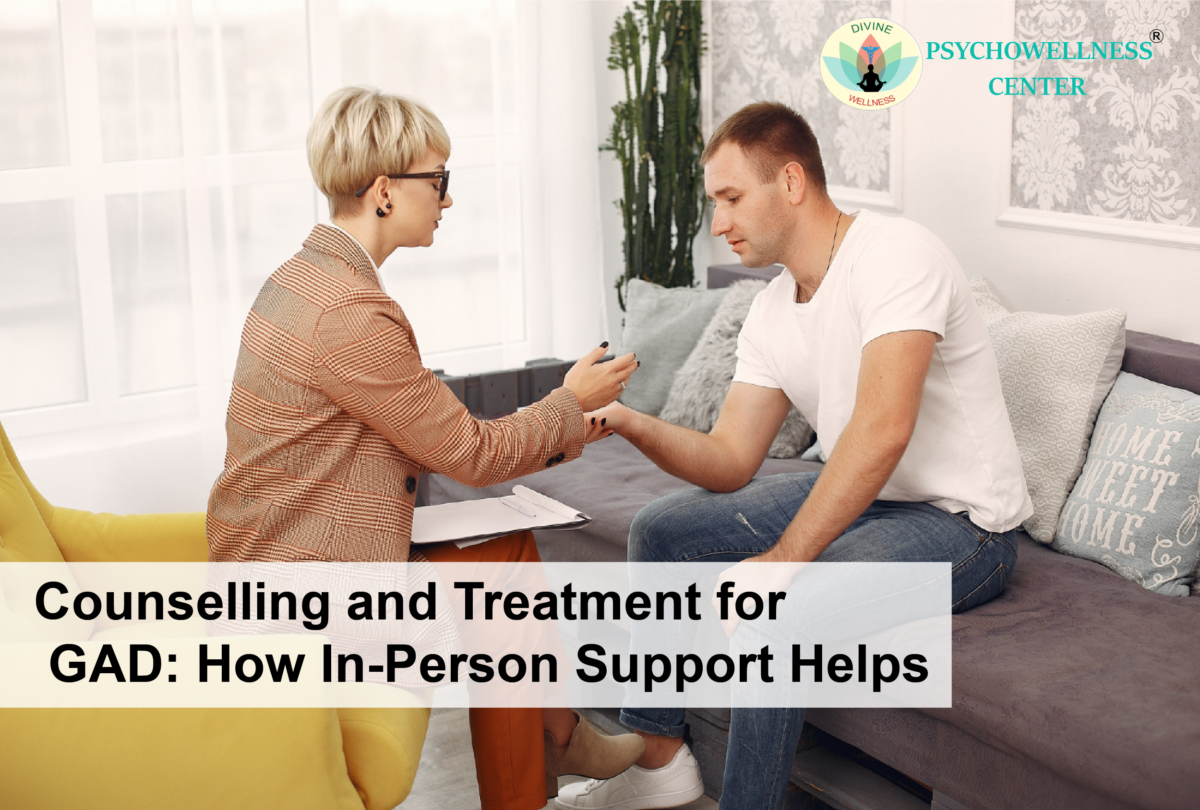
Persistent, excessive, and irrational concern about ordinary things is a hallmark of generalized anxiety disorder (GAD). This chronic state of worry creates a form of internal “cognitive noise” that disrupts the brain’s ability to filter out non-essential stimuli, making it incredibly difficult to maintain sustained focus toward personal, academic, or professional progress.
While digital health resources have grown exponentially, sitting face-to-face with a professional offers a distinct clinical advantage. Understanding the psychological framework of chronic anxiety and how structured, in-person Psychological Counselling rewires the brain provides a clear roadmap toward sustainable mental clarity and long-term success.
Why Managing GAD Is Becoming More Difficult
In today’s fast-paced, hyper-connected environment, our cognitive resources are constantly under siege, complicating the management of chronic anxiety.
- Attention Fragmentation: Constant notifications, social media alerts, and the pressures of multitasking encourage the brain to switch between tasks rapidly. Psychologists call this pattern attention fragmentation, which forces the brain to expend excessive cognitive effort just to reorient itself.
- Chronic Mental Fatigue: For an individual with GAD, this digital fragmentation compounds pre-existing worries, drastically accelerating mental fatigue and reducing daily productivity.
- Performance Anxiety and Burnout: The relentless pressure to remain responsive and productive often induces severe Workplace Stress, driving individuals into a cycle of frustration, low motivation, and performance-related anxiety.
The Neuroscience of Chronic Anxiety and In-Person Regulation
From a neuroscientific perspective, GAD severely disrupts the brain systems responsible for attention, threat assessment, and goal-directed behavior.
- Prefrontal Cortex Impairment: The prefrontal cortex is the brain’s executive hub, responsible for filtering distractions and planning. In a brain flooded by GAD, constant anxiety compromises this region, rendering it difficult to separate actual threats from everyday tasks.
- The Neurotransmitter Baseline: Chronic worry alters the baseline of neurotransmitters like dopamine and norepinephrine. When these are depleted or dysregulated, the brain’s reward system suffers, frequently paving the way for co-occurring Depression.
- The Power of In-Person Co-Regulation: One of the greatest benefits of physical, face-to-face therapy is a biological phenomenon called nervous system co-regulation. Human brains are wired to read microscopic social cues, such as a therapist’s steady breathing, grounded posture, and empathetic facial expressions. In-person support bypasses the limitations of a screen, sending direct safety signals to the patient’s overactive amygdala (the brain’s fear center), making it easier to calm the nervous system.
- Cultivating Neuroplasticity: Repeatedly experiencing this state of calm safety during in-person sessions allows the brain to leverage neuroplasticity, the ability to reorganize and strengthen healthy neural networks. Over time, this makes adaptive coping mechanisms automatic and sustainable.
Flow State vs. Forced Productivity in Anxiety Management
A core objective of GAD treatment is helping individuals transition from a state of exhausting, forced output to a state of authentic, healthy engagement.
- Flow States: Flow occurs when a person becomes entirely absorbed in an activity that balances challenge with personal meaning. In this harmonious state, self-consciousness drops, time distortion occurs, and the mind feels naturally energized rather than drained.
- Forced Productivity (“White-Knuckling”): Many individuals with GAD rely on fear and pressure to get things done. This “white-knuckling” approach may temporarily maintain output, but it relies on a toxic “dopamine trap” that rapidly leads to emotional fatigue, Burnout, and severe physical exhaustion.
In-Person Clinical Modalities and Strategies
Dismantling the deep-seated psychological barriers of GAD requires structured behavioral strategies that go beyond basic willpower. In a physical clinic, a therapist can dynamically utilize several evidence-based modalities:
- Cognitive Behavioral Therapy (CBT): In-person CBT allows the therapist to catch subtle physical shifts (like fidgeting or changes in breathing) when a patient encounters a difficult thought loop. This real-time awareness helps individuals identify negative cognitive cycles and actively replace them with constructive strategies.
- Mindfulness Therapy: Guided, in-person mindfulness practices train the brain’s “attention muscle”. Learning to sit present in a quiet, dedicated therapeutic environment helps reduce general distractibility and handles internal cognitive noise.
- Behavioral Activation: Therapists use this to help patients design highly personalized, manageable tasks that break the cycle of anxiety-induced Procrastination or mental blocks, gradually jumpstarting the brain’s natural reward systems.
- Lifestyle Calibration: True recovery involves organizing foundational habits outside of session hours. In-person programs emphasize strict Sleep Hygiene, as physical exhaustion is a primary catalyst for anxiety spikes, and setting rigid boundaries around digital consumption to combat Social Media Addiction.
When Professional Guidance Can Help
When the internal noise of persistent worry makes daily functioning, career progression, or personal relationships feel like an uphill battle, it is an explicit sign that the mind requires professional recalibration rather than more self-imposed pressure.
For individuals searching for sustainable relief, scheduling an appointment with a counselling psychologist in Delhi, best psychologists in India, and best counselors in Dwarka or checking into a dedicated Counselling Center near me can be a profoundly transformative step toward lifelong Self-Improvement.
Psychowellness Center, with specialized physical clinics in Janakpuri and Dwarka Sector-17, New Delhi, provides evidence-based, clinical interventions specifically tailored to treating Generalized Anxiety Disorder, reducing emotional exhaustion, and restoring cognitive resilience. Their multidisciplinary team of clinical psychologists and psychological counseling near me offers comprehensive diagnostic clarity and personalized treatment plans, and can be contacted directly at 011-47039812 or 7827208707.
Additionally, for individuals who require a hybrid approach or wish to supplement their recovery, the premier digital platform TalktoAngel provides seamless, highly convenient access to an Online Therapist India. This guarantees that you have all the specialist psychological tools required to overcome anxiety and achieve long-term success, whether you are looking for flexible online therapy or intensive in-person clinical care.
Contributions: Dr. R.K. Suri, Clinical Psychologist, and Ms. Tanu Sangwan, Counselling Psychologist
References
- American Psychiatric Association. (2022). Diagnostic and statistical manual of mental disorders (5th ed., text rev.). https://doi.org/10.1176/appi.books.9780890425787
- Baumeister, R. F., & Tierney, J. (2011). Willpower: Rediscovering the greatest human strength. Penguin Press.
- https://www.psychowellnesscenter.com/Blog/how-to-find-support-for-generalized-anxiety-disorder/
- https://www.psychowellnesscenter.com/Blog/how-gad-differs-from-everyday-stress/
- https://www.psychowellnesscenter.com/Blog/top-depression-and-anxiety-treatment-clinic-in-delhi/
- https://www.psychowellnesscenter.com/Blog/lifestyle-self-care-strategies-to-manage-anxiety/
- https://www.psychowellnesscenter.com/Blog/best-anxiety-treatment-clinic-in-delhi-ncr/
- Csikszentmihalyi, M. (1990). Flow: The psychology of optimal experience. Harper & Row.
- Diamond, A. (2013). Executive functions. Annual Review of Psychology, 64, 135-168. https://doi.org/10.1146/annurev-psych-113011-143750.