
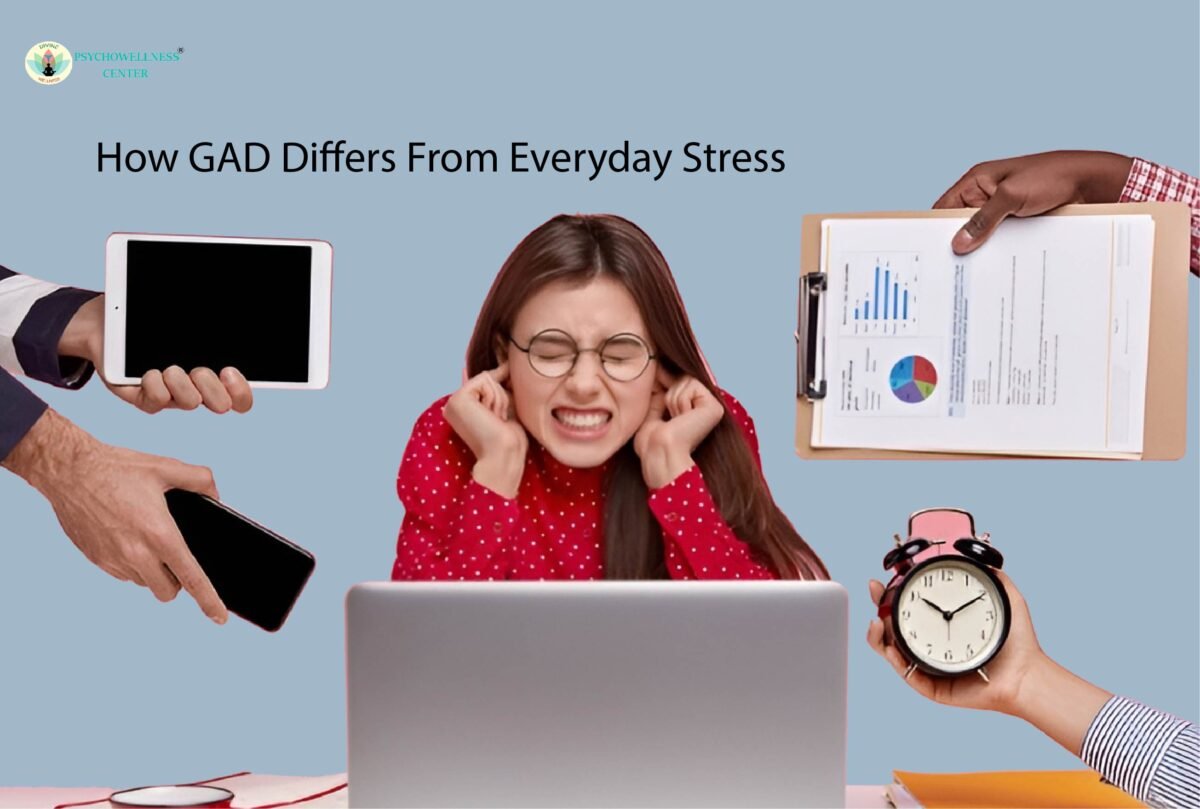
Stress is a normal part of being human. Deadlines, financial worries, relationship conflicts, or a packed schedule can leave anyone feeling overwhelmed. But while stress comes and goes with life’s challenges, Generalized Anxiety Disorder (GAD) is something very different, more persistent, more intrusive, and far more difficult to switch off. Understanding the difference is essential, especially when anxiety, depression, trauma, anger, and loneliness begin to interfere with daily life. In this blog, we’ll explore how GAD differs from everyday stress, how it affects physical health, relationships, friendships, motivation, and overall functioning, and why recognizing the signs matters.
Stress: A Natural, Short-Term Response
Everyday stress is typically tied to a clear cause. You might feel tense before a presentation, irritated after a difficult conversation, or exhausted from juggling responsibilities. This type of stress often:
- Has a clear trigger
- Improves once the situation passes
- Creates temporary physical reactions (fast heartbeat, tense muscles, trouble focusing)
- Can motivate you to act, sometimes increasing resilience
Stress can certainly feel overwhelming and may even lead to burnout if left unmanaged. But once the stressful event resolves, your body usually returns to balance. You may feel tired, but relief eventually follows.
GAD: When Worry Becomes a Constant Companion
GAD is not simply “a lot of stress.” It’s a chronic condition defined by ongoing and excessive worry about a wide range of everyday situations, often without a clear reason. People with GAD frequently describe their mind as “always on,” “constantly preparing for the worst,” or “unable to relax.”
Key differences include:
- Persistent Symptoms
GAD symptoms last for months or years, not just days or weeks. Even small tasks can spark anxiety that feels disproportionate to the situation.
2. Physical Health Effects
While stress affects the body, GAD often leads to ongoing physical symptoms like:
- Muscle tension
- Fatigue
- Digestive issues
- Headaches
- Heart palpitations
- Chronic sleep disturbances
This constant physical strain can drain energy and increase vulnerability to low motivation, irritability, and depression.
3. Difficulty Controlling Worry
People with GAD often try to “just relax” or “stop thinking about it,” but find it nearly impossible. The worry feels automatic, intrusive, and consuming.
4. Impact on Daily Functioning
GAD makes everyday tasks feel more daunting. Making decisions, attending social events, or managing responsibilities can become exhausting. Over time, this can harm friendships, professional life, and romantic relationships.
Emotional Layers: Trauma, Anger, and Emotional Abuse
While GAD has many causes, genetics, brain chemistry, personality, trauma and emotional abuse can significantly increase the risk. When someone grows up or lives in an unpredictable or unsafe environment, the nervous system may become conditioned to stay alert. This hypervigilance can evolve into chronic anxiety.
In such cases, GAD may also show up alongside:
Anger or irritability (a common but overlooked symptom of anxiety)
- Panic disorder or panic attacks
- Depression, especially if anxiety leads to hopelessness
- Feeling disconnected from loved ones
- Difficulty trusting others
Recognizing these intersections can help individuals seek the right support instead of blaming themselves for “overreacting.”
The Role of Loneliness and Relationships
People with GAD often feel isolated, not necessarily because they lack people around them, but because anxiety creates mental distance. Worry can make individuals:
- Avoid social situations
- Overthink conversations
- Fear conflict or rejection
- Struggle to be fully present
- Apologize excessively or become people-pleasers
This emotional disconnect can lead to loneliness even in close relationships or long-standing friendships. Ironically, loneliness then increases anxiety, creating a painful cycle.
Sleep, Burnout, and the Exhaustion Cycle
Chronic anxiety often wreaks havoc on sleep. Many people with GAD experience:
- Trouble falling asleep
- Racing thoughts at night
- Restless or poor-quality sleep
- Early waking with anxious thoughts
Poor sleep heightens anxiety, increases emotional sensitivity, and reduces our ability to handle everyday stress. When combined with worry, physical tension, and ongoing responsibilities, it can lead to burnout, a state where your emotional and physical resources are completely drained.
Low Motivation: Not Laziness, but Overwhelm
One of the misunderstood symptoms linked to GAD is low motivation. When your brain is constantly scanning for threats or imagining worst-case scenarios, you’re already mentally exhausted before the day even begins. This can make tasks like answering emails, doing chores, or even making plans feel impossible. Rather than laziness, low motivation is often the result of:
- Energy spent worrying
- Sleep disruption
- Physical tension
- Emotional overload
- Fear of making mistakes
Understanding this helps reduce self-criticism and encourages more compassionate coping strategies.
How to Recognize When It’s More Than Stress
You might be dealing with GAD, not just stress, if:
- Your worry lasts most days for several months
- The anxiety feels uncontrollable
- You worry about many different areas of life
- You experience physical symptoms like tension, aches, or stomach issues
- Anxiety interferes with work, school, or daily functioning
- Sleep is consistently disrupted
- You feel on edge or easily overwhelmed
- Even in peaceful circumstances, you struggle to unwind.
Early recognition is important because GAD is treatable, and support can significantly improve quality of life.
Building Resilience: What Helps
While everyone’s journey is different, many people find relief through a combination of:
- Developing grounding techniques
- Setting boundaries in relationships and work
- Journaling anxious thoughts
- Practicing regular exercise
- Improving sleep hygiene
- Building strong social support
- Limiting caffeine and alcohol
These steps don’t cure GAD, but they can reduce intensity and increase resilience over time.
Conclusion
Understanding the difference between everyday stress and Generalized Anxiety Disorder is the first step toward healing. If you’re noticing chronic worry, physical symptoms, relationship strain, or ongoing emotional exhaustion, you deserve support. Professional help can make a tremendous difference. You are not alone, and with the right support, it is absolutely possible to reclaim calm, clarity, and balance in your life.
If anxiety, chronic stress, or emotional overwhelm is affecting your daily functioning, seeking timely professional support can be an important step toward recovery. Psychowellness Center offers comprehensive mental health services across India, including counselling and therapy for anxiety disorders, stress, trauma, depression, and emotional regulation. Their experienced psychologists provide both online and in-person support in a safe and confidential environment. You can reach the Psychowellness Center at 011-47039812 / 7827208707 for appointments and guidance. Additionally, platforms like TalktoAngel offer accessible online therapy services, connecting individuals with qualified mental health professionals from the comfort of their homes. Professional support can help you better understand your symptoms, develop effective coping strategies, and move toward improved emotional well-being with confidence and care.
Contribution: Dr. R.K. Suri, Clinical Psychologist, and Ms. Drishti Rajore, Counselling Psychologist
REFERENCES
- Explains how GAD involves excessive, persistent worry that interferes with daily life. Generalized Anxiety Disorder (GAD): Symptoms & Treatment – Cleveland Clinic
- Provides clinical information on causes, diagnosis, and treatment, including how GAD differs from regular stress. Generalized Anxiety Disorder: What You Need to Know – NIMH
- Details symptoms, causes, physical effects, and how GAD impacts daily life differently than normal stress. Generalized Anxiety Disorder: Symptoms, Causes & Treatment – Healthline