
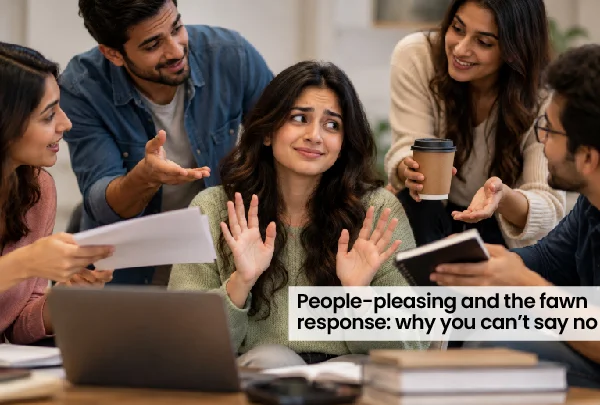
People-pleasing is often mistaken for kindness, generosity, or being a naturally agreeable person. Helping others and caring about their feelings are healthy qualities. But when saying “yes” becomes almost automatic even when you are exhausted, uncomfortable, or strongly want to say “no” there may be something deeper happening.
For some people, pleasing others functions as a fear response. The person may not consciously think, “I am afraid,” yet their body and mind react as though disagreement could lead to rejection, conflict, anger, criticism, or abandonment. In these situations, saying yes can provide immediate relief. Psychological literature describes safety behaviors as actions used to reduce or prevent a feared outcome, which can unintentionally maintain anxiety over time.
When “Yes” Becomes a Safety Strategy
Imagine someone receives a last-minute request from a colleague. They are already overwhelmed, but instead of saying, “I cannot take this on,” they immediately respond, “Sure, no problem.” Later, they feel exhausted and resentful.
Why did they agree?
Sometimes, the real motivation is not willingness but fear: What if they think I am selfish? What if they get angry? What if they stop respecting me?
The immediate “yes” reduces anxiety. The other person appears satisfied, conflict is avoided, and the individual experiences temporary relief. However, repeatedly using agreement to escape discomfort can reinforce the belief that saying no is dangerous. People-pleasing can therefore become a cycle of anxiety, compliance, temporary relief, and later emotional exhaustion.
Understanding the “Fawn” Response
People commonly hear about fight, flight, and freeze as responses to perceived danger. Another term used in trauma discussions is the fawn response, which describes appeasing or excessively accommodating others as a way of managing perceived threat. It is particularly relevant when a person has learned that keeping someone else happy feels necessary for safety or emotional security.
However, it is important not to label every people-pleaser as traumatized. People-pleasing can develop for many reasons, including family expectations, fear of rejection, low self-confidence, social anxiety, relationship experiences, or learned beliefs about being “good” or “helpful.” The key question is not simply “Do I please people?” but “What am I afraid will happen if I don’t?”
Why Saying “No” Can Feel So Difficult
For a healthy boundary, “no” may simply mean that something does not work for you. For someone who has learned to associate disagreement with danger, however, “no” can trigger intense guilt or anxiety.
They may think:
- “They will be disappointed in me.”
- “They might stop loving me.”
- “I will create a conflict.”
- “I am being selfish.”
- “I should help because they need me.”
- “Their feelings are my responsibility.”
This can create a powerful emotional conflict. Rationally, the person knows they have the right to refuse. Emotionally, their nervous system may interpret refusal as a threat.
This is why simply telling someone to “just say no” is not always helpful. If saying no has historically been associated with criticism, rejection, or instability, learning assertiveness requires patience and repeated experiences of safe boundary-setting.
The Hidden Cost of Always Being Agreeable
People-pleasing may maintain peace temporarily, but chronic self-suppression can have significant emotional costs. Individuals may become physically and emotionally exhausted from constantly monitoring other people’s reactions.
Over time, they may experience resentment because they repeatedly agree to things they do not genuinely want. They may also struggle to identify their own preferences because so much attention is focused on what others need. Research-informed psychological discussions associate persistent people-pleasing with anxiety, emotional exhaustion, difficulty expressing needs, and relationship dissatisfaction.
Relationships can also suffer. If one person continually says yes despite privately disagreeing, others may never know what that person genuinely thinks or wants. Authentic relationships require room for differences, honest communication, and mutually respected boundaries.
How to Begin Breaking the People-Pleasing Cycle
The goal is not to become uncaring or say “no” to everyone. The goal is to make choices based on values and genuine willingness rather than fear.
Pause before answering.
Instead of immediately agreeing, try saying, “Let me think about it and get back to you.” This creates space between the request and your automatic response.
Ask yourself what you actually want.
Before agreeing, ask: If I knew this person would not be disappointed, would I still say yes? Your answer may reveal whether your decision comes from genuine care or fear.
Start with small boundaries.
You do not have to begin with the most difficult relationship in your life. Practice expressing small preferences, such as choosing where to eat, declining an unnecessary request, or asking for personal time.
Expect some discomfort.
Feeling guilty after setting a boundary does not necessarily mean that you have done something wrong. Discomfort may simply indicate that you are doing something unfamiliar.
Learn assertive communication.
Assertiveness allows you to respect yourself without disrespecting others. A simple statement such as, “I understand that you need help, but I am not available today,” can communicate both empathy and a boundary.
Examine the underlying fear.
If your reactions feel intense, consider what saying no represents to you. Is it rejection? Anger? Abandonment? Being judged? Understanding the fear can help you change the pattern rather than simply forcing yourself to behave differently.
When Professional Support Can Help
People-pleasing becomes particularly important to address when it repeatedly contributes to anxiety, burnout, resentment, low self-worth, unhealthy relationships, or an inability to express personal needs. A mental health professional can help explore the origins of these patterns and develop healthier ways of responding to fear and interpersonal pressure.
If you are searching for the psychologist near me, consider looking for a professional who understands anxiety, boundaries, self-esteem, relationships, and trauma-informed approaches.
For children and adolescents, people-pleasing may appear as excessive obedience, fear of disappointing adults, difficulty expressing preferences, or intense worry about making mistakes. Parents who are concerned about such patterns may consider consulting the expert child psychologist in India for age-appropriate assessment and guidance.
Families in the capital region may also seek support from the Child Psychologist in Delhi NCR when a child’s fear of rejection, excessive compliance, or difficulty expressing emotions begins affecting school, friendships, family life, or confidence.
Conclusion
People-pleasing is not necessarily a sign of weakness. Sometimes, it is a learned attempt to create safety. Saying yes may once have helped a person avoid conflict, gain approval, or feel accepted. But a strategy that once offered protection can eventually prevent authentic self-expression.
Healing does not mean becoming selfish. It means learning that relationships can survive disagreement, that other people’s emotions are not entirely your responsibility, and that your needs deserve consideration too.
A healthy “yes” comes from choice. A healthy “no” can also come from choice. The journey toward emotional freedom begins when you learn to tell the difference.
FAQs
- Is people-pleasing always a trauma response?
No. People-pleasing can have many causes, including family conditioning, fear of rejection, anxiety, low self-esteem, cultural expectations, or difficult relationship experiences. Fawning is more specifically discussed as a threat-related or trauma-associated response.
- Why do I feel guilty whenever I say no?
Guilt may develop when you have learned to associate being helpful or agreeable with being a good person. With practice, you can learn that having boundaries does not make you uncaring.
- Can people-pleasing affect relationships?
Yes. Constantly hiding your preferences can create resentment and prevent genuine communication. Healthy relationships allow people to disagree while maintaining respect.
- How can I start saying no without feeling overwhelmed?
Begin with small situations. Pause before responding, use simple statements, and remind yourself that temporary discomfort does not necessarily mean you have made a wrong decision.
- When should I seek professional help for people-pleasing?
Consider professional support when people-pleasing significantly contributes to anxiety, exhaustion, low self-esteem, resentment, relationship difficulties, or difficulty making independent decisions.
Contributed by: Dr. R.K. Suri, Clinical Psychologist, and Mr. Harshit, Counselling Psychologist
References
https://www.psychowellnesscenter.com/Blog/how-wfh-can-intensify-people-pleasing-habits/
https://www.psychowellnesscenter.com/Blog/how-low-self-esteem-affects-your-relationships/
American Psychological Association. (2023). Safety behavior. APA Dictionary of Psychology.
Cohen, I. S. (2024). Breaking the cycle of people-pleasing. Psychology Today.
Fagan, A. (2021). 5 ways to stop being a people pleaser. Psychology Today.
Hardis, J. (2023). 4 truths to help you break free from people pleasing. Psychology Today.
Ryder, G. (2022). The fawn response: How trauma can lead to people-pleasing. Psych Central.