
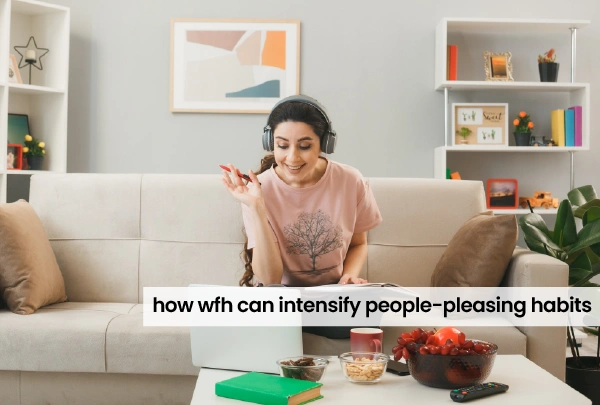
Work from home (WFH) has transformed the way professionals communicate, collaborate, and manage responsibilities. In a traditional workplace, employees often have clearer working hours, visible social cues, and physical separation between professional and personal life. On the other hand, although remote work offers flexibility and convenience, it can also create psychological patterns that are difficult to recognise. One such pattern is people-pleasing, the tendency to prioritise others’ expectations, approval, and comfort over personal needs.
As a result, individuals may feel pressure to remain constantly available, respond immediately, or avoid disagreement to maintain positive professional relationships. Over time, this behaviour can contribute to burnout and emotional exhaustion. Understanding how WFH can intensify people-pleasing habits is therefore important for maintaining emotional well-being and sustainable professional relationships.
Why WFH Can Strengthen People-Pleasing
The reason why WFH increases people-pleasing behavior is that without clear boundaries, employees may feel that they need to demonstrate commitment continuously. It reduces the separation between professional responsibilities and personal life. The factors that contribute to this pattern are:
- Difficulty establishing a healthy boundary
- Excessive concern about professional approval
- Avoidance of disagreement or conflict
- Dependence on external validation
- Pressure to maintain a positive work attitude at all times
- Fear of disappointing colleagues or managers
- Difficulty saying no to additional responsibilities
These behaviours may initially appear productive, but consistently suppressing personal needs can create significant emotional strain.
Impact of People-Pleasing
People-pleasing is a behavioural pattern that can significantly affect emotional well-being, relationships, and professional life. This is particularly true when an individual becomes overly concerned about how others perceive them. Remote workers may spend considerable mental energy analysing messages, responses, meetings, and workplace interactions. The impact of such behavior includes:
- Increased Stress and Anxiety: People-pleasing often creates constant pressure to meet others’ expectations, making it difficult to relax or feel satisfied with one’s own efforts. The fear of disappointing others often leads to anxiety, overthinking, emotional tension, and persistent stress.
- Difficulty Setting Healthy Boundaries: Individuals who struggle to refuse requests or express their limitations may take on excessive commitments, manage their time poorly, and blur the line between personal and professional responsibilities. In some situations, difficulty expressing boundaries may also make it harder to recognise or leave a toxic relationship.
- Loss of Personal Identity: Continuously prioritising other people’s needs can make individuals lose touch with their own preferences, opinions, and priorities. Over time, a weakened sense of identity, contributing to an identity crisis, can occur, also affecting confidence and long-term self-improvement.
- Reduced Assertiveness: Difficulty in hesitating to communicate disagreement, express concerns, or ask for what they need can create unresolved interpersonal problems and frustration. These people might end up avoiding difficult conversations, which may provide temporary comfort.
- Difficulty Making Independent Decisions: Such individuals constantly consider what others might think or expect, resulting in hesitation, overthinking, dependency, and reduced confidence in personal choices.
- Impact on Physical Health: Long-term emotional pressure can affect physical health, particularly when stress becomes persistent and recovery is neglected.
Recognising the Warning Signs
Awareness is an important first step in changing people-pleasing habits. Several signs may indicate that remote work is reinforcing the pattern:
- Feeling guilty when refusing requests
- Regularly working beyond reasonable hours
- Prioritising others’ needs over personal responsibilities
- Avoiding constructive disagreement
- Seeking frequent reassurance
- Experiencing stress after workplace interactions
- Struggling to disconnect from work
- Experiencing low motivation despite continued effort
- Feeling emotionally drained after routine communication
- Neglecting personal self-improvement and career priorities
Recognising these patterns can help individuals understand that constant accommodation is not the same as professional effectiveness.
Strategies for Healthier Remote Work
People-pleasing habits cannot be changed overnight, but can be addressed through intentional behavioural changes. Effective strategies include:
- Practising assertiveness: Clear and respectful communication can reduce the need for constant approval. It also helps individuals express their needs without guilt or fear of conflict, leading to healthier interactions.
- Creating healthy boundaries: Defined working hours can help separate professional obligations from personal life. This separation ensures emotional energy is preserved and prevents work from constantly intruding into personal space.
- Strengthening emotional control: Understanding emotional triggers can make workplace communication more balanced. It also reduces impulsive reactions and supports calmer decision-making in stressful situations.
- Improving time management: Prioritising tasks can prevent unnecessary commitments from accumulating. It also allows individuals to focus on meaningful responsibilities instead of overextending themselves.
- Reducing social comparison: Comparing professional performance with others can intensify insecurity and people-pleasing. Focusing on personal growth instead helps maintain self-worth and reduces unnecessary pressure.
- Using mindfulness: Mindfulness can help individuals notice emotional reactions before automatically agreeing to requests. This awareness creates space to respond thoughtfully rather than out of habit or pressure.
- Prioritising recovery: Adequate rest and sleep are essential for preventing emotional exhaustion. Consistent recovery also improves focus, mood stability, and overall productivity.
- Seeking professional support: A counselling psychologist in New Delhi, a therapist in Delhi, psychological counseling near me, or other qualified mental-health professional can help individuals explore persistent patterns and develop healthier responses. Professional guidance can also support long-term emotional balance and behavioural change.
Incorporating these habits in small amounts can help reduce emotional toll, improve physical health, and encourage job satisfaction.
Conclusion
Work from home (WFH) can provide valuable flexibility, but it can also intensify people-pleasing when professional boundaries become unclear, and workplace approval becomes central to emotional security. Constant availability, social isolation, anxiety, and fear of conflict can gradually encourage individuals to suppress their needs.
By recognising people-pleasing patterns and consciously developing healthier communication habits, professionals can better protect their mental well-being while still maintaining effective and productive workplace relationships. Ultimately, the goal is not to become less considerate of others, but to achieve a balanced mindset where cooperation coexists with self-respect and personal well-being.
FAQs
- How can WFH intensify people-pleasing habits?
WFH can blur the boundaries between professional and personal life, making individuals feel pressure to remain constantly available, respond quickly, and meet others’ expectations, which gradually contributes to stress and emotional exhaustion.
- Can people-pleasing affect mental well-being?
Yes. Persistent people-pleasing can contribute to anxiety, stress, overthinking, low motivation, emotional exhaustion, and difficulty maintaining healthy emotional boundaries.
- How does people-pleasing affect workplace relationships?
People-pleasing may initially help maintain smooth interactions, but consistently avoiding disagreement or suppressing personal needs can lead to frustration, resentment, and unresolved interpersonal problems.
- When should someone seek professional support for people-pleasing?
Professional support may be beneficial when people-pleasing significantly affects emotional well-being, relationships, work performance, sleep, or daily functioning.
Call To Action
People-pleasing tendencies and the emotional challenges associated with working from home can play an important role in protecting overall mental well-being. When the constant need for validation, difficulty saying no, workplace stress, or fear of disappointing others starts affecting confidence, motivation, relationships, sleep, or daily functioning, seeking professional guidance can be helpful. Psychowellness Center, with conveniently located centres in Janakpuri and Dwarka Sec-17, New Delhi, provides confidential and evidence-based mental health support for individuals dealing with anxiety, stress, emotional concerns, workplace challenges, and relationship difficulties. For appointments or further information about the available services, individuals can contact 011-47039812 or 7827208707.
Contributions: Dr. R.K. Suri, Clinical Psychologist, and Ms. Vandana Krishnan, Counselling Psychologist
References
Clark, S. C. (2000). Work/family border theory: A new theory of work/family balance. Human Relations, 53(6), 747–770. https://doi.org/10.1177/0018726700536001
Eurofound & International Labour Organization. (2017). Working anytime, anywhere: The effects on the world of work. Publications Office of the European Union and International Labour Office.
https://www.psychowellnesscenter.com/Blog/effective-solution-for-wfh-depression/
https://www.psychowellnesscenter.com/Blog/creating-mindfulness-in-a-daily-work-routine/
https://www.psychowellnesscenter.com/Blog/integrating-self-care-practices-in-work-environment/
https://www.psychowellnesscenter.com/Blog/integrating-self-care-practices-in-work-environment/
https://www.psychowellnesscenter.com/Blog/helping-employees-make-impactful-wellbeing-changes/