
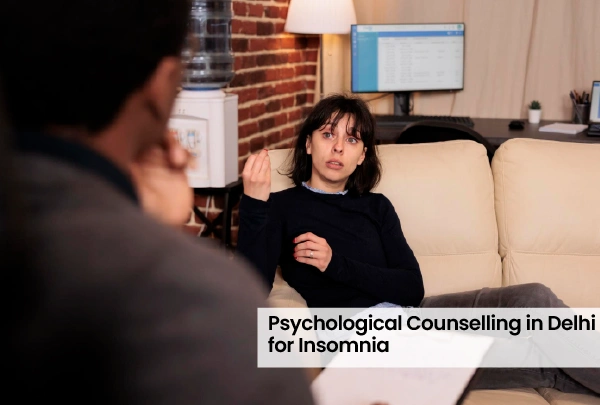
Sleep is essential for both physical and emotional well-being, yet millions of people struggle to get the restful sleep they need. If you regularly find yourself lying awake at night, waking up frequently, or feeling exhausted despite spending enough time in bed, you may be experiencing Insomnia. While many people assume insomnia is only a sleep problem, it is often closely linked to stress, anxiety, depression, and other psychological factors. This is why Psychological Counselling has become an important part of treating persistent sleep difficulties.
Therapy focuses on identifying the emotional, behavioural, and cognitive factors that may be keeping your mind alert at bedtime. Clinical guidelines consistently recommend Cognitive Behavioural Therapy for Insomnia (CBT-I) as the first-line treatment for chronic insomnia because it provides long-lasting improvements without relying solely on medication.
What Is Insomnia?
Insomnia is a common sleep disorder characterised by difficulty falling asleep, staying asleep, waking too early, or experiencing poor-quality sleep despite having adequate opportunity to rest. These sleep disturbances often lead to daytime fatigue, irritability, poor concentration, reduced productivity, and emotional distress.
Especially during stressful periods, occasional sleepless nights are normal. However, when sleep problems occur at least three nights a week for several months and begin affecting daily functioning, professional evaluation is recommended. Chronic insomnia can influence mood, memory, work performance, and overall quality of life if left untreated.
The Connection Between Mental Health and Sleep
Sleep and Mental Health share a two-way relationship. High levels of Stress, persistent anxiety, and depression can make it difficult to relax at bedtime, leading to racing thoughts and prolonged wakefulness. At the same time, ongoing sleep deprivation can worsen emotional regulation, increase anxiety, reduce resilience to stress, and contribute to symptoms of depression.
Many people with insomnia describe a cycle in which they worry about not sleeping, become increasingly anxious at bedtime, and eventually associate the bed with frustration rather than rest. Over time, this pattern reinforces insomnia, making it even harder to fall asleep naturally. Psychological interventions aim to break this cycle by addressing both the emotional and behavioural factors maintaining poor sleep.
How Psychological Counselling Helps Treat Insomnia
Unlike medications that primarily provide temporary symptom relief, Psychological Counselling focuses on understanding and changing the underlying patterns contributing to Insomnia. During therapy, a psychologist explores factors such as stress, anxiety, unhealthy sleep habits, excessive worry, perfectionism, unresolved emotional concerns, or grief and loss that may be interfering with healthy sleep.
One of the most effective approaches is Cognitive Behavioural Therapy for Insomnia (CBT-I). CBT-I helps individuals identify unhelpful beliefs about sleep, reduce bedtime anxiety, improve sleep habits, and retrain the brain to associate the bed with sleep instead of wakefulness. Research consistently shows that CBT-I is more effective than sleep medication for long-term management of chronic insomnia and is recommended by major clinical guidelines as the preferred first-line treatment. Many individuals also benefit from mindfulness techniques alongside CBT-I to promote relaxation before bedtime.
When Should You Seek Psychological Counselling for Insomnia?
Occasional sleepless nights are common, especially during stressful periods. However, if your sleep difficulties persist for several weeks and begin affecting your work, relationships, mood, or daily functioning, it may be time to seek Psychological Counselling in Delhi from a qualified counselling psychologist in Delhi. Persistent Insomnia is often associated with underlying stress, anxiety, depression, unhealthy sleep habits, loneliness, or social isolation that require more than temporary solutions.
You should consider professional support if you:
- Require more than 30 minutes to fall asleep most nights.
- Experience frequent waking and difficulty falling asleep.
- Despite getting adequate sleep, you still feel exhausted.
- Experience daytime fatigue, irritability, or poor concentration.
- Notice increasing anxiety, stress, or low mood related to sleep.
- Depend regularly on sleeping pills without lasting improvement.
Seeking help early can prevent Insomnia from becoming chronic and reduce its impact on both your physical and emotional well-being.
What Happens During Therapy for Insomnia?
A psychologist first explores your sleep patterns, daily routine, emotional health, and factors that may be contributing to poor sleep. Instead of focusing only on the symptom of sleeplessness, therapy aims to understand the underlying thoughts and behaviours that keep insomnia going.
The most effective psychological treatment is Cognitive Behavioural Therapy for Insomnia (CBT-I). A typical CBT-I program is completed over 6–8 sessions and includes several evidence-based techniques, such as:
- Sleep Restriction Therapy to improve sleep efficiency.
- Stimulus Control Therapy to strengthen the association between your bed and sleep.
- Cognitive Therapy to challenge unhelpful beliefs such as “I’ll never sleep tonight.”
- Relaxation Techniques to reduce bedtime anxiety.
- Sleep Hygiene education to improve healthy sleep habits.
Unlike medication, CBT-I addresses the root causes of insomnia, helping individuals achieve long-term improvements in sleep quality. It is recommended as the first-line treatment for chronic Insomnia by major sleep medicine organisations worldwide and is an important component of sleep disorder counselling.
Simple Habits That Support Better Sleep
While therapy is highly effective, combining it with healthy daily habits can further improve sleep quality.
Some practical strategies include:
- Maintain consistent sleep and wake-up times, including on weekends.
- Limit caffeine and nicotine intake late in the day.
- Limit screen use to at least an hour before bedtime.
- Practice relaxing techniques like deep breathing or progressive muscle relaxation.
- Reserve your bed for sleep rather than work or scrolling on your phone.
- Avoid checking the clock repeatedly if you cannot fall asleep.
These habits may not completely resolve chronic Insomnia, but they can complement psychological counselling in Delhi and help reinforce healthy sleep patterns.
Why Choose Psychological Counselling in Delhi for Insomnia?
Many people believe that poor sleep is something they simply have to live with. However, effective psychological treatments are available, and seeking help early from one of the Best Psychologists in Delhi or a qualified psychologist in Delhi can significantly improve both sleep and overall Mental Health.
If your insomnia is linked to stress, anxiety, depression, excessive worrying, or emotional difficulties, working with a qualified psychologist can help you understand the factors affecting your sleep and develop practical, long-lasting coping strategies. Whether you’re looking for a therapist near me, a counsellor near me, or a trusted Counseling Center Near me, choosing evidence-based care can make a lasting difference.
Professional Support in Janakpuri and Dwarka, Delhi
Individuals seeking professional psychological support may consider the services offered by Psychowellness Center. With centres conveniently located in Janakpuri and Dwarka Sec-17, Delhi, the clinic provides confidential and evidence-based mental health care. To book an appointment or learn more about the services, individuals can contact 011-47039812 or 7827208707.
Conclusion
Sleep is not a luxury; it’s essential for emotional resilience, physical health, and daily functioning. Persistent Insomnia can affect concentration, relationships, productivity, and overall quality of life, but it is a treatable condition.
Through Psychological Counselling in Delhi, particularly Cognitive Behavioural Therapy for Insomnia (CBT-I), individuals can learn to break the cycle of sleeplessness, reduce stress and anxiety, and restore healthy sleep habits. If insomnia is affecting your sleep and daily functioning, seek professional support. TalktoAngel offers online counselling, while Psychowellness Center provides evidence-based therapy to help improve sleep and overall well-being.
Contributions: Dr. R.K. Suri, Clinical Psychologist, and Ms. Ishita , Counselling Psychologist
References
- Edinger, J. D., & Means, M. K. (2005). Cognitive-behavioral therapy for primary insomnia. Clinical Psychology Review, 25(5), 539–558.
- Walker, J., Muench, A., Perlis, M. L., & Vargas, I. (2022). Cognitive Behavioral Therapy for Insomnia (CBT-I): A Primer. Clinical Psychology and Special Education, 11(2), 123–137. https://doi.org/10.17759/cpse.2022110208
- Riemann, D., et al. (2021). Behavioral and psychological treatments for chronic insomnia disorder in adults: An American Academy of Sleep Medicine clinical practice guideline. Journal of Clinical Sleep Medicine.
- Qaseem, A., Kansagara, D., Forciea, M. A., Cooke, M., & Denberg, T. D. (2016). Management of chronic insomnia disorder in adults: A clinical practice guideline from the American College of Physicians. Annals of Internal Medicine, 165(2), 125–133. Supported by ACP guidance recommending CBT-I as first-line treatment.