
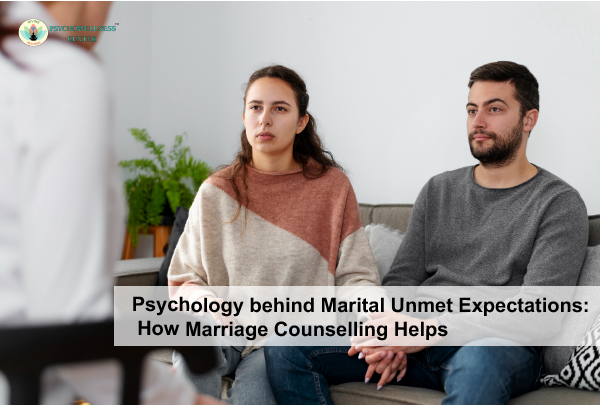
Marital relationships often begin with hope, emotional investment, and expectations for companionship and growth. On the other hand, unfulfilled expectations can cause emotional anguish, conflict, and discontent. This blog explores the psychological foundations of unmet expectations in marriage and highlights how structured counselling interventions can support couples in rebuilding connection, understanding, and resilience.
Introduction
A marriage is often viewed as a lifelong commitment built on trust, companionship, and shared goals. However, many couples enter this union with unspoken or unrealistic expectations shaped by culture, family, and personal experiences. When these expectations remain unmet, they can lead to dissatisfaction, frustration, and emotional distance within the relationship. Understanding the psychological roots of these unmet expectations is essential in addressing conflicts effectively and fostering a healthier bond.
The Psychology behind Unmet Expectations
Unmet expectations in marriage often stem from cognitive schemas, deeply ingrained beliefs about how relationships should function. These schemas are influenced by early family dynamics, social conditioning, and previous romantic experiences. When reality does not align with these internal beliefs, individuals may experience disappointment, leading to loneliness even within a partnership.
Attachment theory also plays a significant role. Individuals with anxious attachment may seek excessive reassurance, while those with avoidant attachment may struggle with emotional closeness. This mismatch often contributes to couple conflicts, as partners fail to meet each other’s emotional needs.
Another contributing factor is poor communication. Many couples hesitate to express their expectations clearly, assuming their partner should intuitively understand them. This lack of communication can escalate into misunderstandings, resentment, and even family problem dynamics that extend beyond the couple to children and extended family.
Common Areas of Unmet Expectations
- Emotional and Physical Intimacy
A lack of emotional connection or physical closeness often leads to dissatisfaction. Issues related to Intimacy may also include sexual dysfunction, which can further strain the marital bond if not addressed openly.
- Trust and Fidelity
Expectations of loyalty and trust can be shattered by betrayals like infidelity and cheating, which frequently result in emotional trauma and divorce considerations.
- Roles and Responsibilities
Conflicts may arise when expectations about roles, financial, emotional, or domestic, are not aligned. This imbalance can sometimes evolve into patterns of dependence, where one partner feels overly reliant on the other.
- Compatibility and Values
Differences in values, lifestyle, or long-term goals can create tension, especially if they were overlooked during the premarital phase or early dating concerns.
- Emotional Safety
In some cases, unmet expectations escalate into harmful patterns such as emotional abuse or the development of a toxic relationship, where respect and empathy are compromised.
The Impact of Unmet Expectations
When expectations remain unaddressed, they can significantly affect mental health and relational stability. Individuals may experience anxiety, low self-esteem, and emotional exhaustion. Over time, persistent dissatisfaction may lead to withdrawal, reduced communication, and even separation or breakup.
Additionally, the lack of fulfillment in marriage can push individuals to seek emotional support outside the relationship, sometimes blurring boundaries between friendship and romantic involvement. This further complicates the relational dynamic and intensifies existing conflicts.
It is also important to recognize that marital challenges are not limited to heterosexual couples. Individuals in the LGBTQ+ community may face additional societal pressures, stigma, and a lack of support, which can intensify unmet expectations within their relationships.
How Marriage Counselling Helps
Marriage counselling provides a structured and supportive environment where couples can explore their concerns and rebuild their connection. Evidence-based approaches such as Cognitive Behavioural Therapy (CBT) and Emotion-Focused Therapy (EFT) are commonly used to address relational issues.
- Improving Communication
Couples counselling helps partners express their needs and expectations clearly and respectfully. This promotes understanding between people and lessens miscommunication.
- Identifying Core Issues
Best relationship therapists near me and best marriage counselors in Dwarkaassist couples in uncovering underlying psychological patterns, such as attachment styles or unresolved past experiences that contribute to unmet expectations.
- Rebuilding Trust
In cases involving betrayal, counselling provides tools to rebuild trust and establish healthy boundaries.
- Enhancing Emotional Connection
Therapy encourages emotional openness and vulnerability, helping partners reconnect on a deeper level.
- Conflict Resolution Skills
Couples learn practical strategies to manage disagreements constructively, reducing the intensity and frequency of conflicts.
- Addressing Individual Concerns
Marriage Counselling also focuses on personal growth, helping individuals manage their emotions and expectations more effectively.
Moving Toward Healthier Expectations
Developing realistic and flexible expectations is crucial for a sustainable marriage. Couples must recognize that no relationship is perfect and that differences are natural. Practicing empathy, active listening, and mutual respect can significantly improve relationship satisfaction.
It is also important to continuously nurture the relationship through shared experiences, open communication, and emotional support. Seeking professional help from the best relationship psychologists in India and the best couple counselors in Jankapuri early can prevent minor issues from escalating into major conflicts.
Conclusion
In today’s fast-evolving world, unmet expectations in Marriage are becoming increasingly common, shaped by changing roles, digital influences, and evolving emotional needs. While these challenges can strain a Relationship, they also create growth opportunities when addressed with awareness and the right support. If left unresolved, such concerns may escalate into Couple Conflicts, emotional disconnection, or even Divorce, but timely intervention can help couples rebuild understanding and trust.
For those who prefer face-to-face sessions, Psychowellness Center offers expert offline counselling services in a supportive environment. Located at New Delhi the center provides professional care for a wide range of relationship and mental health concerns. You can reach out at +91 78272 08707 or +91 11 4707 9079 to seek assistance.
With the right blend of professional support and personal commitment, couples can transform unmet expectations into opportunities for emotional growth, resilience, and long-term relationship satisfaction.
Contributions: Dr. R.K. Suri, Clinical Psychologist, and Mr. Harshit Vaid, Counselling Psychologist
References
American Psychological Association. (2020). Publication manual of the American Psychological Association (7th ed.).
https://www.psychowellnesscenter.com/Blog/why-couples-are-turning-to-marriage-counselling/
https://www.psychowellnesscenter.com/Blog/tips-to-cope-with-frustration-in-your-marriage/
https://www.psychowellnesscenter.com/Blog/marriage-counselling-for-couples-on-the-brink-of-divorce/
https://www.psychowellnesscenter.com/Blog/key-to-constructive-arguments-between-couples/
Baucom, D. H., Epstein, N., & LaTaillade, J. J. (2002). Cognitive-behavioral couple therapy. In A. S. Gurman & N. S. Jacobson (Eds.), Clinical handbook of couple therapy (3rd ed., pp. 26–58). Guilford Press.
Johnson, S. M. (2019). Attachment theory in practice: Emotionally focused therapy (EFT) with individuals, couples, and families. Guilford Press.