
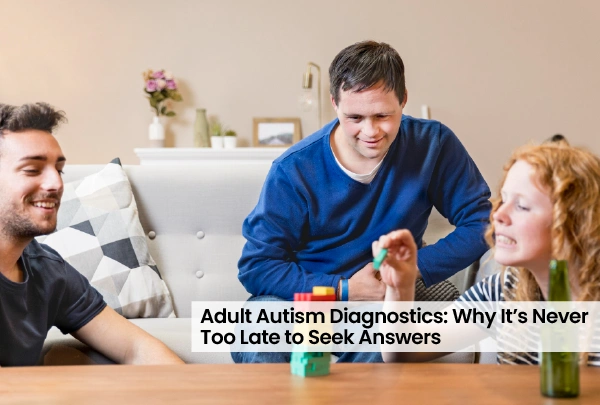
Autism Spectrum Disorder (ASD) is often associated with childhood, with many people assuming that it is identified and diagnosed only during the early years of life. However, with growing awareness in mental health research, it has been revealed that many adults continue to live with undiagnosed autism, living life without understanding why certain experiences, relationships, or environments feel challenging for them.
Understanding Adult Autism
Autism Spectrum Disorder (ASD) is a neurodevelopmental condition that affects individuals in the areas of communication, social interaction, processing sensory information, and engaging with the world around them. While autism begins to show up in childhood, the signs may become more noticeable in adulthood. Because these adults are undiagnosed, they develop coping mechanisms that make them fit into social expectations. This process is called masking, which makes autism difficult to recognise; as a result, many people suffer difficulties in their daily lives.
Why Many Adults Go Undiagnosed
Several factors contribute to delayed autism diagnosis in adults. Many individuals grow up without knowledge of proper screening tools or awareness, leading their traits to be misunderstood or overlooked.
- Limited awareness during childhood – Autism was primarily associated with children who exhibited significant communication delays or repetitive behaviours. Since it was not known as a child, the signs were overlooked or less obvious.
- Masking and Camouflaging – Many adults adapt to social situations by consciously or unconsciously imitating social behaviours to navigate everyday situations, leading to exhaustion, burnout, and chronic stress.
- Misdiagnosis – The signs of adult autism often coexist with other disorders like anxiety, depression, ADHD, and social anxiety. Without identifying autism, it may lead to many unresolved challenges.
- High-functioning appearance in daily life – Some adults seem to perform well in other tasks, which masks internal difficulties. Despite outward success, they struggle with interpersonal problems, emotional control, or relationship challenges.
Signs That May Indicate Adult Autism
The Diagnostic and Statistical Manual of Mental Disorders (DSM-5) identifies two broad areas of characteristics. While autism presents differently in every individual, some common signs include:
Persistent Differences in Social Communication
- Difficulty understanding social cues
- Challenges maintaining conversations
- Limited eye contact or unusual body language
- Difficulty developing or maintaining friendships
- Preference for direct and literal communication
Restricted or Repetitive Patterns of Behaviour
- Strong preference for routines
- Distress when routines change unexpectedly
- Highly focused interests
- Repetitive movements or behaviors
- Sensitivity to sounds, lights, textures, or smells
These characteristics must have been present since early development but become more noticeable only during adulthood.
Advantages of an Adult Autism Diagnosis
Receiving an autism diagnosis later in adulthood can change their life perspective. Rather than being a label, it often provides a framework for understanding lifelong experiences.
- Greater Self-Understanding – Receiving a diagnosis helps provide immense relief to many adults as their behaviours and struggles start making sense now. It also helps reduce self-blame and increase self-acceptance.
- Improved Mental Health Support—Undiagnosed autism also coexists with conditions like anxiety, depression, or even burnout due to years of hiding their real self.
- Better Relationships – Understanding autism improves communication with family members, partners, and colleagues. Challenges in relationship dynamics become easier to address when both individuals recognize how autism influences communication.
- Workplace Stress – A diagnosis helps improve job satisfaction and prevent burnout by encouraging their exceptional problem-solving abilities and analytical thinking.
- Reduced Self-Blame – Instead of viewing themselves as “broken” or “weird,” many autistic adults develop a greater self-compassion and confidence after understanding their neurodivergent traits.
With the correct diagnosis, treatment plans can become more personalised and effective through psychological counselling in Delhi or other specialised mental health services.
Doing An Adult Autism Assessment
An adult autism assessment is comprehensive and designed to understand the individual’s developmental history and current state. A qualified mental health professional may:
- Review developmental history
- Explore childhood behaviours and milestones
- Conduct structured clinical interviews
- Assess communication and social functioning
- Evaluate sensory sensitivities
- Eliminate any additional mental health issues that could be present.
Sometimes family members or close relatives may also provide insightful information and behavioural changes regarding early childhood behaviours.
How Therapy Can Help After Diagnosis
Receiving a diagnosis can significantly increase self-improvement of the adult in all aspects of life. Therapy provides practical strategies for managing daily challenges while embracing individual strengths. Working with a qualified counselling psychologist in Delhi can help individuals:
- Develop effective communication skills
- Improve assertiveness
- Learn healthier emotion control strategies
- Build stronger relationships
- Reduce stress and anxiety
- Improve time management
- Develop healthy boundary skills
- Strengthen resilience
Many individuals also benefit from doing mindfulness-based practices, which help improve emotional regulation and overall well-being.
Living Well As An Autistic Adult
An autism diagnosis does not define an individual’s potential. With much greater self-awareness, appropriate support, and acceptance, many autistic adults lead meaningful and fulfilling lives.
It is important to recognise that personal strengths, establishing healthy boundaries, managing sensory needs, and communicating openly can improve overall well-being. Supportive relationships play a vital role in fostering confidence, reducing stress, and creating environments where autistic individuals feel understood and valued.
Equally important is prioritising self-care and seeking support when needed. Working with experienced mental health professionals, joining autism support groups, or connecting with others who share similar experiences can provide valuable guidance and reassurance. Accepting and advocating one’s individual needs can empower autistic adults to navigate life’s challenges with greater confidence while building a fulfilling personal and professional life.
Conclusion
Receiving an autism assessment and diagnosis in adulthood is not about applying a label—it is about gaining a deeper understanding of yourself, recognising your strengths and challenges, and accessing the right support to improve your quality of life. With evidence-based interventions, personalised therapeutic approaches, and compassionate guidance, adults on the autism spectrum can build emotion control, enhance self-awareness, strengthen relationships, and work toward meaningful personal and professional goals. Remember, it is never too late to seek answers. An autism diagnosis can be the first step toward greater self-acceptance, confidence, and lasting self-improvement.
Call for Action
If you or someone you know is experiencing signs of autism or facing challenges related to social communication, sensory sensitivities, emotional regulation, or daily functioning, seeking professional support can make a meaningful difference. You can book an assessment or counselling session with Psychowellness Center, where experienced mental health professionals provide comprehensive autism assessments and personalised therapeutic care. The centre is conveniently located in Janakpuri and Dwarka Sector-17, New Delhi, and appointments can be scheduled by calling 011-47039812 or 7827208707. Take the first step towards better understanding yourself, accessing the right support, and embracing your strengths with confidence.
Frequently Asked Questions (FAQs)
- Can autism be diagnosed in adulthood?
Yes. Although autism is often identified during childhood, many individuals are diagnosed later in life. An adult autism assessment involves evaluating developmental history, communication patterns, sensory experiences, and behavioural characteristics by a qualified mental health professional.
- What are the common signs of autism in adults?
Common signs may include difficulties with social communication, preference for routines, sensory sensitivities, intense interests, challenges in understanding social cues, and feeling overwhelmed in certain environments. However, symptoms can vary significantly from one person to another.
- Why do some people receive an autism diagnosis only as adults?
Many adults were not diagnosed in childhood because their traits were subtle, they learned to mask their difficulties, or awareness about autism was limited. Some individuals seek an assessment only after experiencing ongoing challenges in relationships, work, or daily life.
- What are the benefits of getting an autism diagnosis as an adult?
An adult diagnosis can provide greater self-understanding, explain lifelong experiences, improve access to appropriate support and accommodations, and help individuals develop effective coping strategies for personal, academic, and professional settings.
- What should I expect during an adult autism assessment?
An adult autism assessment typically includes detailed interviews, questionnaires, a review of developmental history, and standardised assessment tools. The process helps clinicians understand your strengths, challenges, and support needs before providing recommendations or a diagnosis.
Contributions: Dr. R.K. Suri, Clinical Psychologist, and Ms. Vandana Krishnan, Counselling Psychologist
References
- National Institute of Mental Health. (2024). Autism spectrum disorder. https://www.nimh.nih.gov/health/topics/autism-spectrum-disorders-asd
- National Autistic Society. (2024). Autism in adults. https://www.autism.org.uk/advice-and-guidance/topics/diagnosis/diagnosis/adults