
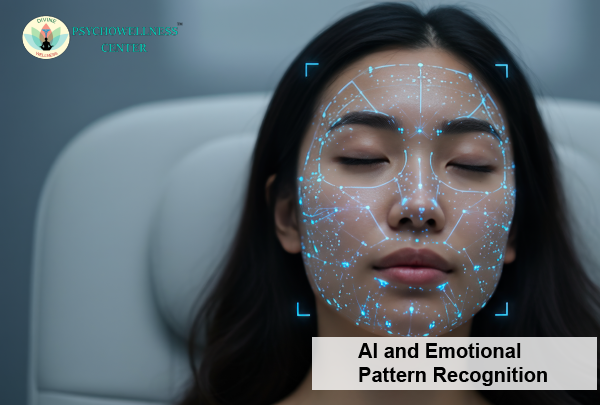
Artificial Intelligence (AI) is transforming how we understand human behaviour, moving beyond simple automation to the nuanced recognition of emotional patterns. Emotional pattern recognition allows AI to analyse facial expressions, voice tone, physiological signals, and behaviour to detect emotions such as stress, anxiety, depression, anger, and fluctuations in emotion control. By uncovering these subtle cues, AI offers new tools for mental health support, workplace well-being, and personal self-improvement.
Unlike traditional observation, AI can track emotions continuously, providing insights that might go unnoticed even by trained psychologists. While it cannot replace human empathy, AI serves as a valuable complement to therapy and psychological interventions, supporting timely and informed decisions in mental health care.
How AI Detects Emotional Patterns
AI systems use a combination of techniques to understand emotional states:
- Facial expression analysis: Detects micro-expressions to identify emotions like frustration, sadness, or joy.
- Physiological monitoring: Sensors track heart rate, skin conductance, or body movement to reveal heightened emotional arousal.
- Behavioural data: AI can analyse patterns in activity, social media interactions, or even typing rhythms to detect signs of low motivation or depression.
By integrating these signals, AI builds a comprehensive picture of emotional patterns over time, offering insights that can guide intervention and support.
Applications in Mental Health
AI-based emotional recognition is finding multiple applications in mental health:
- Early detection of mental health concerns: Continuous monitoring can help identify anxiety or depression at early stages, allowing timely intervention.
- Support for emotion regulation: AI tools can help individuals recognise triggers, improve emotion control, and manage anger effectively.
- Addiction management: AI can track behavioural patterns in individuals struggling with addiction, assisting therapists in creating personalised recovery strategies.
- Parenting and caregiving: Monitoring emotional responses in parenting contexts can provide insights into stress levels and emotional well-being of both children and caregivers.
These AI applications complement clinical expertise, allowing therapists to offer more tailored care and interventions based on real-time emotional data.
Workplace and Social Implications
Emotional pattern recognition is increasingly applied in workplace settings. By analysing emotional dynamics, AI can identify early signs of stress, burnout, and low engagement. Employers can use these insights to promote resilience, enhance teamwork, and improve overall job satisfaction. Employees can also benefit from AI-assisted feedback to develop better emotion control and self-regulation strategies, supporting professional growth and emotional intelligence.
In social contexts, AI can help individuals understand their emotional interactions and patterns, promoting healthier relationships and personal development. While ethical considerations remain critical—such as consent, privacy, and cultural sensitivity—responsible implementation can significantly enhance emotional well-being.
Challenges and Ethical Considerations
Despite its promise, AI-based emotional recognition presents challenges:
- Accuracy limitations: Misinterpretation can occur, particularly across cultures or with individuals exhibiting atypical emotional expressions.
- Privacy and consent: Emotional data is sensitive, requiring clear communication, secure handling, and transparency.
- Over-reliance on technology: AI should complement human therapy rather than replace the critical empathy and insight provided by professionals.
Balancing these ethical and practical concerns is essential to ensure AI tools enhance mental health support without compromising personal privacy or therapeutic relationships.
Future Directions
The future of AI in emotional pattern recognition is promising. As algorithms improve, AI could assist in:
- Detecting early signs of post-traumatic stress disorder (PTSD) or addiction patterns
- Supporting interventions for stress, anxiety, and depression
- Enhancing parenting support by analysing emotional interactions with children
- Helping individuals build resilience and promote self-improvement
Collaboration between AI developers and mental health professionals will ensure that these tools are both ethical and effective, integrating technology with human insight to provide holistic care.
Practical Implications for Therapy
For therapists and clients, AI provides a detailed lens into emotional patterns that are difficult to track manually:
- Monitoring stress and anxiety fluctuations between sessions
- Identifying triggers for anger and emotional dysregulation
- Tracking progress in behaviour modification or recovery from addiction
- Supporting low motivation management through personalised feedback
By leveraging AI insights, mental health professionals can deliver highly targeted interventions, and individuals gain awareness of their emotional patterns, ultimately fostering better mental well-being.
Conclusion
AI and emotional pattern recognition represent a transformative tool in modern mental health care. By identifying emotional patterns in stress, anxiety, depression, anger, addiction, parenting, and emotion control, AI complements professional therapy, enhances self-awareness, and supports personalised interventions. While technology cannot replace human empathy, it provides a valuable supplement for understanding and managing emotional health.
Psychowellness Center offers the best psychologists in Delhi, psychologists in Delhi NCR, counselling in Delhi, and counsellor near me services. Psychowellness Center at Dwarka and Janakpuri, New Delhi (Contact: 011-47039812 / 7827208707) provides a safe and supportive environment to understand emotions, improve emotion control, and foster resilience. Their experienced therapists deliver personalised care using evidence-based approaches, helping individuals navigate challenges and enhance overall mental well-being. To further support awareness and self-help, you can explore YouTube videos on mindfulness and focus available on the Psychowellness Center YouTube page, which offer practical insights and techniques aligned with these concepts.
Contributions: Dr. R.K. Suri, Clinical Psychologist, and Ms. Mansi , Counselling Psychologist
References
- Picard, R. W. (1997). Affective computing. Cambridge, MA: MIT Press.
- Calvo, R. A., & D’Mello, S. K. (2010). Affect detection: An interdisciplinary review of models, methods, and their applications. IEEE Transactions on Affective Computing, 1(1), 18–37. https://doi.org/10.1109/T-AFFC.2010.1
- Ko, B., & Cho, H. (2019). Artificial intelligence in mental health: Opportunities and challenges for emotion recognition. Frontiers in Psychology, 10, 1461. https://doi.org/10.3389/fpsyg.2019.01461