
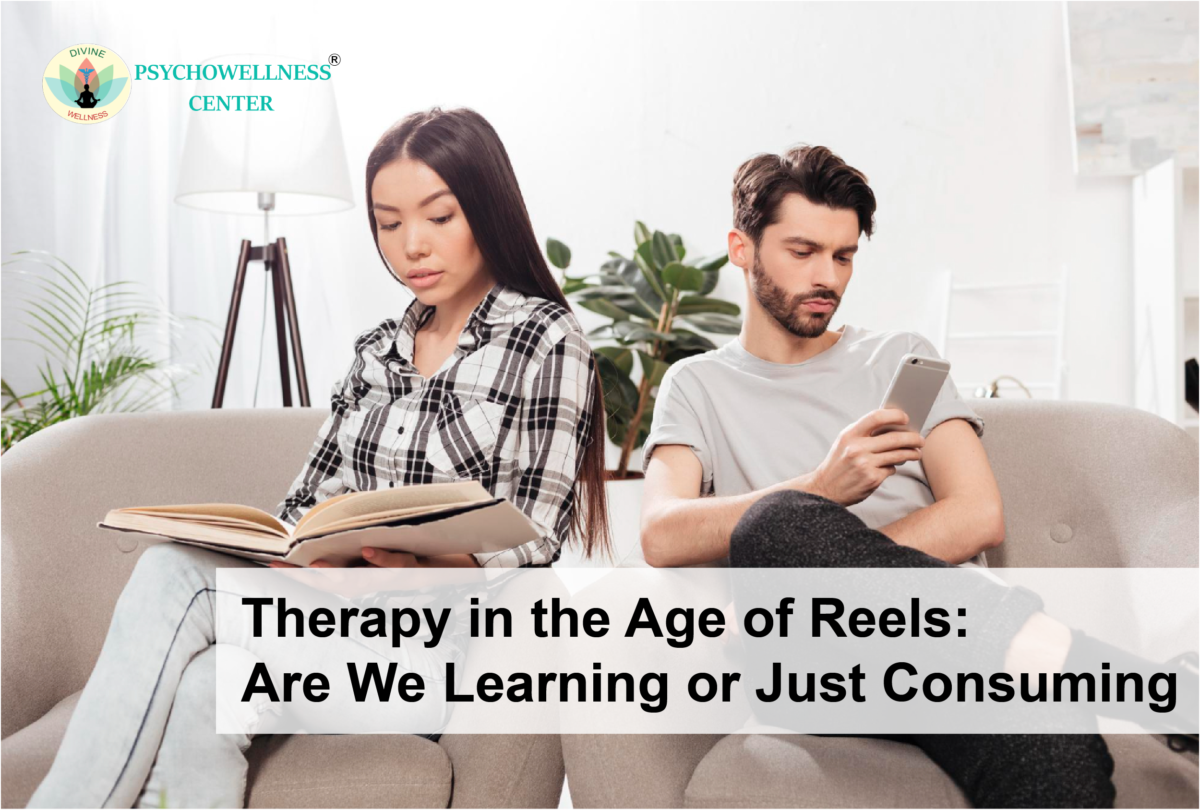
The emergence of short-form video platforms in recent years has changed the way we obtain mental health information. From 30-second clips on anxiety to quick “therapy hacks” for stress, depression, burnout, anger issues, OCD, and other psychological advice is now just a scroll away. While this accessibility has helped normalize conversations around mental health, it also raises an important question: are we genuinely learning from this content, or are we simply consuming it?
In the age of reels, therapy has taken on a new digital identity, one that is fast, engaging, and often oversimplified. Understanding the difference between mindful learning and passive consumption is crucial for safeguarding our mental well-being.
The Rise of Bite-Sized Therapy Content
Social media platforms have democratized mental health knowledge. Influencers, coaches, and therapists discuss issues including relationships, trauma, anxiety, and self-care. This has reduced stigma and encouraged many people to seek help who might otherwise have stayed silent.
However, the challenge lies in the format. Reels are designed for quick engagement, not deep understanding. Complex psychological concepts such as cognitive distortions or trauma responses are often reduced to catchy phrases or generalized advice.
For individuals seeking clarity, this can create confusion rather than insight. In such cases, consulting a psychologist in Delhi ensures that information is personalized, accurate, and grounded in evidence-based practice.
Learning vs. Consuming: What’s the Difference?
Passive Consumption
Passive consumption occurs when we scroll endlessly, watching mental health content without reflecting or applying it. It may feel productive, but it rarely leads to meaningful change.
Active Learning
Active learning involves engaging with the content, reflecting on how it applies to your life, questioning its validity, and taking intentional steps to implement it.
For example, watching a reel about “setting boundaries” might feel empowering. But true learning happens when you understand your personal challenges with boundaries and work on them consistently, often with the help of a psychologist in Delhi NCR.
The Illusion of Self-Awareness
One of the biggest risks of reel-based therapy content is the illusion of self-awareness. You may think you have a complete understanding of your mental health because you can identify symptoms or relate to certain habits.
However, awareness without action can be misleading. Real growth requires deeper exploration, which cannot be achieved through short videos alone. A trained best psychologist in Delhi NCR can help translate awareness into actionable change through structured therapeutic techniques.
The Problem of Oversimplification
Mental health is complex and deeply personal. Reels often present “one-size-fits-all” solutions such as:
- “Just think positive”
- “Cut off toxic people instantly”
- “Practice self-love daily”
While these suggestions are not entirely wrong, they lack nuance. For instance, cutting off relationships may not always be practical or emotionally feasible. Similarly, basic cognitive tendencies are not addressed by “thinking positively.”
This is where professional guidance from the best psychologists in Delhi becomes essential. Therapy provides a safe space to explore individual experiences and develop tailored coping strategies.
Emotional Overload and Comparison
Ironically, consuming too much mental health content can increase stress. Constant exposure to topics like trauma, healing, and self-improvement may lead to:
- Emotional overwhelm
- Comparison with others’ progress
- Pressure to “heal faster”
- Self-diagnosis without proper evaluation
Instead of feeling empowered, individuals may feel inadequate or confused. Seeking counselling in Delhi can help regulate these emotions and provide clarity in a supportive environment.
Can Reels Be Helpful?
Despite their limitations, reels are not entirely harmful. When used mindfully, they can:
- Raise awareness about mental health issues
- Encourage people to seek professional help
- Provide quick coping tips for everyday stress
- Normalize therapy and emotional expression
The key lies in balance. Reels should act as a starting point, not a substitute for therapy. Psychological counseling near me provides evidence-based treatments that support long-term wellbeing for a better understanding.
Moving from Consumption to Growth
If you find yourself relying heavily on social media for mental health guidance, here are some ways to shift toward meaningful growth:
1. Limit Passive Scrolling
Set boundaries for screen time and avoid excessive consumption of mental health content.
2. Reflect on What You Watch
How does this relate to me, you ask? What can I actually alter?
3. Verify Information
Not all online content is accurate. Make sure the data originates from reliable sources.
4. Take Action
Implement small, practical changes instead of just saving or liking content.
5. Seek Professional Support
When in doubt, consult a qualified psychologist who can provide personalized care.
Accessing Professional Help in Delhi
For those looking to move beyond digital consumption and engage in real healing, professional support is available in Janakpuri and Dwarka Sector 17, Delhi. Experienced psychologists may be reached by phone at 011-47039812 or 7827208707. These centers offer structured therapy sessions tailored to individual needs, helping you address concerns such as anxiety, stress, and overthinking in a meaningful way.
Conclusion
The age of reels has undoubtedly made mental health conversations more accessible and less stigmatized. However, the line between learning and consuming is thin. While reels can spark awareness, they cannot replace the depth, personalization, and effectiveness of professional therapy.
Therapy can assist people in recognizing dysfunctional relationships, regaining self-assurance, and determining the best course of action going forward.Organizations such as Psychowellness Center, situated in Janakpuri and Dwarka Sector 17, Delhi, offer all-encompassing mental health services by means of skilled practitioners who comprehend the intricacies of human conduct. At the same time, platforms like TalktoAngel make online counselling accessible, ensuring that support is just a click away.
True healing is not about how much content you consume, it’s about how deeply you understand yourself and the steps you take toward growth.
Contributions: Dr. R.K. Suri, Clinical Psychologist, and Ms. Tanu Sangwan, Counselling Psychologist
References
https://www.psychowellnesscenter.com/Blog/are-your-social-media-habits-affecting-your-mood/
https://www.psychowellnesscenter.com/Blog/reshaping-a-blurred-identity-due-to-social-media-overuse/
https://www.psychowellnesscenter.com/Blog/rise-of-screen-fatigue-among-young-adults/
American Psychological Association. (2020). Publication manual of the American Psychological Association (7th ed.). APA Publishing.
Beck, J. S. (2011). Cognitive behavior therapy: Basics and beyond (2nd ed.). Guilford Press.
Fardouly, J., & Vartanian, L. R. (2016). Social media and body image concerns. Current Opinion in Psychology, 9, 1–5. https://doi.org/10.1016/j.copsyc.2015.09.005
Kross, E., et al. (2013). Facebook use predicts declines in subjective well-being. PLoS ONE, 8(8), e69841. https://doi.org/10.1371/journal.pone.0069841
Naslund, J. A., et al. (2020). The future of mental health care: Peer-to-peer support and social media. Epidemiology and Psychiatric Sciences, 29, e162. https://doi.org/10.1017/S2045796020001067