
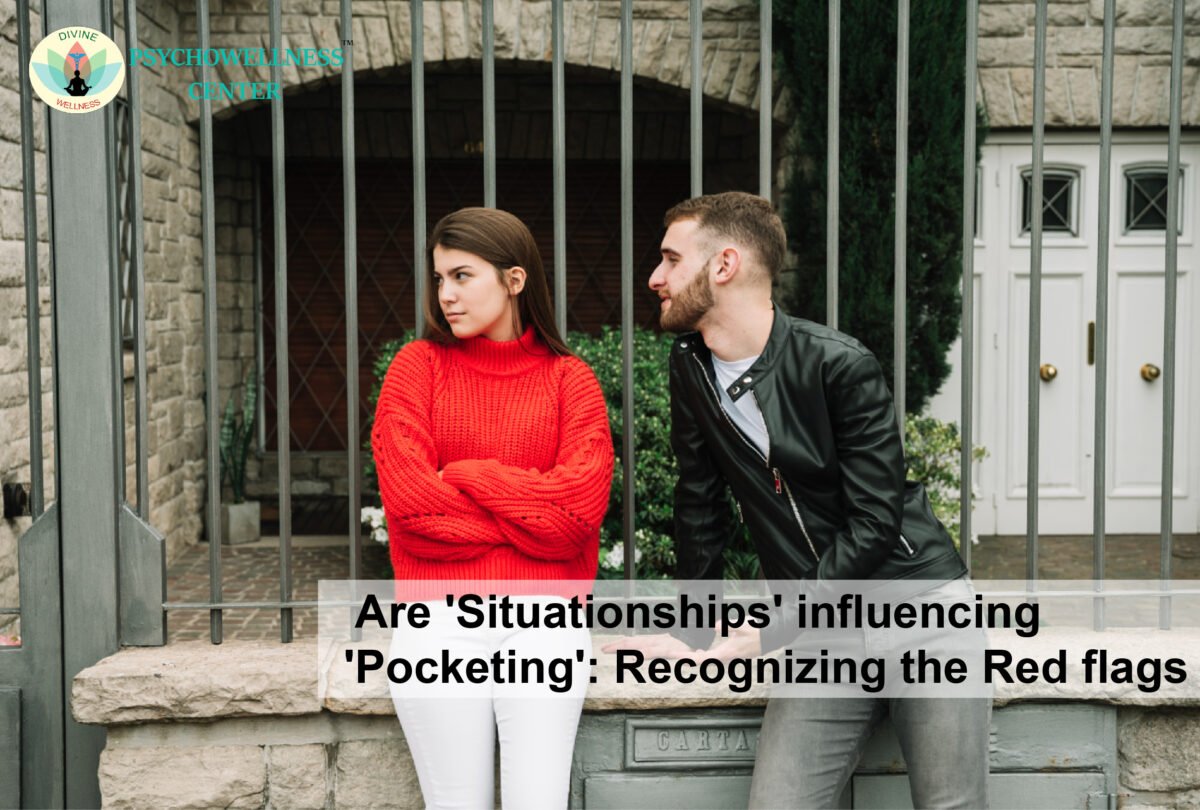
Modern relationships have evolved alongside changing social norms and digital communication. While this flexibility has created more freedom in how people connect, it has also introduced ambiguity. Terms like “situationship” and “pocketing” reflect patterns where clarity, commitment, and visibility in relationships may be limited or inconsistent.
Understanding how these patterns interact can help individuals recognise early warning signs and make more informed decisions about their emotional well-being.
Understanding Situationships
A situationship typically refers to a relationship that exists without a clear definition or commitment. It may involve emotional or physical intimacy, regular interaction, and shared experiences, but lacks explicit agreement about the nature or future of the relationship.
While some individuals may enter such arrangements intentionally, problems arise when expectations are mismatched and create stress, isolation, loneliness, anger issues, and relationship trauma. One person may perceive the relationship as evolving toward commitment, while the other prefers to keep it undefined. This lack of clarity often creates uncertainty, overthinking, and emotional strain over time.
What is Pocketing in Relationships
Pocketing refers to a situation where one partner keeps the relationship hidden from important areas of their life. This may include not introducing the partner to friends or family, avoiding public acknowledgment, or maintaining a level of secrecy about the relationship.
Unlike privacy, which can be a healthy boundary, pocketing often involves deliberate exclusion. It can create feelings of invisibility, confusion, and self-doubt for the person being kept out of the partner’s social world.
How Situationships Can Lead to Pocketing
Situationships and pocketing are often interconnected. When a relationship lacks definition, it becomes easier for one partner to avoid accountability or visibility. The absence of clear expectations allows behaviours like pocketing to go unaddressed.
In such cases, one individual may justify keeping the relationship hidden by pointing to its undefined status. Over time, this can normalise behaviour that would otherwise be considered concerning in a committed relationship.
This overlap makes it important to assess not just the label of the relationship, but the patterns within it.
Red Flags to Watch Out For
One of the primary indicators is consistent avoidance of integration into the partner’s life. If introductions to friends, family, or social circles are repeatedly postponed without clear reasons, it may signal pocketing.
Another red flag is selective communication. If interactions are limited to specific times or contexts, such as late-night conversations or private settings, it may indicate a lack of openness.
Ambiguity around the relationship status is also significant. When attempts to define the relationship are dismissed, avoided, or met with vague responses, it suggests reluctance to establish clarity.
Emotional inconsistency can further reinforce confusion. Alternating between closeness and distance without explanation can make it difficult to assess where the relationship stands.
Lastly, feeling hesitant to express needs or concerns may indicate an imbalance. When one partner’s comfort depends on avoiding difficult conversations, the dynamic becomes uneven.
Emotional Impact of These Patterns
Being in a situationship that involves pocketing can lead to ongoing emotional uncertainty. Individuals may question their value, overanalyse interactions, or feel anxious and depressed about the future of the relationship.
This pattern can also affect self-esteem. When visibility and acknowledgment are limited, individuals may internalise the behaviour as a reflection of their self-worth.
Over time, this can create emotional fatigue, making it harder to maintain clarity and boundaries.
Distinguishing Privacy from Secrecy
It is important to differentiate between healthy privacy and problematic secrecy. Privacy involves mutual understanding and respect for personal boundaries, while secrecy often involves withholding information in a way that creates imbalance.
In healthy relationships, both individuals are aware of each other’s boundaries and feel included, even if certain aspects remain private. In contrast, pocketing often leaves one partner feeling excluded without explanation. Recognising this distinction helps in evaluating whether the relationship dynamic is balanced.
The Importance of Clear Communication
Clarity is essential in navigating modern relationship structures. Open discussions about expectations, intentions, and boundaries reduce ambiguity and prevent misunderstandings.
While such conversations may feel uncomfortable, avoiding them often leads to prolonged uncertainty. Clear communication allows both individuals to make informed decisions about their involvement.
It also provides an opportunity to identify whether both partners are aligned in their expectations.
Setting Personal Boundaries
Establishing boundaries is a key step in addressing these patterns. This may involve expressing the need for clarity, visibility, or consistency within the relationship.
Boundaries are not about controlling the other person’s behaviour but about defining what is acceptable for one’s own well-being. If these boundaries are not respected, it may indicate a deeper incompatibility. Consistent boundaries support emotional stability and reduce confusion.
When to Seek Support
If relationship patterns lead to persistent confusion, distress, or self-doubt, professional support can be beneficial. Counselling provides a structured space to explore relationship dynamics, understand emotional responses, and develop healthier patterns.
It can also help individuals build confidence in setting boundaries and making decisions aligned with their well-being.
Conclusion
Situationships and pocketing reflect evolving relationship dynamics, but they can also create ambiguity and emotional strain when expectations are unclear. Recognising red flags, understanding behavioural patterns, and maintaining open communication are essential steps in navigating these relationships more effectively.
Individuals exploring counselling options for relationships such as relationship counselling in Delhi, therapist near me, counselling near me, or seeking support from best psychologists and top psychologists in Delhi may consider professional guidance from Psychowellness Center. With centres located in Janakpuri and Dwarka Sec-17, Delhi, support is available through a structured and confidential process; appointments can be scheduled at 011-47039812 or 7827208707.
Contributions: Dr. R.K. Suri, Clinical Psychologist, and Ms. Charavi Shah, Counselling Psychologist
References
- Afifi, W. A., & Burgoon, J. K. (2000). The impact of violations on uncertainty and the consequences for relational communication. Journal of Social and Personal Relationships, 17(4–5), 491–521. https://doi.org/10.1177/0265407500174003
- Knobloch, L. K., & Solomon, D. H. (1999). Measuring the sources and content of relational uncertainty. Communication Studies, 50(4), 261–278. https://doi.org/10.1080/10510979909388499
- Rusbult, C. E. (1980). Commitment and satisfaction in romantic associations: A test of the investment model. Journal of Experimental Social Psychology, 16(2), 172–186. https://doi.org/10.1016/0022-1031(80)90007-4
- Vangelisti, A. L., & Perlman, D. (Eds.). (2018). The Cambridge handbook of personal relationships (2nd ed.). Cambridge University Press.
- https://www.psychowellnesscenter.com/Blog/looking-for-couples-counselling-things-to-know/
- https://www.psychowellnesscenter.com/Blog/psychotherapy-counselling-in-delhi-for-relationship-issues/
- https://www.psychowellnesscenter.com/Blog/benefits-of-in-clinic-relationship-counselling-sessions/
- https://www.psychowellnesscenter.com/Blog/what-to-expect-from-marriage-counselling/