
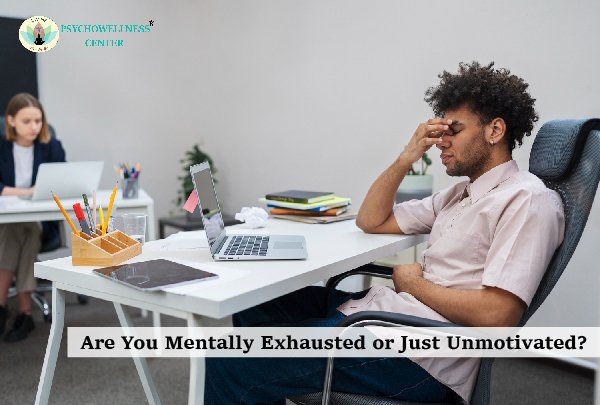
In today’s fast-moving world, many people struggle to stay productive, focused, and emotionally balanced. Some wake up feeling drained before the day even begins, while others lose interest in activities they once enjoyed. This often leads to an important question: are you truly mentally exhausted, or are you simply lacking motivation?
Although these experiences may appear similar, mental exhaustion and lack of motivation are not always the same. Because both disorders need different coping mechanisms and emotional support, it’s critical to recognize the differences.
Understanding Mental Exhaustion
Mental exhaustion occurs when the mind becomes overwhelmed after prolonged emotional, psychological, or cognitive strain. It often develops gradually due to continuous work pressure, emotional responsibilities, academic demands, caregiving duties, or unresolved emotional stressors.
When people are mentally exhausted, even small tasks can feel difficult. They may struggle to concentrate, make decisions, or complete daily responsibilities. Emotional fatigue can also affect sleep patterns, appetite, memory, and emotional stability.
One common symptom associated with mental exhaustion is anxiety, especially when individuals constantly feel pressured to perform, solve problems, or meet expectations without proper rest or emotional recovery. Over time, this emotional overload can reduce productivity and increase feelings of hopelessness.
What Does Low Motivation Look Like?
On the other hand, low motivation usually refers to a reduced desire or willingness to initiate tasks, pursue goals, or remain engaged in activities. Low motivation may not always entail emotional depletion, in contrast to mental tiredness. Instead, it can stem from boredom, disappointment, lack of direction, fear of failure, or unrealistic expectations.
Someone experiencing low motivation may procrastinate, lose interest in long-term plans, or struggle to maintain consistency. While occasional dips in motivation are normal, a persistent lack of drive can sometimes indicate deeper emotional concerns such as chronic stress, depression, or emotional fatigue.
It is important to recognize that mental exhaustion and low motivation can exist together. When individuals ignore emotional fatigue for long periods, motivation naturally decreases because the brain and body no longer have the energy to function effectively.
Signs You May Be Mentally Exhausted
Emotional and physical health are frequently impacted by mental tiredness. Some common signs include:
- Feeling emotionally numb or detached
- Difficulty concentrating
- Increased irritability
- Sleep disturbances
- Frequent headaches or body tension
- Feeling overwhelmed by simple tasks
- Emotional sensitivity or crying spells
- Loss of enthusiasm for social interaction
Many individuals also experience burnout, a state of chronic emotional, mental, and physical exhaustion often linked to prolonged stress and overwork. Burnout can significantly affect workplace productivity, relationships, and overall quality of life.
Why Rest Alone Is Sometimes Not Enough
People frequently believe that getting extra sleep or taking a quick vacation will instantaneously boost motivation and vitality. While physical rest is important, emotional exhaustion may require deeper emotional care and psychological support.
When the mind is constantly overwhelmed, the nervous system remains in a prolonged state of alertness. This can make relaxation difficult even during rest periods. If people don’t aggressively address the root causes of stress and emotional overload, emotional exhaustion may persist.
Practicing mindfulness can help individuals become more aware of their emotional and mental state without judgment. Mindfulness techniques encourage present-moment awareness, helping people reduce overthinking and emotional reactivity.
The Importance of Emotional Awareness
Many individuals ignore emotional exhaustion because they believe they should “push through” difficulties. However, constantly suppressing emotions can worsen mental fatigue over time. Emotional awareness allows individuals to recognize when their mind and body are signaling the need for rest, support, or change.
One effective way to rebuild emotional balance is through healthy goal setting. Setting small, realistic goals helps individuals regain structure and confidence without overwhelming themselves. Rather than focusing on perfection, manageable goals encourage gradual progress and emotional stability.
Healthy routines such as proper sleep, balanced nutrition, physical activity, emotional expression, and social support also contribute to emotional recovery and self-improvement. Small lifestyle changes can significantly improve mental clarity and emotional resilience over time.
Therapeutic Support for Emotional Exhaustion
Professional mental health support can be very helpful when emotional exhaustion persists. Therapy helps individuals understand emotional patterns, manage overwhelming thoughts, and develop healthier coping strategies.
Approaches such as dialectical behaviour therapy are particularly effective for improving emotional regulation, distress tolerance, and interpersonal communication. This therapeutic method helps individuals manage emotional overwhelm in healthier ways.
Similarly, mindfulness therapy focuses on increasing self-awareness, reducing emotional reactivity, and improving mental clarity. These techniques can help individuals feel more grounded and emotionally balanced during periods of emotional exhaustion.
Today, many people actively search online for services such as a counsellor near me, a therapist near me, or psychological counselling in Delhi to find professional guidance for emotional fatigue, stress, and motivational difficulties.
Seeking support from the Best Psychologists in Delhi NCR can help individuals better understand the root causes of emotional exhaustion and develop sustainable coping strategies. Professional counselling can also help individuals rebuild emotional energy, improve self-awareness, and restore healthy daily functioning.
How to Differentiate Between Exhaustion and Lack of Motivation
A simple way to distinguish between the two is to ask yourself the following questions:
- Do I want to complete tasks but feel too emotionally drained to start?
- Am I physically tired even after resting?
- Do small responsibilities feel emotionally overwhelming?
- Have I become disinterested in the things I used to enjoy?
If the answer is yes, mental exhaustion may be contributing to your difficulties. On the other hand, lack of motivation can be the main issue if energy levels are comparatively normal but there is little interest or direction.
Understanding the difference helps individuals choose appropriate coping strategies rather than blaming themselves for being “lazy” or “unproductive.”
Conclusion
Mental exhaustion and lack of motivation are both common experiences, especially in today’s demanding environment. However, they should not be ignored or misunderstood. Emotional fatigue can quietly affect concentration, relationships, emotional health, and overall well-being if left unaddressed. Recognizing emotional exhaustion early allows individuals to take meaningful steps toward recovery. Through emotional awareness, healthy routines, therapeutic support, and realistic self-care practices, people can gradually regain emotional energy, clarity, and balance.
To better understand and cope with the emotional exhaustion, lack of motivation, and mental fatigue caused by prolonged pressure and overwhelming daily demands, individuals can seek professional support at the Psychowellness Center. Services are available in-person at Dwarka and Janakpuri, New Delhi (Contact: 011-47039812 / 7827208707) and online through TalktoAngel. With the guidance of trained mental health professionals, individuals can learn to improve emotional control, restore motivation, manage stress responses, and regain psychological balance through evidence-based approaches such as cognitive behavioural therapy, mindfulness techniques, dialectical behaviour therapy, and emotional regulation interventions.
Mental exhaustion and lack of motivation can often feel similar, making it difficult to recognize when the mind and body truly need rest and emotional recovery. Persistent fatigue caused by severe emotional and physical depletion from prolonged pressure can affect concentration, productivity, and overall well-being. Incorporating healthy wellness routines frequently suggested by mental health professionals for emotional balance and recovery can help restore energy and improve daily functioning. Additionally, creating realistic personal targets with step-by-step planning strategies may help individuals regain focus, structure, and emotional clarity over time.
Contributions: Dr. R.K. Suri, Clinical Psychologist, and Ms. Mahima Mathur, Counselling Psychologist
References
American Psychiatric Association. (2022). Diagnostic and statistical manual of mental disorders (5th ed., text rev.). American Psychiatric Publishing.
Kabat-Zinn, J. (2013). Full catastrophe living: Using the wisdom of your body and mind to face stress, pain, and illness (Revised ed.). Bantam Books.
Linehan, M. M. (2015). DBT skills training manual (2nd ed.). Guilford Press.
Maslach, C., & Leiter, M. P. (2016). Burnout. Wiley International Encyclopedia of Management, 1–3.
Neff, K. D. (2011). Self-compassion: The proven power of being kind to yourself. William Morrow.
https://www.psychowellnesscenter.com/Blog/why-people-feel-mentally-exhausted-more-than-ever/
https://www.psychowellnesscenter.com/Blog/signs-and-remedies-for-mental-fatigue/
https://www.psychowellnesscenter.com/Blog/break-the-cycle-of-low-motivation-and-get-help-now/