
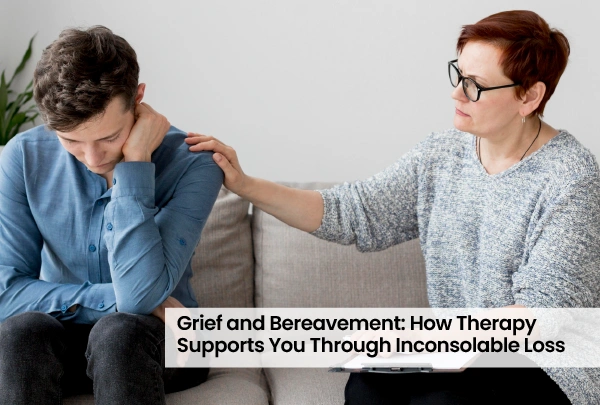
Loss is one of life’s most painful and unavoidable experiences. Whether it is the death of a loved one, the end of a meaningful relationship, a miscarriage, the loss of a pet, or even the loss of health or identity, grief touches every aspect of our lives. While everyone experiences grief differently, one thing remains universal, the emotional pain can feel overwhelming. During such difficult times, therapy offers a safe and compassionate space to process emotions, rebuild resilience, and gradually find meaning after loss.
Understanding Grief and Bereavement
Despite their frequent interchangeability, the terms grief and bereavement have distinct meanings. Bereavement refers to the state of having lost someone significant through death, while grief is the emotional, psychological, physical, and behavioral response to that loss. Mourning, on the other hand, is the outward expression of grief, often shaped by cultural and personal traditions.
Grief is not limited to sadness. It may include a wide range of emotions such as anger, guilt, anxiety, numbness, loneliness, disbelief, relief, or even moments of happiness followed by guilt. Some people experience difficulty concentrating, changes in appetite, disturbed sleep, fatigue, or physical aches. These reactions are normal responses to a significant loss and vary greatly from person to person.
There Is No “Right” Way to Grieve
Many people have heard about the five stages of grief, denial, anger, bargaining, depression, and acceptance. However, modern psychological understanding emphasizes that grief is not a linear process. Individuals do not necessarily experience these emotions in a fixed order, and they may revisit certain feelings multiple times. Every grief journey is unique, influenced by personality, cultural beliefs, previous experiences, the nature of the relationship, and the circumstances surrounding the loss.
While some people become silent and reclusive, others cry in public. Some return to work quickly, whereas others need more time before resuming daily routines. None of these responses are inherently right or wrong.
When Grief Becomes Difficult to Manage
While grief naturally changes over time, some individuals find themselves feeling emotionally “stuck.” Intense sorrow may continue for months or years without improvement, making it difficult to function in daily life. Persistent yearning, inability to accept the loss, severe social withdrawal, overwhelming guilt, or hopelessness may indicate that professional support could be beneficial.
Seeking therapy does not mean someone is weak or incapable of coping. Instead, it reflects a willingness to receive support during one of life’s most challenging experiences.
How Therapy Helps During Grief
Grief therapy is not about helping someone “move on” or forget the person they lost. Rather, it helps individuals learn how to carry the loss while continuing to live a meaningful life.
1. Creating a Secure Environment for Emotional Expression
Many grieving individuals feel pressure to “stay strong” for family members or may worry about burdening others with their emotions. Therapy offers a confidential, non-judgmental environment where every feeling, whether sadness, anger, guilt, confusion, or relief, is accepted and validated.
2. Understanding Emotional Reactions
A therapist helps individuals understand that grief affects thoughts, emotions, behaviors, and even physical health. Learning that one’s reactions are normal often reduces fear and self-criticism, allowing healing to begin.
3. Developing Healthy Coping Strategies
Therapists teach practical coping techniques tailored to the individual’s needs, including:
- Emotional regulation strategies
- Mindfulness and grounding exercises
- Journaling and expressive writing
- Relaxation and breathing techniques
- Building healthy daily routines
- Strengthening social support networks
These strategies help individuals gradually regain a sense of stability while honoring their emotional experience.
4. Addressing Guilt and Unfinished Conversations
Many grieving people struggle with thoughts such as, “I should have done more,” or “I never got to say goodbye.” Therapy helps process unresolved emotions, challenge unhelpful beliefs, and foster self-compassion.
5. Finding Meaning After Loss
Healing does not mean forgetting someone. Instead, therapy supports individuals in discovering ways to maintain a healthy emotional connection with the deceased while also embracing new roles, relationships, and life goals. Contemporary grief research highlights that maintaining meaningful memories and continuing emotional bonds can be a healthy part of adaptation.
Therapeutic Approaches Used in Grief Counseling
Mental health professionals may use evidence-based therapeutic approaches depending on the individual’s unique needs, including:
- Cognitive Behavioral Therapy (CBT) to identify and modify distressing thoughts.
- Acceptance and Commitment Therapy (ACT) to encourage emotional acceptance while pursuing meaningful values.
- Narrative Therapy to help individuals reconstruct their personal story after loss.
- Mindfulness-based interventions to reduce emotional overwhelm and increase present-moment awareness.
- Supportive psychotherapy focused on empathy, validation, and strengthening coping resources.
Rather than applying a single technique, therapists often integrate multiple evidence-based approaches to best support the grieving individual.
Supporting Someone Who Is Grieving
If someone close to you is grieving, your presence often matters more than finding the perfect words. Consider:
- Listening without trying to “fix” their pain.
- Allowing them to express emotions freely.
- Avoiding phrases such as “Everything happens for a reason” or “It’s time to move on.”
- Offering practical support with daily tasks.
- Checking in regularly, especially after the initial weeks when support often decreases.
Simple acts of compassion can make an enormous difference during bereavement.
When to Seek Professional Help
Consider reaching out to a mental health professional if grief is causing:
- Persistent inability to function at work or home
- Intense hopelessness or despair
- Severe sleep or appetite disturbances
- Ongoing feelings of worthlessness or excessive guilt
- Social isolation
- Thoughts of self-harm or suicide
Early psychological assistance can encourage better adjustment and avoid protracted emotional distress.
Compassionate Grief Counseling at Psychowellness Center
At Psychowellness Center, experienced best counselors near me, and psychological counseling near me provide compassionate and evidence-based grief and bereavement counseling tailored to each individual’s emotional needs. Whether you are coping with the loss of a loved one, struggling after a major life transition, or feeling unable to move forward, professional therapy can help you process your emotions with dignity and care.
Psychowellness Center offers counseling services at both its Janakpuri and Dwarka Sector-17 locations, ensuring accessible mental health support for individuals and families. To schedule an appointment or learn more about grief counseling services, contact 011-47039812 or 7827208707.
Conclusion
Grief changes us, but it does not have to define the rest of our lives. Healing is not about forgetting the person we loved; it is about learning to live with the loss while rediscovering hope, purpose, and connection. Therapy provides compassionate guidance through this deeply personal journey, helping individuals honor their memories while gradually rebuilding a meaningful future. Seeking support is not a sign of weakness, it is an act of courage, resilience, and self-care.
Contributions: Dr. R.K. Suri, Clinical Psychologist, and Ms. Sakshi Dhankhar, Counselling Psychologist
References
American Psychiatric Association. (2022). Diagnostic and statistical manual of mental disorders (5th ed., text rev.; DSM-5-TR). Author.
https://www.psychowellnesscenter.com/Blog/grief-counselling-near-me-when-loss-feels-unbearable/
https://www.psychowellnesscenter.com/Blog/best-psychologist-in-janakpuri-for-grief-and-loss/
Stroebe, M., Schut, H., & Boerner, K. (2017). Models of coping with bereavement: An updated overview. Estudios de Psicología, 38(3), 582–607. https://doi.org/10.1080/02109395.2017.1340055
Worden, J. W. (2018). Grief counseling and grief therapy: A handbook for the mental health practitioner (5th ed.). Springer Publishing Company.