
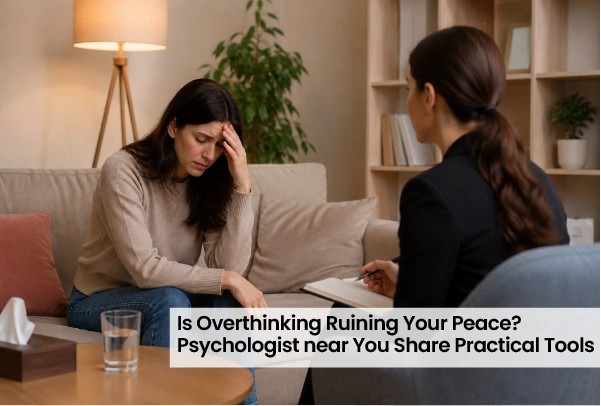
Have you ever pictured every scenario before acting, worried about a decision you’ve already made, or constantly replayed a conversation? Occasional reflection is a normal part of life, but when thinking becomes repetitive and unproductive, it can begin to affect your emotional well-being. Overthinking doesn’t solve problems; it often magnifies them, leaving you feeling mentally exhausted and emotionally overwhelmed.
Psychologists describe overthinking as repetitive negative thinking, which generally appears in two forms: worry, which focuses on future uncertainties, and rumination, which involves dwelling on past events or mistakes. Even though these thought patterns may seem like a way to solve problems, research indicates that they are strongly associated with higher levels of stress, anxiety, and depression because they prevent people from making progress.
In the fast-paced world of today, overthinking has grown more prevalent. Academic pressure, workplace demands, relationship concerns, financial responsibilities, and constant exposure to social media can all contribute to a mind that rarely gets a chance to rest. Many people believe that thinking harder will eventually lead to the “right” answer, but excessive analysis often results in confusion, self-doubt, and decision fatigue.
The good news is that overthinking is a habit that can be altered rather than a personality feature. Seeking psychological counseling in Delhi from a licensed psychologist or counseling psychologist in Delhi can help you create better thought patterns through evidence-based treatments like mindfulness and cognitive behavioral therapy (CBT) if your everyday life is being negatively impacted by repetitive thinking.
What Is Overthinking?
Healthy thinking helps us solve problems and make informed decisions. Overthinking, however, involves repeatedly analysing situations without reaching a solution. Instead of providing clarity, it creates uncertainty and emotional distress.
Two common forms include:
- Worry: recurring ideas about worst-case scenarios or future occurrences.
- Rumination: Constantly replaying past experiences, conversations, or mistakes.
For example, someone may spend hours worrying about an upcoming interview or repeatedly analyse an argument that happened weeks ago. While reflection is useful, getting caught in these loops rarely changes the outcome. Instead, it drains mental energy and makes it harder to focus on the present.
Signs You’re Overthinking
You may be overthinking if you frequently:
- Replay conversations in your mind.
- Imagine worst-case scenarios.
- Struggle to make decisions.
- Seek constant reassurance.
- Have trouble sleeping because your mind won’t switch off.
- Feel mentally exhausted even after a relatively calm day.
If these patterns persist and begin affecting your relationship, work, or daily functioning, speaking with a Psychologist, exploring Anxiety Counselling, or seeking Mental Health Counselling can help you develop healthier coping strategies before stress becomes overwhelming.
Why Do We Overthink?
Overthinking is often the brain’s way of trying to protect us from uncertainty, mistakes, or disappointment. When faced with an important decision or stressful situation, our minds naturally search for answers. However, instead of finding solutions, overthinking keeps us trapped in endless “what if” scenarios. Several factors can contribute to overthinking, including perfectionism, fear of failure, low Self-confidence, past negative experiences, and chronic stress. People who struggle to tolerate uncertainty often spend excessive time analysing situations because they believe more thinking will provide certainty. In reality, the cycle usually increases anxiety rather than reducing it.
How Overthinking Affects Your Mental Health
Persistent Rumination doesn’t just affect your thoughts; it can influence your emotions, physical health, and relationships. When the brain stays in a constant state of analysis, the body’s stress response remains activated, making it harder to relax, concentrate, or sleep.
Overthinking has long been associated with increased anxiety, sadness, emotional tiredness, and a lower quality of life. It may also lead to procrastination, indecisiveness, and repeatedly seeking reassurance from others. Instead of helping you prepare for challenges, overthinking often makes everyday situations feel more overwhelming.
4 Practical Tools Psychologists Recommend
- Identify When You’re Overthinking
The first step is recognising the difference between productive thinking and repetitive thinking. Ask yourself:
- Am I solving the problem?
- Have I already given this some thought?
- Is this thought leading to action or simply increasing my stress?
Awareness helps interrupt the cycle before it becomes automatic.
- Challenge Your Thoughts with CBT
One of the most successful evidence-based therapies for overthinking is cognitive behavioral therapy, or CBT. Rather than accepting every thought as true, CBT encourages you to question it.
For example, instead of thinking:
“I’m definitely going to fail.”
Ask yourself:
- What’s the evidence?
- Is there another explanation?
- In this case, what would I say to a friend?
Research shows that CBT significantly reduces repetitive negative thinking, worry, and rumination across a range of mental health conditions.
- Practice Mindfulness
Many people try to stop unwanted thoughts by pushing them away, but this often makes them stronger. Being mindful teaches you to watch your thoughts without becoming trapped in them. Instead of fighting every thought, you learn to acknowledge it and gently return your attention to the present moment.
Even a little period of focused breathing, grounding techniques, or environmental awareness can settle a racing mind. Studies have found that mindfulness-based interventions significantly reduce rumination and improve overall psychological well-being.
- Take One Small Action
Overthinking keeps you stuck in your head, while action helps you move forward. Rather than waiting until you feel completely certain, ask yourself. Making a phone call, beginning a project, or engaging in a conversation you’ve been putting off could all be examples. Small actions build confidence, reduce uncertainty, and remind your brain that progress comes from doing, not endless analysing.
When Should You Seek Professional Help?
Occasional overthinking is a normal response to stressful situations or major life decisions. However, when repetitive thoughts begin to interfere with your sleep, work, relationships, or overall quality of life, it may be time to seek professional support. Consulting a psychologist Delhi, seeking psychological counselling in Delhi, or working with a qualified counselling psychologist Delhi can help you identify the underlying causes of persistent overthinking and develop healthier ways to manage it.
Professional advice might be beneficial if you:
- Feel mentally exhausted or emotionally drained most days.
- Struggle to make decisions because you fear making the wrong choice.
- Constantly replay past events or imagine worst-case scenarios.
- Find it difficult to relax, concentrate, or stay present in the moment.
- Notice increasing symptoms of anxiety, stress, or persistent low mood.
Early intervention can stop overthinking from developing into a chronic habit and provide you with useful techniques to reestablish emotional equilibrium and enhance your general wellbeing. If you are looking for the best psychologists in Delhi, Psychowellness Center offers evidence-based psychological care through experienced mental health professionals. With conveniently located clinics in Janakpuri and Dwarka, the center provides therapy and counselling services for individuals, couples, children, and families. To book an appointment or learn more, contact the Janakpuri or Dwarka clinic at 7827208707 or 011-47039812.
How Therapy Can Help
Therapy doesn’t aim to stop you from thinking, it helps you think differently. Whether you visit a Counseling Center Near me or seek counselling in Delhi, a psychologist works with you to understand what drives your overthinking and teaches practical skills to break unhelpful thought cycles.
Cognitive Behavioural Therapy (CBT) helps identify negative thinking patterns, challenge unrealistic beliefs, and replace them with more balanced perspectives. At the same time, Mindfulness teaches you to observe your thoughts without becoming overwhelmed by them, allowing you to respond calmly instead of reacting automatically. If you’re looking for the best psychologist in Janakpuri or an experienced counselling psychologist in Delhi, these evidence-based approaches can improve emotional control, reduce Stress, and help you develop healthier coping strategies for long-term psychological well-being.
Conclusion
Overthinking often starts with the intention of protecting ourselves from mistakes or uncertainty. Unfortunately, thinking harder rarely brings greater certainty, it often increases stress and makes it harder to enjoy the present moment.
Fortunately, overthinking is a habit rather than a permanent aspect of your personality. By recognising unhelpful thought patterns, practising Mindfulness, using Cognitive Behavioural Therapy (CBT) techniques, and taking small, meaningful actions, you can gradually reduce mental clutter and regain a sense of peace.
If overthinking is affecting your confidence, relationships, work, or daily life, don’t hesitate to seek support from a qualified Psychologist. Mental Health Counselling, Anxiety Counselling, and Stress Counselling can provide practical tools to help you manage repetitive thinking and improve your overall emotional well-being.
Contributions: Dr. R.K. Suri, Clinical Psychologist, and Ms. Ishita , Counselling Psychologist
References
- Beshai, S. (2024). Mindfulness and CBT: A conceptual integration bridging ancient wisdom and modern cognitive theories of psychopathology. Frontiers in Psychology, 15, 1489798. https://doi.org/10.3389/fpsyg.2024.1489798
- Mao, L., Li, P., Wu, Y., Luo, L., & Hu, M. (2023). The effectiveness of mindfulness-based interventions for ruminative thinking: A systematic review and meta-analysis of randomized controlled trials. Journal of Affective Disorders, 321, 83–95. https://doi.org/10.1016/j.jad.2022.10.022