
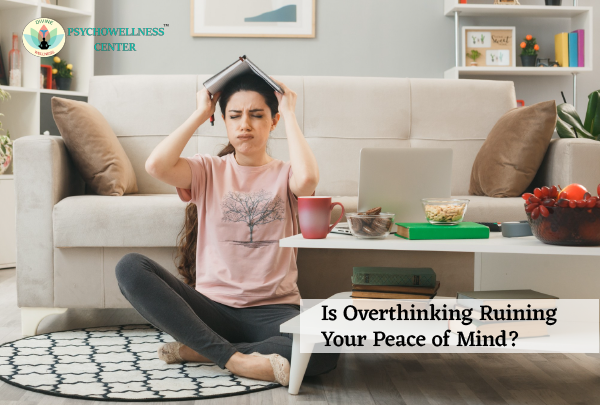
In today’s fast-paced and demanding world, overthinking has become a silent mental habit that affects millions of people. What may begin as a simple reflection often turns into a cycle of repetitive thoughts, self-doubt, and worry. Overthinking doesn’t just occupy your mind it can deeply impact your emotional well-being, decision-making ability, and overall quality of life. If you find yourself constantly replaying conversations, worrying about the future, or analyzing every detail, it might be time to pause and reflect: Is overthinking ruining your peace of mind?
What Is Overthinking?
Overthinking refers to the process of dwelling excessively on thoughts, situations, or problems. It often involves analyzing past events repeatedly or worrying about future uncertainties. While thinking critically is helpful in decision-making, overthinking is unproductive and draining.
There are two common patterns of overthinking:
- Rumination: Repeatedly thinking about past mistakes or negative experiences
- Worrying: Obsessing about future possibilities and worst-case scenarios
Both patterns keep your mind stuck in a loop, making it difficult to feel calm and present.
Signs You Might Be Overthinking
The first step to controlling overthinking is acknowledging it. Some common signs include:
- Constantly replaying past conversations or events
- Fear of making the incorrect decision makes decision-making difficult.
- Imagining worst-case scenarios frequently
- Feeling mentally exhausted without physical activity
- Trouble sleeping due to racing thoughts
If these patterns persist, seeking guidance from a psychologist in Delhi can help you understand and manage these thoughts effectively.
How Overthinking Affects Your Mental Health
Overthinking can significantly disrupt your mental peace. Here’s how:
1. Increased Anxiety and Stress
When your mind is constantly occupied with “what ifs,” it triggers anxiety. Your brain perceives imagined threats as real, triggering stress responses such as increased heart rate and restlessness.
2. Reduced Productivity
Overthinking slows down decision-making. You may spend too much time analyzing options instead of taking action, leading to missed opportunities and frustration.
3. Emotional Exhaustion
Continuous mental chatter can drain your emotional energy, leaving you feeling tired, irritable, and overwhelmed.
4. Negative Thinking Patterns
Overthinking often reinforces negative beliefs about yourself and others. This can lower self-esteem and increase feelings of helplessness.
If you’re experiencing these challenges, consulting a psychologist in Delhi NCR can provide professional strategies to break this cycle.
Why Do We Overthink?
Overthinking doesn’t happen without reason. It is frequently connected to underlying psychological elements like:
- Fear of failure or rejection
- Perfectionism
- Past trauma or negative experiences
- Lack of control over situations
- Low self-confidence
Understanding the root cause is crucial. A trained psychologist delhi ncr can help identify these triggers and guide you toward healthier thought patterns.
Practical Ways to Stop Overthinking
Breaking the habit of overthinking requires conscious effort and consistent practice. Here are some effective techniques:
1. Practice Mindfulness
Instead of focusing on the past or the future, mindfulness helps you stay in the now. Deep breathing and meditation are two methods that might help you relax.
2. Set Time Limits for Decisions
Give yourself a specific time to think about a problem, and once the time is up, take action. This prevents endless analysis.
3. Challenge Negative Thoughts
Ask yourself: Is this thought realistic? Is there evidence for it? Reframing thoughts can reduce their intensity.
4. Engage in Physical Activity
Exercise helps release stress and shifts your focus away from repetitive thoughts.
5. Write It Down
You can get insight and process emotions by keeping a journal.
6. Seek Professional Help
If overthinking feels uncontrollable, reaching out to the best psychologists in Dwarka can make a significant difference in managing your mental health.
When Should You Seek Counselling?
While occasional overthinking is normal, chronic overthinking may require professional intervention. Consider seeking counselling in Delhi if:
- Your thoughts interfere with daily functioning
- You experience frequent anxiety or panic attacks
- You struggle with sleep or concentration
- Most of the time, you experience emotional overload.
In Delhi, professional psychological counseling near me provides systematic methods like Cognitive Behavioral Therapy (CBT), which assists people in recognizing and altering harmful thought patterns.
The Role of Therapy in Managing Overthinking
Therapy offers a secure and encouraging setting for you to examine your feelings and ideas. A psychologist can help you:
- Identify triggers of overthinking
- Develop coping strategies
- Improve emotional control
- Build self-awareness and confidence
Over time, therapy assists you in regaining control over your thoughts rather than letting them dictate your life.
Finding Support in Delhi
If you are looking for professional help, there are experienced psychologists available in areas like Janakpuri and Dwarka Sector 17, Delhi. You can access services by calling 011-47039812 / 7827208707. These centers provide personalized therapy sessions tailored to individual needs, ensuring effective support for managing overthinking and related concerns.
Conclusion
At first, overthinking could seem harmless, but if it becomes a habit, it can take your emotional equilibrium and tranquility. The good news is that it is manageable with the right strategies and support. Recognizing the signs, practicing mindfulness, and seeking professional help can help you break free from this mental loop.
Organizations like Psychowellness Center, located in Janakpuri and Dwarka Sector 17, Delhi, offer expert guidance from trained psychologists who specialize in managing anxiety and overthinking. Additionally, platforms like TalktoAngel provide accessible online counselling services, making mental health support available from the comfort of your home.
Taking the first step toward help is not a sign of weakness, it’s a step toward a calmer, healthier mind.
Contributions: Dr. R.K. Suri, Clinical Psychologist, and Ms. Tanu Sangwan, Counselling Psychologist
References
https://www.psychowellnesscenter.com/Blog/therapy-near-you-for-overthinking-minds/
https://www.psychowellnesscenter.com/Blog/8-tips-to-stop-overthinking/
https://www.psychowellnesscenter.com/Blog/is-overthinking-a-trauma-defense/
https://www.psychowellnesscenter.com/Blog/exiting-from-the-loop-of-anxiety-and-overthinking/
American Psychological Association. (2020). Publication manual of the American Psychological Association (7th ed.). APA Publishing.
Beck, A. T. (2011). Cognitive therapy of anxiety disorders: Science and practice. Guilford Press.
Nolen-Hoeksema, S. (2000). The role of rumination in depressive disorders. Journal of Abnormal Psychology, 109(3), 504–511. https://doi.org/10.1037/0021-843X.109.3.504
Segal, Z. V., Williams, J. M. G., & Teasdale, J. D. (2018). Mindfulness-based cognitive therapy for depression (2nd ed.). Guilford Press.