
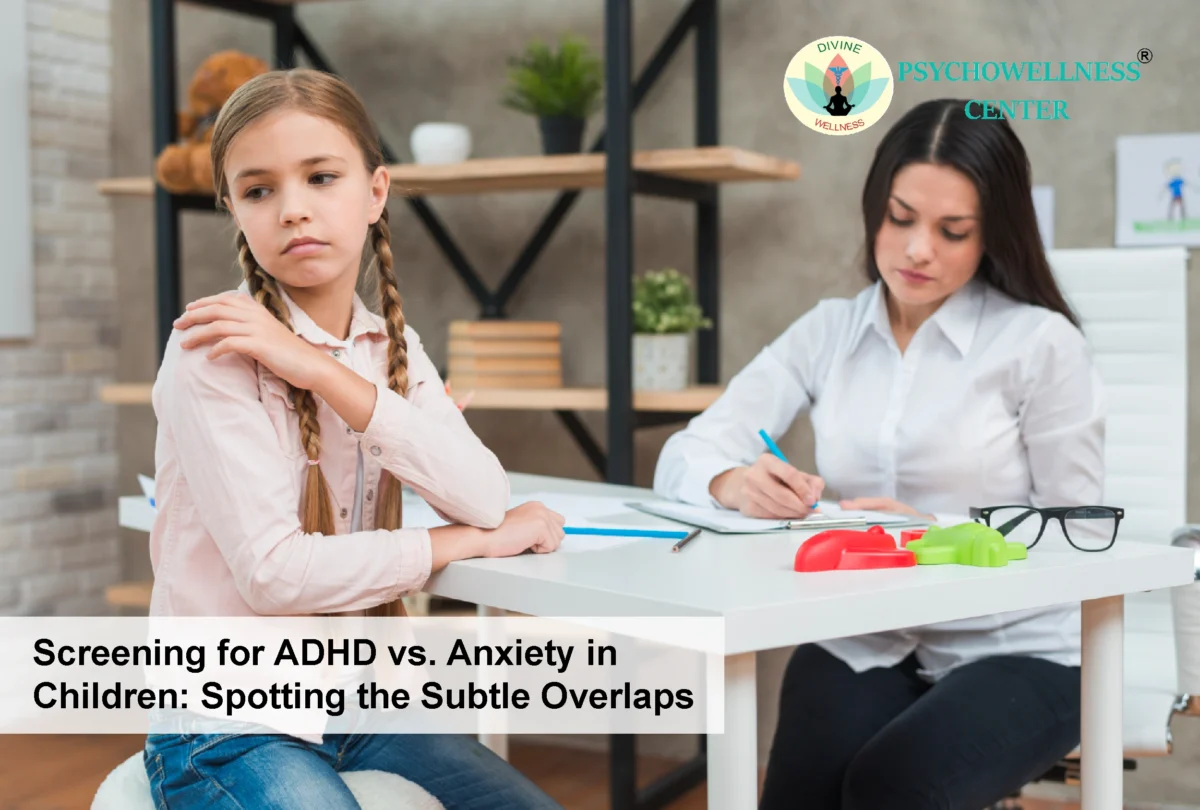
Children often experience emotional and behavioral challenges as they grow, but when these difficulties begin to interfere with learning, relationships, or daily life, it becomes important to understand the underlying cause. Two of the most commonly misunderstood conditions in children are Attention-Deficit/Hyperactivity Disorder (ADHD) and anxiety disorders. Although they are distinct conditions, they share several overlapping symptoms, making it difficult for parents, teachers, and even healthcare professionals to differentiate between them without proper assessment.
Accurate screening is essential because the treatment approaches for ADHD and anxiety differ significantly. Misidentifying one condition as the other may delay appropriate intervention and affect a child’s emotional, academic, and social development.
Understanding ADHD
Attention-Deficit/Hyperactivity Disorder (ADHD) is a neurodevelopmental condition characterized by persistent patterns of inattention, hyperactivity, and impulsivity that interfere with functioning across multiple settings, such as home and school.
Common symptoms of ADHD include:
- Difficulty sustaining attention during tasks
- Frequently making careless mistakes
- Forgetfulness in daily activities
- Difficulty organizing schoolwork
- Restlessness or excessive movement
- Interrupting conversations or activities
- Acting without thinking
- Difficulty waiting for turns
Children with ADHD often struggle because their brains process attention and impulse control differently. Their behaviors are generally consistent across different environments rather than occurring only in stressful situations.
Understanding Anxiety in Children
Anxiety is a natural stress response, but when excessive worry becomes persistent and begins to impair daily functioning, it may indicate an anxiety disorder. Children with anxiety often experience intense fears, constant worry, and physical symptoms that affect their concentration and behavior.
Common signs of anxiety include:
- Excessive worrying about school, health, or family
- Difficulty concentrating because of intrusive thoughts
- Irritability
- Sleep disturbances
- Frequent headaches or stomachaches
- Avoidance of challenging situations
- Perfectionistic tendencies
- Fear of making mistakes
Unlike ADHD, anxious children often appear cautious, withdrawn, or overly concerned about meeting expectations.
Why ADHD and Anxiety Look So Similar
One of the biggest challenges in child mental health is that ADHD and anxiety frequently share several observable symptoms. These similarities can easily lead to confusion during initial evaluations.
Some overlapping symptoms include:
- Difficulty concentrating
- Restlessness
- Fidgeting
- Irritability
- Poor academic performance
- Forgetfulness
- Trouble completing assignments
- Sleep problems
However, while the outward behaviors may appear similar, the underlying reasons are often quite different.
For example, a child with ADHD may lose focus because their attention shifts rapidly from one stimulus to another. In contrast, a child with anxiety may lose focus because their mind is occupied with worries or fearful thoughts.
Understanding the “why” behind the behavior is often more important than simply observing the behavior itself.
Key Differences Between ADHD and Anxiety
Although these conditions overlap, careful screening helps distinguish them.
A child with ADHD generally:
- Becomes distracted by external stimuli
- Struggles with organization consistently
- Acts impulsively
- Enjoys new activities but quickly loses interest
- Has symptoms present across most situations
A child with anxiety generally:
- Is distracted by internal worries
- Avoids situations due to fear
- Thinks carefully before acting
- May perform well until stress increases
- Experiences symptoms mainly during anxiety-provoking situations
Another important distinction is that children with ADHD often seek stimulation, whereas children with anxiety tend to avoid uncertainty and situations they perceive as threatening.
Can Children Have Both ADHD and Anxiety?
Indeed. According to research, anxiety and ADHD frequently coexist. Many children diagnosed with ADHD also experience clinically significant anxiety.
When both conditions are present, symptoms can become more complicated. For example:
- Anxiety may increase inattention.
- ADHD-related difficulties may create academic stress, leading to anxiety.
- Emotional regulation becomes more challenging.
- Social relationships may suffer due to impulsivity and excessive worry.
This is why comprehensive psychological evaluation is essential rather than relying on symptom checklists alone.
The Importance of Comprehensive Screening
Proper screening involves gathering information from multiple sources rather than depending on one observation or questionnaire.
A comprehensive assessment may include:
- Clinical interviews with parents
- Behavioral observations
- Teacher feedback
- Developmental history
- Standardized psychological assessments
- Emotional and behavioral rating scales
- Academic functioning assessment
Mental health professionals also evaluate the duration, severity, and consistency of symptoms across different environments.
Screening aims to identify not only ADHD or anxiety but also any co-occurring concerns such as learning difficulties, depression, autism spectrum disorder, or behavioral issues that may influence treatment planning.
How Parents and Teachers Can Help
When it comes to seeing early warning indicators, parents and educators are essential. They often observe behaviors across different settings and can provide valuable information during the assessment process.
Some helpful steps include:
- Keeping track of behavioral patterns
- Noting situations where symptoms become worse
- Communicating regularly between home and school
- Avoiding labeling the child as “lazy” or “disobedient”
- Seeking professional evaluation when concerns persist
Early identification allows children to receive timely support before difficulties become more severe.
Treatment Depends on Accurate Diagnosis
Treatment should always be individualized based on the child’s unique needs.
For ADHD, interventions may include:
- Parent training
- Classroom accommodations
- Organizational skill development
- Medication when clinically appropriate
For anxiety disorders, treatment often includes:
- Relaxation and emotional regulation techniques
- Exposure-based interventions when appropriate
- Family guidance
- Medication in moderate to severe cases under psychiatric supervision
When both ADHD and anxiety coexist, treatment plans usually address both conditions simultaneously to achieve the best outcomes.
When Should Parents Seek Professional Help?
Parents should consider seeking professional guidance if their child:
- Has persistent attention difficulties lasting more than six months
- Experiences excessive worry that interferes with daily life
- Shows declining academic performance
- Avoids school or social situations
- Frequently complains of physical symptoms without medical causes
- Has difficult-to-control emotional outbursts
- Struggles with friendships due to impulsivity or fear
Early assessment can prevent long-term academic, emotional, and social difficulties.
Conclusion
Since many symptoms of anxiety and ADHD in children overlap, it is not always easy to distinguish between the two. Although both disorders can have an impact on behavior, attention, and academic achievement, the underlying reasons and methods of therapy are very different. Careful psychological screening helps identify the true source of a child’s difficulties, ensuring they receive the most appropriate support.
If you are concerned about your child’s attention, behavior, or emotional well-being, seeking a comprehensive psychological assessment can make a meaningful difference. At Psychowellness Center, experienced child psychologists in Delhi NCR, best child counselors near me, and autism therapy near me, provide evidence-based assessment, diagnosis, and intervention for children experiencing ADHD, anxiety, learning challenges, and other emotional or behavioral concerns.
Visit Psychowellness Center at Janakpuri or Dwarka Sector-17 for professional child psychological assessments and counseling services. To schedule an appointment or learn more, contact 011-47039812 or 7827208707. Early identification and timely intervention can help children build confidence, improve academic performance, and thrive emotionally and socially.
Contributions: Dr. R.K. Suri, Clinical Psychologist, and Ms. Sakshi Dhankhar, Counselling Psychologist
References
American Psychiatric Association. (2022). Diagnostic and statistical manual of mental disorders (5th ed., text rev.; DSM-5-TR). American Psychiatric Association Publishing.
https://psychowellnesscenter.com/Blog/parental-guide-for-children-with-adhd/
https://www.psychowellnesscenter.com/Blog/adhd-and-autism-assessment-and-diagnosis-in-delhi/
https://www.psychowellnesscenter.com/Blog/attention-deficit-hyperactivity-disorder/
https://www.psychowellnesscenter.com/Blog/tips-for-young-adhd-teens-navigating-everyday-life/
https://www.psychowellnesscenter.com/Blog/mental-health-screening-center-in-delhi-for-students/
Barkley, R. A. (2015). Attention-deficit hyperactivity disorder: A handbook for diagnosis and treatment (4th ed.). The Guilford Press.
Centers for Disease Control and Prevention. (2024). Attention-deficit/hyperactivity disorder (ADHD). https://www.cdc.gov/adhd/